OpenAI hits back at Apple over trade secret claims: ‘A mess of its own making’
Apple sued OpenAI and former Apple employees Tang Tan and Chang Liu in July accusing of stealing trade secrets
OpenAI has rejected Apple’s trade secret theft allegation in court on Monday by saying that the iPhone maker has failed to prove that the company’s information was stolen by ex-employees.
OpenAI said in a filing in the U.S. District Court in San Jose, California, “This dispute is a mess of Apple's own making, and it is trying to blame everyone else.”
Apple filed a lawsuit against OpenAI and former Apple employees Tang Tan and Chang Liu in July. In the lawsuit, the former accused them of stealing trade secrets concerning hardware design, manufacturing and supply-chain operations.
The maker of ChatGPT contends the lawsuit is a tactic by Apple to bog down a potential competitor and dissuade employees from leaving, noting that OpenAI has only hired roughly 400 former Apple employees for its hardware initiative.
OpenAI defends the employee moves by citing California law, which allows workers to freely transition between rival companies.
In its original lawsuit, Apple disputed that the hiring of Apple’s employees as a part of AI lab’s strategy meant to learn about the competitor’s secrets and assess the internal files.
OpenAI argues that Apple’s internal policies, including encouraging the use of personal iCloud accounts for work, are responsible for creating messy situations as they cannot separate personal and company information.
When the employees are asked to leave the company, it becomes difficult for them to return company materials.
OpenAI wrote, “Employees "can leave a company like Apple that has struggled to adopt AI and move to an exciting startup that builds innovative products.”
“Apple may not like those choices. But it cannot claim those choices are unlawful, and it cannot use its own sloppy procedures to blame others for its own mess."
Earlier, Apple claimed in a new court filing that OpenAI is responsible for destroying important evidence and Chang Liu “not only downloaded a confidential Apple circuit schematic but also used it in his work at the artificial intelligence company.”


-
 Google’s flagship AI model Gemini 4 Argon is here: What developers need to know
 -
 Apple unveils new HomePod mini 2 colors: What to know
 -
 Apple debuts HomeView smart display and next-gen home devices powered by conversational Siri AI
 -
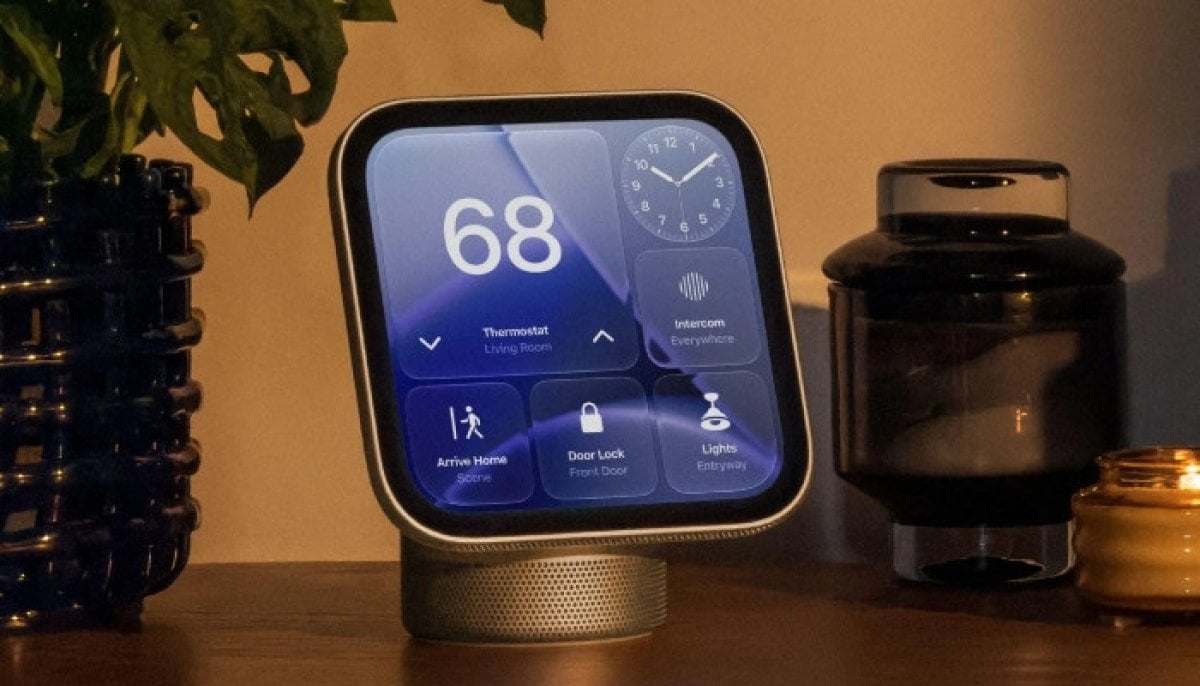 Apple launches HomeView: Here’s what the $299 Siri AI smart home hub can do
 -
 Meta challenges UK online safety watchdog: Here’s why
 -
 Character.AI files for bankruptcy, agrees to $20M disney asset sale
 -
 Scott Kupor reveals how the ‘Super Intelligence’ task force will push AI safety
 -
 Geoffrey Hinton, Yoshua Bengio join 400 scientists calling for global AI oversight body
-
 Can AI predict people's thoughts? Palantir CEO Alex Karp weighs in
 -
Anthropic warns small AI models may soon self-replicate across connected devices
-
Philippine lower house approves bill restricting minors' social media access
-
Google Translate adds auto-save for Live Translate transcripts, with one catch