Scientists slam Trump's claim Canada 'poisoned' US air
Rhetoric lands as smoke has blanketed cities, including New York, Washington DC, Detroit and Toronto
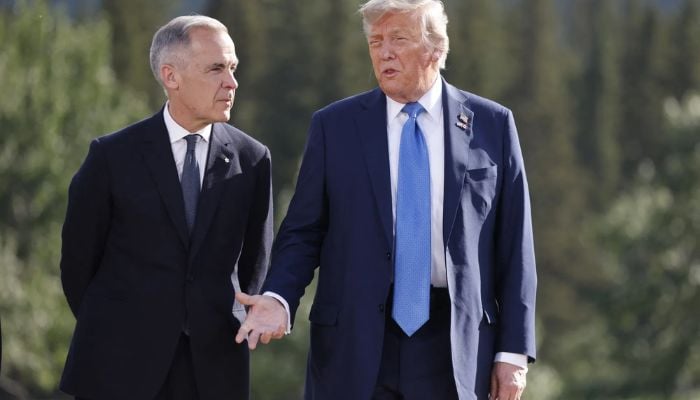
Donald Trump's claim that Canada is "poisoning" American air with wildfire smoke has drawn sharp pushback from climate scientists, who say the president is punishing a country for a crisis it did not cause.
Trump brought up the matter personally to the Canadian prime minister, Mark Carney, during the World Cup final match and told reporters that Canada must put out the fires or pay the price financially.
Trump has mentioned damages, more tariffs, or even both as a means of making sure Canada pays for the wildfires that they started, referring to their nearly 1,000 wildfires as an invasion.
Senator Bernie Moreno from Ohio said that he will introduce legislation against Canada for its "atrocity of forestry management".
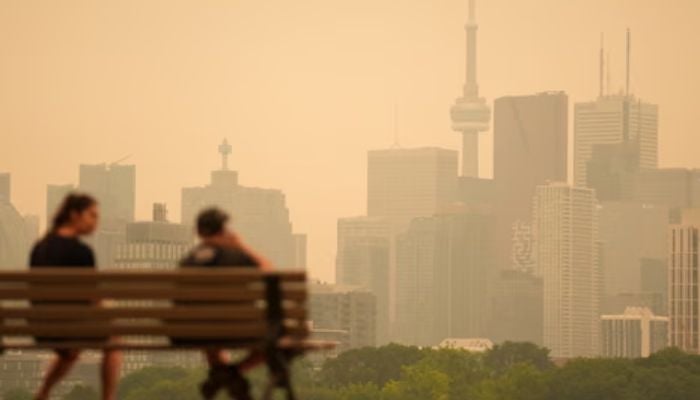
The rhetoric lands as smoke has blanketed cities, including New York, Washington DC, Detroit and Toronto, with Canada having already lost more than 8.1 million acres of boreal forest this year, well above the long-term average.
Michael Mann, a climate scientist at the University of Pennsylvania, compared Trump's position to causing a crash through reckless driving and then billing the other driver for damages.
He said the administration's fossil fuel expansion and resistance to clean energy are compounding the very problem it blames Canada for. Marshall Burke, an environmental policy expert at Stanford, said most of the affected Canadian forests are remote and essentially unmanaged, unlike in the US, and that a warming climate, not Canadian action or inaction, is driving the surge in extreme fires.
Lori Daniels, a wildfire ecologist at the University of British Columbia, stated that such attacks on Canada were ignorant and failed to recognise both the human impact and the firefighters who are putting their lives in danger.
According to her, some North American forests might be helped by targeted thinning for fuel reduction, similar to the ancient practices of indigenous people, but it wouldn't help much in the huge, sparse Canadian boreal forest.
Previous research had found that increased temperatures doubled the risk of conditions suitable for severe fires during the 2023 wildfire season in Canada.


-
 'I'm scared!' Lindsay Clancy holdout juror makes shocking claim about defense attorney
 -
 Zero-click spyware threat: How everyday ads could put users at risk
 -
 What led to Jackie the Big Bear eagle’s death? New necropsy update offers clues
 -
 What is Rockstar's next game after GTA 6? Execs respond
 -
 Savannah Guthrie leaves US for major reason amid brief absence from ‘Today’
 -
 NASA Apollo 16 astronaut who walked on the moon makes ‘disturbing’ UFO claim
 -
 Kash Patel’s ‘From Russia, with Love’ post sparks controversy, FBI responds
 -
 Elon Musk addresses SpaceX’s move to restrict Starlink in Ukraine: ‘POTUS makes the call’