Japan enacts new election law mandating AI labels on social media
New rules require AI-generated images and videos shared during election campaigns to be clearly labeled on social media
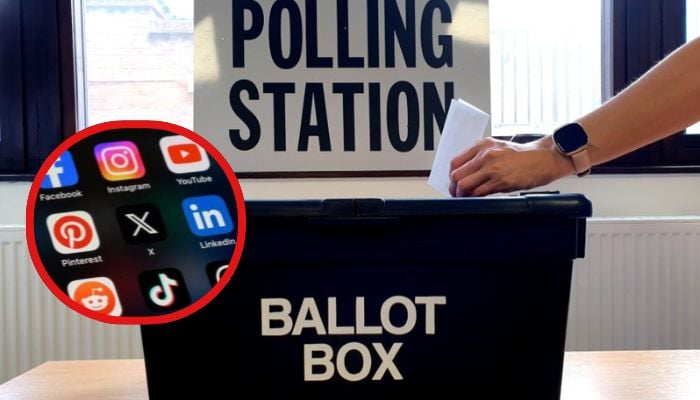
Japan has introduced new rules requiring AI-generated images and videos shared on social media during election campaigns to be clearly labeled.
To protect the nations's democratic integrity, Japan's parliament in a major move enacted a landmark law to clamp down on disinformation and regulate social media use during election.
Japan's internal affairs minister said on Tuesday AI-generated images and videos will have to be marked as such under new rules on the use of social media during elections in Japan.
The cross-party legislation comes in response to rising concerns over AI-generated smear campaigns and false information distorting recent political races.
The move is aimed at improving transparency and reducing the risk of misleading or deceptive content influencing voters, as generative AI tools become more widely used.
The new rules, approved by parliament on Monday also forbid internet users and platforms from spreading fake or distorted information about candidates and will take effect in March.
Unlike under laws on social networks passed by the European Union, Japanese authorities will not be able to impose penalties for non-compliance, prompting local media to question their effectiveness.
Japanese government officials have said, in drafting the new rules, they needed to strike a balance between free speech and the sanctity of democratic elections.
The Nikkei business daily said that this may be because Tokyo wants to avoid the friction seen between Washington and Brussels over fines imposed under the bloc’s Digital Services Act.
The decision came amid growing global concerns over the use of generative AI in elections.
Japan's decision reflects a broader international effort to regulate the use of artificial intelligence in politics while preserving freedom of expression.
By requiring clear labels rather than banning AI-generated content outright, the government aims to strike a balance between encouraging technological innovation and protecting the integrity of elections.
The government aims to fully implement these changes by March 1, 2027, just ahead of the unified spring local elections.
Governments authorities worldwide are increasingly worried that AI-generated deepfakes and manipulated content could spread misinformation, damage public trust and interfere with democratic processes.


-
 Multiple injured in supermarket stabbing attack in South Korea’s Incheon, investigation underway
 -
 Fugitive businessman Alvaro Pulido arrested in $2bn Venezuela corruption scandal
 -
 German labour minister steps down after stepdaughter's death and political attacks
 -
 Trump could fire Kimberly Guilfoyle as US ambassador to Greece over misconduct reports
 -
 Elon Musk spends millions to become top political donor to keep Republicans in power
 -
 Mark Carney warns Alberta against separation in Thanksgiving message from Edmonton
 -
 Florida and Alabama face widespread power outages as Hurricane Isaias moves north
 -
 Reform UK pledges to suspend UK asylum system for up to 5 years
-
 Mamdani launches first major NYPD use-of-force review in nearly a decade
 -
Ilhan Omar accuses Trump of political intimidation after federal agents search her home
-
OPEC slashes 2026 oil demand growth forecast to 400,000 BPD, citing weaker momentum
-
Cornell 7 ‘loophole’ in assault case exposes a deeper legal problem