Europe's heatwave puts AI data centres under pressure
Data centres demand the most power at precisely the time the grid has the least power to supply
Europe's record-breaking heatwave is exposing a critical vulnerability in the global infrastructure supporting the AI boom: data centres are increasingly concentrated in regions facing acute climate threats.
A study released by First Street on June 18, 2026, examined 97 global data centre markets and found that 79% of global data centre capacity faces elevated risk from acute climate hazards, including flooding, extreme winds, and wildfires that can disrupt operations, increase downtime and drive insurance and repair costs.
In the last three years, severe weather has been the top loss driver in Zurich’s portfolio for its US data centre construction builders’ risk portfolio, responsible for one-third of Zurich’s losses in the portfolio, according to Patrick McBride, the head of international construction at Zurich.
The issue is further exacerbated by where companies are constructing.
This year, 64% of the data centres under construction are outside traditional clusters such as Northern Virginia and in new frontier markets like West Texas, Tennessee, Wisconsin, and Ohio regions that have higher exposure to risks such as tornadoes, hail, and strong winds.
Cooling makes up around 40% of data centres' energy use even at normal temperatures, and this rises in extreme heat, just when air conditioning is driving up demand for the power grid, according to Mishal Thadani, CEO of AI software platform Rhizome.
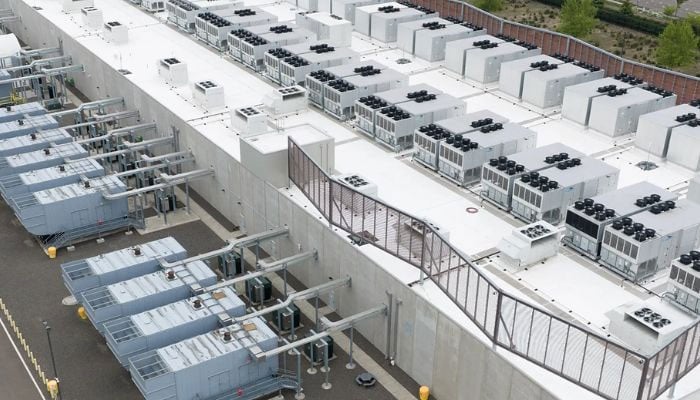
Temperatures of up to 38 degrees Celsius (100 degrees Fahrenheit) occurred in May in Turin, Italy, which put thermal stress on the underground power cables, leading to frequent blackouts. According to Thadani, "Data centres demand the most power at precisely the time the grid has the least power to supply."
Microsoft claims that its data centres will be designed to "function reliably across a broad spectrum of environmental conditions through site selection, redundancy, and environmental monitoring to minimise risk due to excessive temperature and extreme weather".
According to Nvidia, their new AI servers can tolerate operating the cooling liquid at 45 degrees Celsius, compared to the lower temperatures before, where increasing chiller temperature by just one degree saves 4% in cooling power.


-
 Meta faces pressure as publishers and advertisers urge EU, UK to suspend new terms
 -
 Cybersecurity warning: Major websites face potential global threat
 -
 Tesla, SpaceX merger could create $3.5tn giant
 -
 Meta sued in Australia over alleged social media addiction among children
 -
 US bank accounts at risk as unauthorised AI agents gain access
 -
 Tesla app 4.62 adds iPad support in 2 columns
 -
 PHP security vulnerability triggers millions of exploit attempts, Cloudflare warns
 -
 Is Apple’s iPhone Duo worth buying? Marques Brownlee weighs in