World's oldest artwork: 68,000 year-old cave paintings discovered in Indonesia
68,000-year-old artwork in Indonesia sheds new light on early human creativity
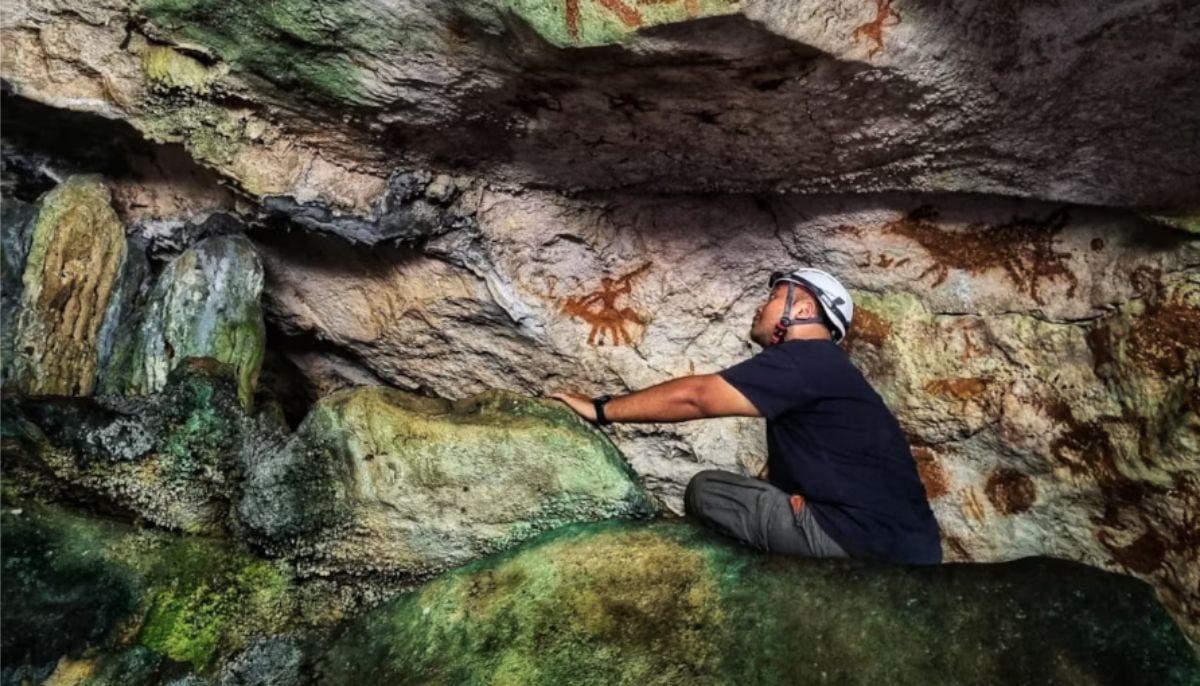
Archaeologists have just uncovered the world's oldest artwork in Indonesia.
Researchers have found that handprints stencilled on limestone caves on the Indonesian island of Muna could be up to 67,800 years old, making them the oldest known paintings in the world.
The new discovery is also more than 15,000 years older than the previous art found in the Sulawesi region by the same team in 2024.
The region surrounding Indonesia is known for some of the world’s most ancient archaeological finds, alongside neighboring East Timor and Australia.
Adhi said the cave art provides new evidence supporting the theory that there was early human migration through Sulawesi.
“It also shows that our ancestors were not only great sailors,” Adhi said, according to the Jakarta Post, “but also artists.”
The ochre- or tan-colored drawings analyzed by Indonesian and Australian researchers were made by blowing pigment over hands placed against the cave walls, leaving an outline.
According to the Indonesian news outlet, archaeologist Adhi Agus Oktaviana from Indonesia’s National Research and Innovation Agency (BRIN) has been looking for hand stencils in the Muna Island region, in Sulawesi province, since 2015.
World's oldest artwork in Indonesia:
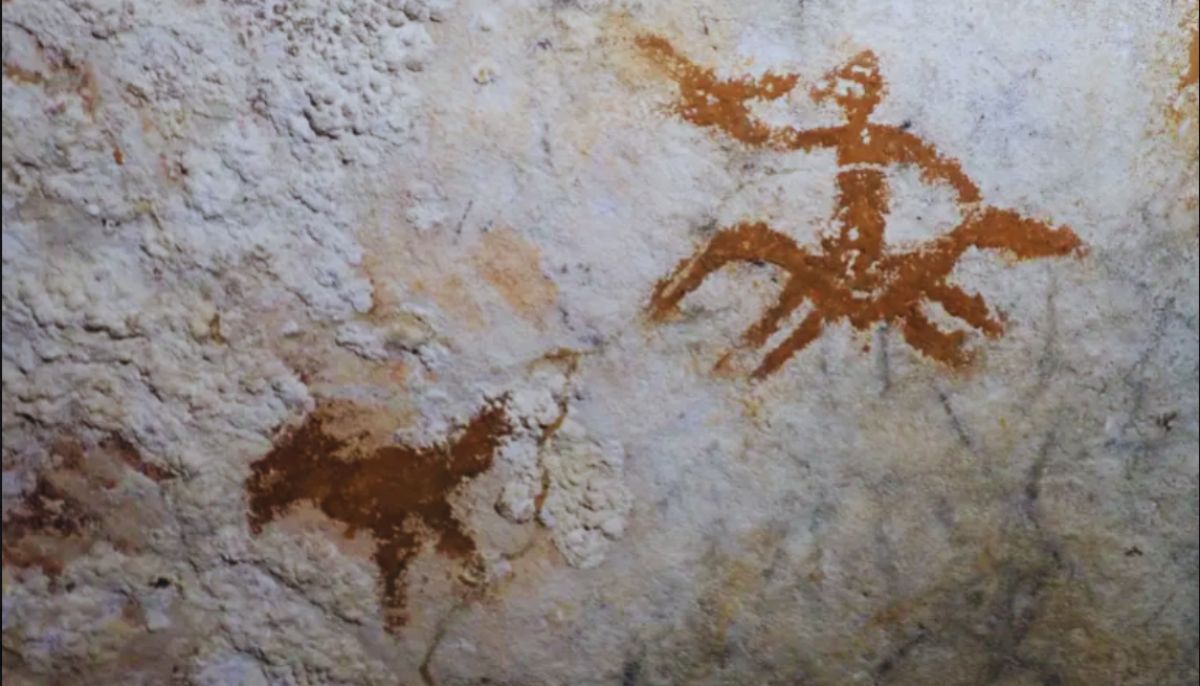
Researchers found the hand stencil artwork in a cave, which has now been dated, under newer paintings in the cave of a “person riding a horse alongside a chicken.”
Aubert said they also found handprints in negative, stenciled, probably using red ochre.
Archaeologists said the fingers of one of the hand-painted stencils were "retouched to become pointed like claws—a style of painting only seen in Sulawesi," the Canadian archaeologist added.
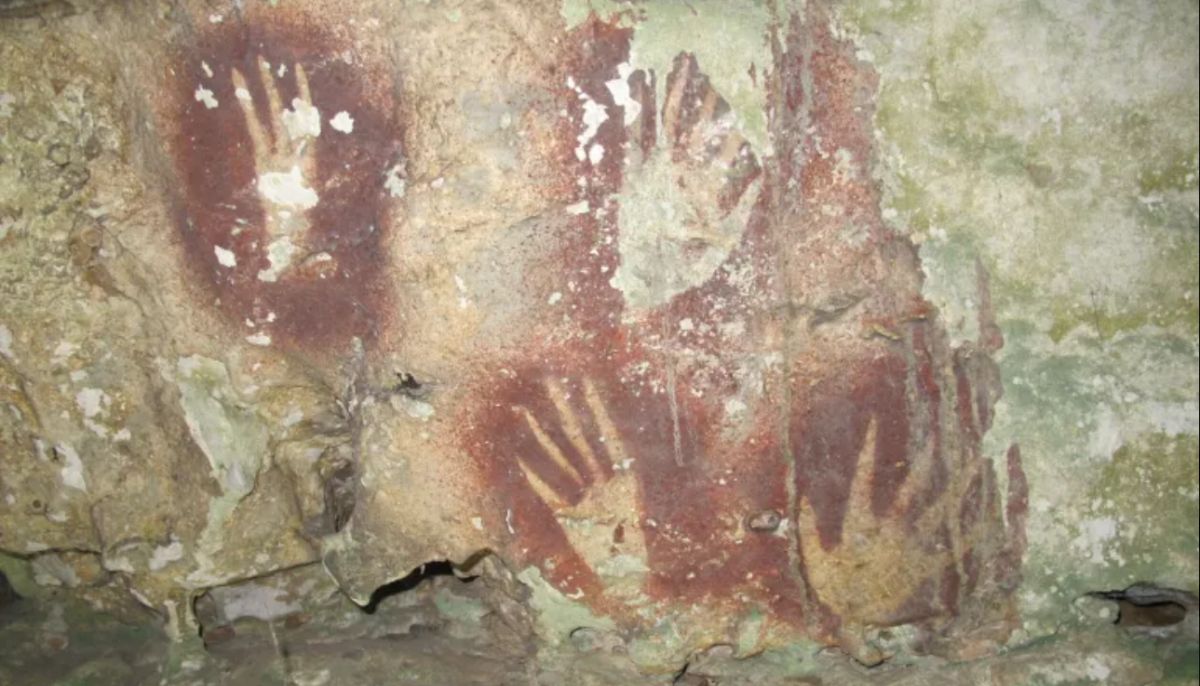
Aubert’s co-author, Adam Brumm said it appeared the people who painted the hands may have been trying to depict something else.
“It was almost as if they were deliberately trying to transform this image of a human hand into something else—an animal claw perhaps,” said Brumm.
“Clearly, they had some deeper cultural meaning, but we don’t know what that was. I suspect it was something to do with these ancient peoples’ complex symbolic relationship with the animal world,” he said.
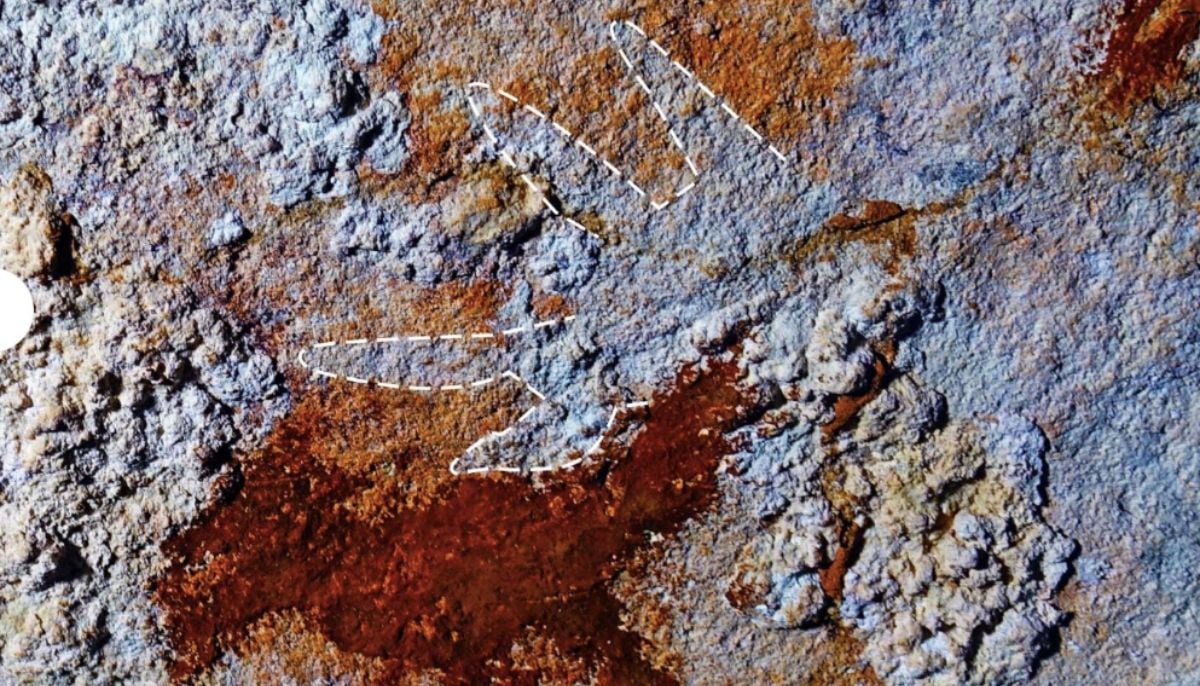
To determine the art's age, the team took five-millimeter samples from "cave popcorn," which are small clusters of calcites that form on the walls of limestone caves.
Then they zapped the layers of rock with a laser to measure how the uranium decayed over time compared to a more stable radioactive element called thorium.
This "very precise" technique gave the scientists a clear minimum age for the painting, Aubert explained.
The scientists also established that the Muna caves had been used for rock art many times over a long period.
Archaeologists informed, that some of the ancient art in these caves was even painted over up to 35,000 years later, Aubert said.
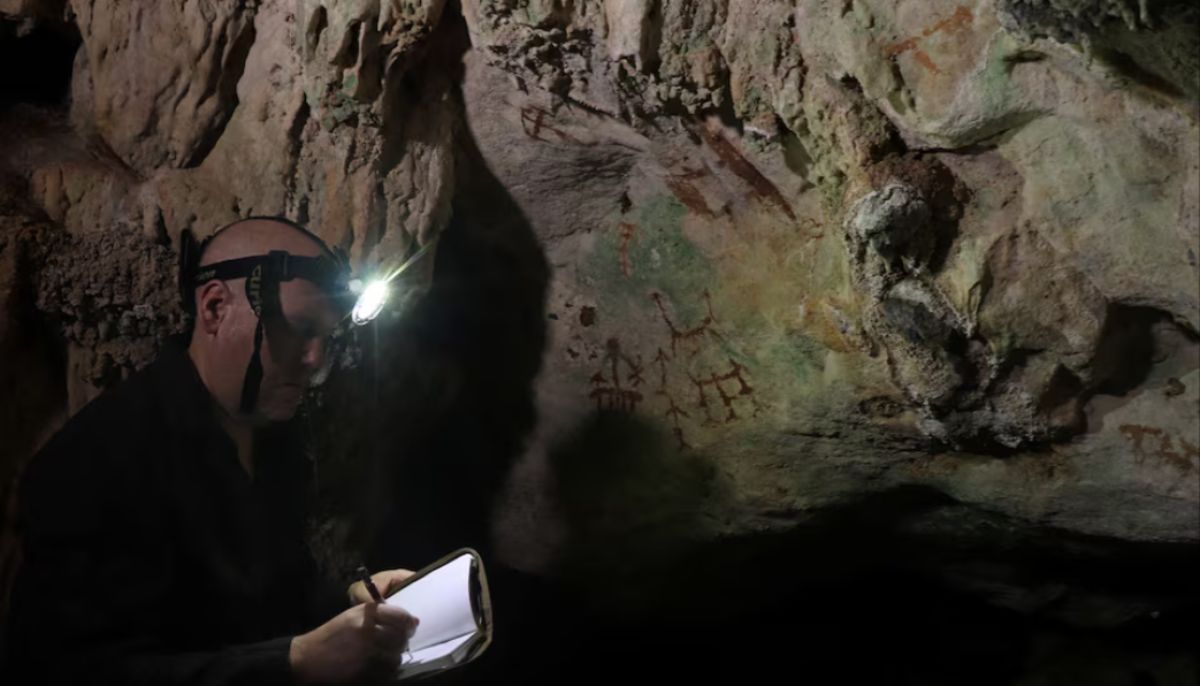
The new discovery is also more than 15,000 years older than previous art found in the Sulawesi region by the same team.
The research was published in the journal 'Nature' on Wednesday, January 21, 2026.
The newly discovered oldest artwork in Indonesian caves also sheds light on how humans first migrated to Australia.




-
 China to send two more pandas to US to strengthen US-China ties
 -
 Mayor Mamdani launches 'Twitch Show' to interact with New Yorkers
 -
 RIAT 2026: Middle East conflict forces air show cancellation
 -
 Nancy Guthrie case: Bone discovery sparks major online interference in her disappearance
 -
 NATO responds after Trump announces to deploy additional 5,000 troops to Poland
 -
 House Republicans cancel vote to rein in Trump’s military campaign in Iran
 -
 Ebola treatment center attacked by angry protesters in Congo
 -
 US Navy division awards $75m contract for submarine combat control program
-
 Why Donald Trump Jr. chose private Bahamas Island wedding amid questions over Trump’s attendance
 -
‘We were lucky’: Stephen Colbert bids emotional farewell in final broadcast on Thursday
-
How Vanessa Trump is facing cancer with Tiger Woods' support?
-
Alberta MLAs approve petition asking if province should remain in Canada