Insurrection Act of 1807: All you need to know about powerful US emergency law
US President Donald Trump has threatened to invoke the rarely used emergency law amid Minnesota protests
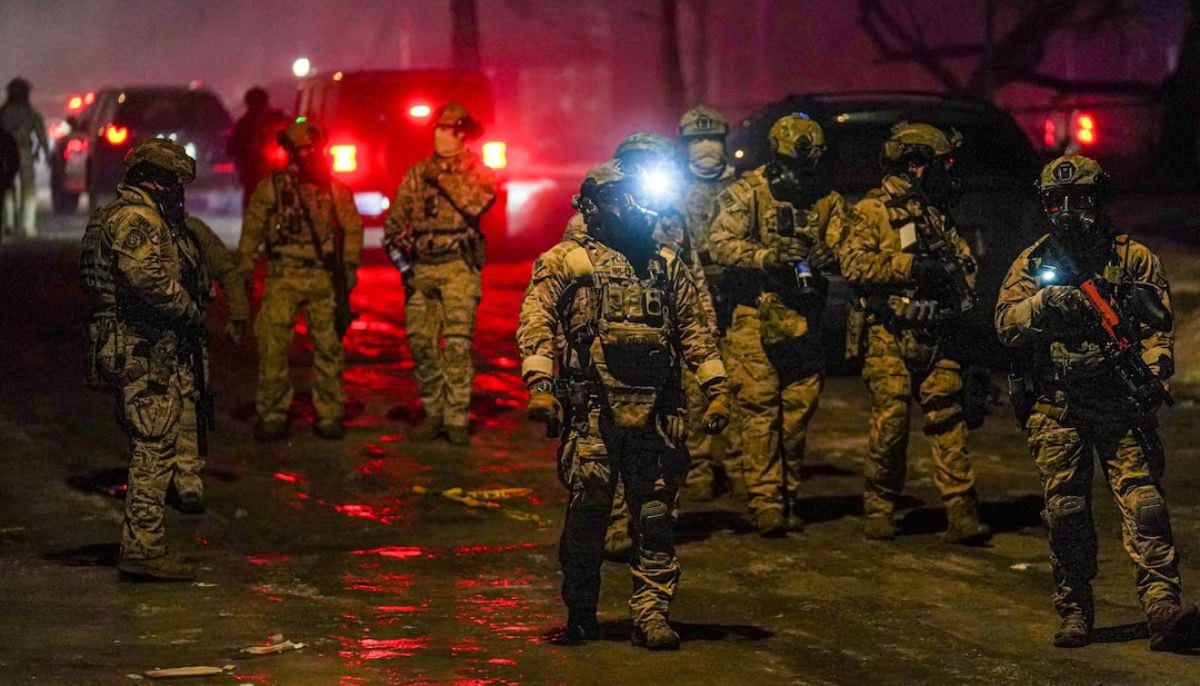
The Insurrection Act of 1807 has been under spotlight as recently US President Donald Trump threatened to invoke this act to deploy military forces in Minnesota as days of demonstration have plunged the country into turmoil.
The riots started when an Immigration and Customs Enforcement (ICE) agent shot a Venezuelan national during an arrest attempt as confirmed by the Department of Homeland Security (DHS).
On Thursday, Trump posted on his Truth Social platform, citing, “If the corrupt politicians of Minnesota don’t obey the law and stop the professional agitators and insurrectionists from attacking the Patriots of I.C.E., who are only trying to do their job, I will institute the INSURRECTION ACT.”
Here’s to know everything about this law and what implications it can bring.
What is the Insurrection Act of 1807?
The Insurrection Act is a law from 1807, entitling the US president with the powers to deploy federal military troops inside the country to restore law and order situation.
It consists of three main sections:
- The first section allows the president to deploy militias and troops if requested by a state to quell an insurrection.
- According to the second section, the president at his own discretion sends in troops whenever he wants to counter unlawful obstructions, combinations, or assemblages, or rebellion against the authority of the United States.
- The third section revolves around using the military to stop an insurrection that is blamed for hindering federal law or violating constitutional rights.
Here’s the catch! The law does not clearly define what it means to be an “insurrection” or “rebellion”.
Under what circumstances the law can be invoked?
According to an 1827 Supreme Court ruling, only the president has sole authority to decide when the law applies and he can apply it unilaterally.
But according to legal experts, this law can only be used in extreme situations, specifically when civilian law enforcement agencies have been deemed insufficient in the face of a crisis.
Joseph Nunn, a counsel at the Brennan Center for Justice who has studied the statute extensively, said “the act has historically been a tool for emergency situations when civilian authorities are overwhelmed by some sudden crisis — an insurrection, mass civil unrest."
Does this Insurrection Act give sweeping powers to president?
According to William Banks, a professor emeritus and expert on the domestic role of the military, there are no rules or limits on this power. The president can act entirely unilaterally without asking for permission, holding discussion with officials and reporting to Congress.
“There is also no expiration date; unlike other laws that might only last 30 or 60 days, this stays in effect indefinitely because the president doesn't have to follow any specific guidelines,” Banks added.
Insurrection Act: Counteracting force against ‘Posse Comitatus’
The Insurrection Act is considered a counteracting force against Posse Comitatus, an 1878 law that forbids the military deployment for law enforcement purposes. And its invocation overrides the Posse Comitatus Act.
According to Nunn, “Insurrection Act is the law’s most important exception.”
Historical use of Act
It has been used thirty times in US history including during the civil right movement, aiming to enforce school desegregation in the 1950s and 1960s.
In 1922, it was used during the Los Angeles riots under the presidency of Republican George HW Bush.
Presidents have invoked the act unilaterally only 5 times in the past 130 years, all during the Civil Rights Era, according to Nunn.
President Dwight D. Eisenhower invoked this act in 1957 to send the 101st Airborne division (US elite army soldiers) to Little Rock to enforce desegregation.
President Kennedy also invoked it three times, one in Mississippi and two-times in Alabama. Johnson used the law in Alabama in 1965.
Does the Insurrection Act apply to Minneapolis?
According to Trump, Minnesota residents and officials are obstructing US law by protesting their agenda and going against immigration agents and Custom and Border Protection officers.
But statutes argue that invocation demands the presence of extreme circumstance, when things get out of control.
Could the court block Trump’s invocation?
It could be possible. But no historical precedent is present where the court blocks the invocation of the act.
Nunn said, “There's very little case law on this subject. One, the Insurrection Act simply isn't invoked very often. It's a tool that's used very rarely.”
“Two, it has never been flagrantly abused in this way. There have been invocations of the Insurrection Act that I would say weren't perfectly justified, weren't obviously necessary, but it has never been outright abused,” she added.


-
 Trump says Google rejected his request to rename Atlantic Ocean after himself or America
 -
 Magnitude 7.0 earthquake in Tibet kills 16 and destroys hundreds of homes
 -
 Ron Duguay, former New York Rangers forward, dies after cancer battle
 -
 Kathy Hochul gets campaign boost from NYC Mayor Zohran Mamdani ahead of midterms
 -
 Abdul El-Sayed and Mike Rogers clash over Trump, patriotism in Michigan Senate debate
 -
 Russia attacks Kyiv hours after peace talks announcement, killing two and injuring 22
 -
 Macron vows to ban non-union protests, blames ultra-left groups as unrest grips France
 -
 Trump's massive DC arch could begin construction days after US midterm elections