Canadian PM visits China after a decade of diplomatic strain: What deals are in focus?
Since 2017, this departure to China marks the first visit by a Canadian PM
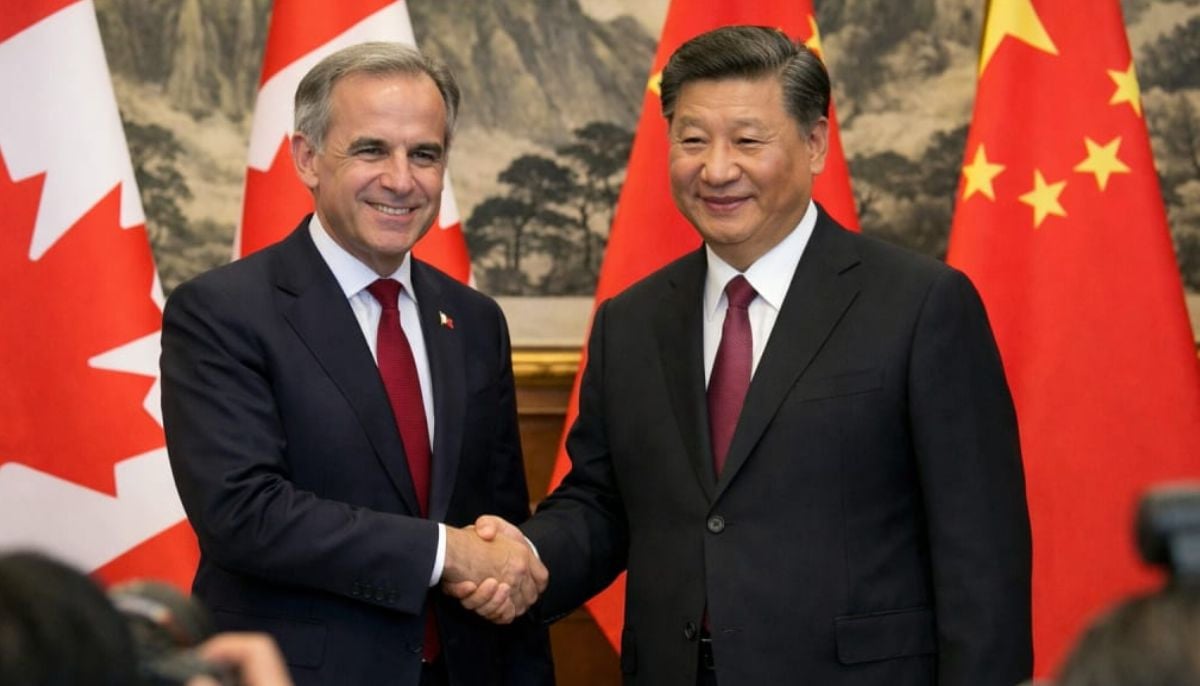
Canada’s Prime Minister Mark Carney is set to meet the Chinese officials, aiming to discuss trade deals and international security after decades of tense relations with Beijing.
The rare visit comes at a time when Canada is facing uncertain relations with the US on the grounds of trade war and repeated annexation threats from President Donald Trump.
Since 2017, this departure to China marks the first visit by a Canadian PM. The meeting of high officials could bring a paradigm shift in diplomatic ties between the countries.
The relations between two countries soured under former PM Justin Trudeau when the administration arrested the chief financial officer of Chinese firm Huawei in 2018.
According to senior Canadian officials, Carney is expected to sign a number of memoranda that are under discussion.
Greg MacEachern, a former senior Liberal ministerial adviser, said he expected the trip would yield significant outcomes beyond mere symbolism.
“When the Prime Minister is invited to China, it is not for window dressing,” he said, adding the trip would be monitored in Washington.
“There's a political risk that could upset President Trump, but Prime Minister Carney clearly wants to send the message that Canada is open for business. And the Canadian government has made the calculation that it's worth it.”
Key deals in focus
As reported by Reuters, a deal could be made regarding the export of Canadian crude to China. The US is the main importer of Canada as it exports 90 percent to America.
The US' recent push for Venezuela oil could reduce its dependency on Canadian crude.
However, Chinese tariffs on Canadian canola loom larger on the expected progress.
Talks related to Canola exports could also be possible during the meeting. In August 2025, China imposed preliminary anti-dumping tariffs on canola imported from Canada, slashing Canadian canola exports to China completely.
This dispute initially started when Canada put high taxes on EVs coming from China.
According to China’s foreign ministry, Beijing is looking to build mutual trust and relationship with Canada in a good spirit.
According to Colin Hornby, head of the Manitoba farm group Keystone Agricultural Producers, “he did not expect an agreement to eliminate the canola tariffs during the trip but was optimistic something could happen in the coming weeks or months.”
Analysts’ concerns related to recent visit
Some analysts see this rare visit and cooperation with China as a threat to Canada's national security.
According to Vina Nadjibulla, vice-president of the Asia Pacific Foundation of Canada, “There are clear red lines not to be crossed.”
Cheuk Kwan, co-chair of the Toronto Association for Democracy in China, said he wished Canada would “not fall into the trap of appeasing China just to secure bilateral trade agreements.”
Joseph Torigian, an expert in Chinese politics at American University said, “The Chinese might make a case during bilateral meetings with Canada about how unreliable the U.S. is as a partner and how dangerous they are.


-
 New York Knicks add James Wiseman and Bruce Brown ahead of NBA training camp
 -
 Eight charged after police dismantle massive illicit cannabis grow operation in Ontario
 -
 Trump grant cuts hit health, disaster relief and education across US, analysis finds
 -
 Max Domi to miss Maple Leafs training camp amid complications from surgery
-
 Ex-FBI agent cites 'a lot of proof' suggesting Nancy Guthrie is dead
 -
Eight charged after police dismantle massive illicit cannabis grow operation in Ontario
-
Trump grant cuts hit health, disaster relief and education across US, analysis finds
-
 EU plans total social media ban for under 13s as von der Leyen targets big tech
 -
 Pete Hegseth impeachment vote put on hold after House cuts session short
 -
 EU to launch Climate Insurance Alliance to close growing protection gap after extreme temperatures
 -
 US interest rates rise as Fed signals another hike could be coming this year
 -
 Police recover body from pond after massive search for missing Noah Woods