Why did Trump withdraw US from climate treaty, dozens of international forums, UN entities?
"The United States would be the first country to walk away from the UNFCCC,’ said Manish Bapna, president and CEO, Natural Resources Defense Council
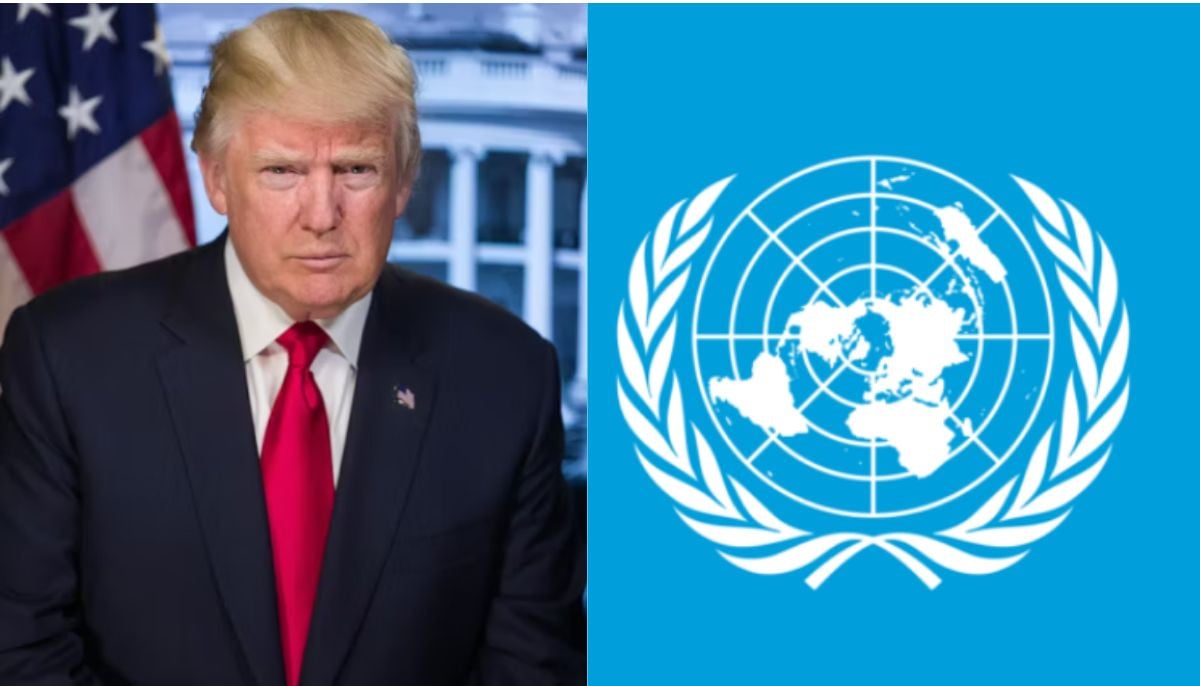
US president Donald Trump has withdrawn the United States from dozens of international organizations, including many that work collaboratively to combat global climate change.
The memorandum was signed on Wednesday January 7, 2026 after a review into causes that the White House said were "a waste of taxpayer dollars" and "operate contrary to U.S. national interests.”
It said the move is part of a review of all international intergovernmental organizations, conventions and treaties.
"These withdrawals will end American taxpayer funding and involvement in entities that advance globalist agendas over US priorities," it said The White House in a statement.
It added that many of the organizations promoted "radical climate policies, global governance and ideological programs that conflict with US sovereignty and economic strength".
As reported by BBC, Among the 66 UN and non-UN groups, nearly half of them are bodies of the United Nations, including the UN Framework Convention on Climate Change - a treaty that underpins all international efforts to combat global warming.
Trump listed in a memo, opens new U.N. Framework Convention on Climate Change - described by many as the "bedrock" climate treaty which is parent agreement to the 2015 Paris climate deal.
The White House said the decision was taken because those entities "no longer serve American interests" and promote "ineffective or hostile agendas".
Last year, Trump once again withdrew the US from the Paris climate agreement - the world's most important effort to tackle rising temperatures - and declined to send a delegation to the COP30 climate summit in Brazil.
"The United States would be the first country to walk away from the UNFCCC,’ said Manish Bapna, president and CEO, Natural Resources Defense Council
TRUMP CAUTIOUS OF MULTILATERAL ORGANISATIONS
Trump's move reflects his long-standing wariness of multilateral institutions, particularly the United Nations as he has repeatedly questioned the effectiveness, cost and accountability of international bodies, arguing they often fail to serve U.S. interests.
Since beginning his second term a year ago, Trump has sought to slash U.S. funding, engagement for the UN, and stopped U.S. engagement with the U.N. Human Rights Council.
He also extended a halt to funding for the Palestinian relief agency UNRWA and quit the U.N. cultural agency UNESCO and announced plans to quit World Health Organization WHO and the Paris climate agreement.
Other entities on the U.S. list are the U.N. Conference on Trade and Development, the International Energy Forum, the U.N. Register of Conventional Arms and the U.N. Peacebuilding Commission.
"For United Nations entities, withdrawal means ceasing participation in or funding to those entities to the extent permitted by law," reads the memo.
_updates.jpg)
Moreover, Trump has already largely slashed voluntary funding to most U.N. agencies.
The U.S. will also quit UN Women, which works for gender equality and the empowerment of women, and the U.N. Population Fund (UNFPA), the international body's agency focused on family planning as well as maternal and child health in more than 150 countries.
The U.S. also cut its funding for the UNFPA last year.
Notably the United States skipped the annual U.N. international climate summit last year for the first time in three decades.




-
 Pam Bondi, dubbed Trump's Ghislaine Maxwell, gets fired
 -
 Macron slams Trump: ‘Neither elegant nor up to standard’ over mockery
 -
 Storm Dave: Everything you need to know to stay safe this Easter weekend
 -
 Brazil approves law giving separated couples joint custody of pets
 -
 'Poisoned' Mount Everest climbers expose guides' million-dollar fraud scheme
 -
 NASA Artemis II historic rocket launch: Spacecraft successfully enters Earth orbit
 -
 Vanessa Trump remains loyal to Tiger Woods after DUI arrest: Report
 -
 Pink moon 2026: when to see April’s full moon and why it won’t look pink in the sky
-
 Reese's Peanut Butter Cups to return to classic chocolate recipe following public backlash
 -
TDSB vice principal jobs cut as board removes 40 roles amid funding loss, enrolment decline
-
Earthquakes hit Indonesia off Ternate, triggering tsunami warning that is now lifted
-
NASA Artemis II rocket launch: Canada’s Jeremy Hansen makes history in first lunar mission in decades