Maduro's arrest exposes the limits of China’s push for global diplomacy
China condemns US for acting like a ‘world judge’ in Venezuela
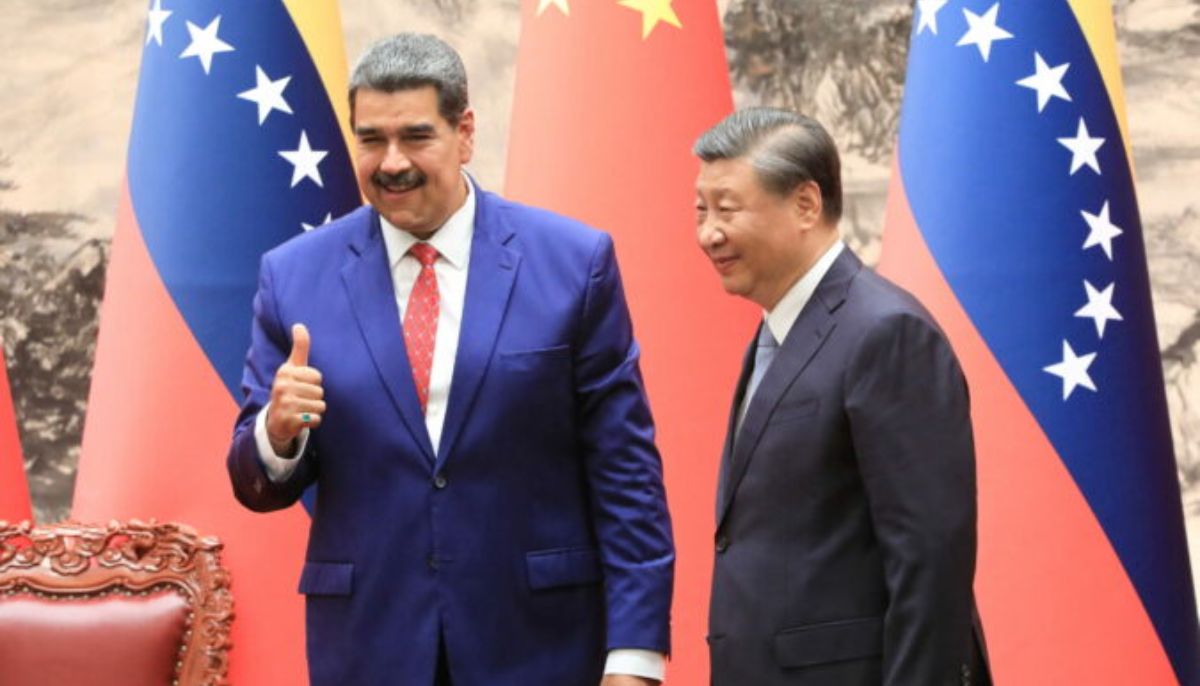
China’s top diplomat accused U.S. forces of acting like a “world judge” after the capture of Nicolas Maduro, stating that the move to put the Venezuelan president on trial in New York directly challenges international law in Latin America.
Beijing has recently challenged Washington in the United States over the legality of the recent operation.
China primarily follows a policy of non-interference and routinely criticizes military activity conducted without the UN Security Councils’ approval.
The U.S. military's removal of a key Chinese strategic partner from his capital in the dead of night serves as a major test for Beijing. It challenges China’s assertion that it can resolve global hotspot issues through diplomacy without following Washington’s military route.
In this connection Chinese Foreign Minister Wang Yi told his Pakistan counterpart during a meeting in Beijing on Sunday while referring to the sudden developments in Venezuela stating, “We have never believed that any country can act as the world’s police, nor do we accept that any nation can claim to be the world’s judge.”
While addressing the meeting, China voiced its outrage at the actions of the U.S., which like China, is one of the council's five permanent members.
The Charge d’ affairs of China’s Permanent Mission to the United Nations was of the view that the lessons of history offer a stark reminder stating: “Military means are not the solution to problems, are not the solutions to problems, and the indiscriminate use of force will only lead to greater crisis.”
According to Reuters, analysts were of the view that China, being the world’s second-largest economy and a major trading partner, would be crucial in assembling criticism of Washington's actions.
A major setback for China
President Trump has adopted a menacing military toward Colombia and Mexico and, while remarking that Cuba’s communist regime “looks like it’s ready to fall on its own.
Latin American nations that signed onto Chinese President Xi Jinping's flagship Global Security Initiative, may wonder if the alliance can truly protect them as it faces this major test.
Beijing has achieved a significant breakthrough in persuading Latin America states to switch diplomatic recognition from Taiwan to China. Over the last two decades, countries including Costa Rice,Penama, the Dominican Republic, EI Salvador, Nicaragua and Honduras have all sided with the $19 trillion economy’s promise of strategic alliance.
Beijing poured money into Venezuela’s oil refineries and infrastructure, offering financial rescue as the U.S. and its allies tightened sanctions from 2017. According to customs data, China purchases around $1.6 billion worth of goods in 2024, which represents the latest full figures available.
Following a brief meeting between Maduro, China’s special representative for Latin America and Caribbean affairs, Qui Xiaoqi, said: “It was a big blow to China, we wanted to look like a dependable friend to Venezuela.”
Additionally, the capture of Nicolas Maduro by US forces represents a crucial moment that exposes the friction between China’s public diplomacy and the assertion of US powers.


-
 Ron Duguay, former New York Rangers forward, dies after cancer battle
 -
 Kathy Hochul gets campaign boost from NYC Mayor Zohran Mamdani ahead of midterms
 -
 Abdul El-Sayed and Mike Rogers clash over Trump, patriotism in Michigan Senate debate
 -
 Russia attacks Kyiv hours after peace talks announcement, killing two and injuring 22
 -
 Macron vows to ban non-union protests, blames ultra-left groups as unrest grips France
 -
 Trump's massive DC arch could begin construction days after US midterm elections
 -
 Putin-Witkoff meeting: 5 key takeaways on Ukraine peace talks
 -
 Sheriff Chris Nanos insists Nancy Guthrie was taken alive
-
 Yankees extend Brian Cashman's tenure after another disappointing playoff exit
 -
Poland's abortion ban faces new challenge as lawmakers vote to loosen restrictions
-
New York Democrat Brad Lander released after detention in West Bank
-
Ohio chemical tank explosion triggers mass evacuations and shelter-in-place orders in Toledo