How Rama Duwaji navigates the politics of clothing
Duwaji does not dress to disappear, nor does she dress to provoke. Her style is controlled, deliberate, and notably uninterested in appeasement.
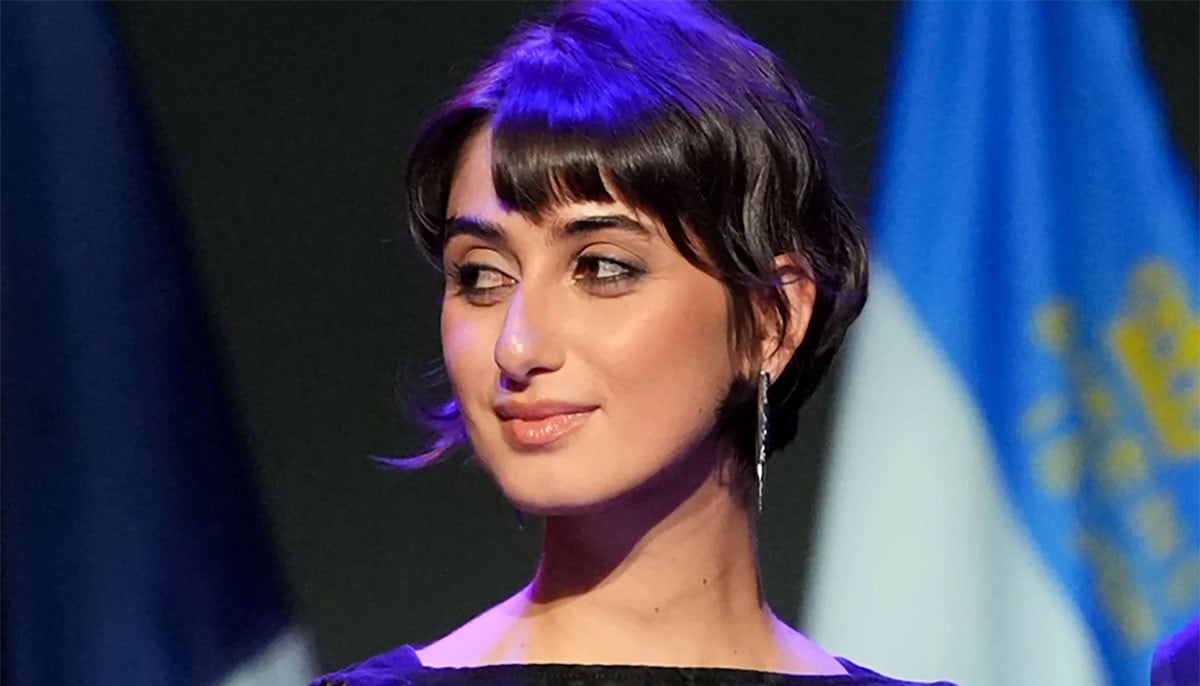
Women’s clothing has long been treated as public testimony. Not merely aesthetic, it is read as evidence: of seriousness or frivolity, humility or excess, political alignment or ideological betrayal. Men in public life are allowed the comfort of uniformity. Women are rarely granted that mercy.
That reality helps explain why Rama Duwaji, New York City’s new First Lady, has been scrutinized with such intensity since stepping into the public eye alongside Mayor Zohran Mamdani.
Artist before First Lady
Before she became attached to a political office, Duwaji was an artist. Born in Houston and educated in illustration and visual storytelling, her work has appeared in publications such as The New Yorker and The Washington Post.
Her drawings often explore intimacy, memory, and the emotional textures of everyday life. That background matters. It suggests a person already fluent in visual language and acutely aware of how images are read, misread, and projected upon.
When Duwaji appeared at Mamdani’s swearing-in ceremonies at the abandoned City Hall station at midnight on New Year’s eve, and the day after in the more public ceremony, the attention quickly shifted from her presence to her clothes.
The politics of optics
Critics focused on her footwear, Miista boots with a retail price often cited around $600, as proof of hypocrisy, given her husband’s progressive politics.
The criticism ignored a key fact: many of Duwaji’s inauguration pieces were borrowed or rented, styled with an emphasis on circular fashion rather than ownership.
This detail punctures the outrage. The issue was never really the cost of the boots. It was the expectation that a woman connected to leftist politics must perform austerity at all times, that her body must visually enact policy, even when men around her are rarely subjected to the same demand.
Style as a way of deliberate structure
For the private midnight ceremony, Duwaji wore a vintage Balenciaga coat. For the public inauguration, she chose a custom design by Cynthia Merhej of Renaissance Renaissance, a Palestinian-Lebanese designer known for sculptural tailoring and intellectual restraint.
These were not random selections. They formed a pattern of independent designers, archival pieces, clothes that emphasize form and intention over trend.
Duwaji does not dress to disappear, nor does she dress to provoke. Her style is controlled, deliberate, and notably uninterested in appeasement.
What her choices suggest
Her approach offers something quietly radical: she accepts that women’s clothing will be politicized and instead of retreating or overcorrecting, she treats dress as a form of authorship.
The clothes become part of a broader practice, as intentional, contextual, and resistant to simplification.
In a culture that still demands women explain who they are before they are allowed to be seen, that choice speaks loudly, and clearly, and on her own terms.


-
 Colorado Avalanche injury update: Cale Makar to miss time with upper-body injury ahead of playoffs
 -
 Max Scherzer shines as Blue Jays beat Rockies with strong outing and late offensive surge
 -
 Connor Ingram delivers standout performance as Oilers secure fourth straight win over Kraken
 -
 Canucks vs Flames: Calgary powers past Vancouver with big second period in 7-3 win
-
 Pam Bondi, dubbed Trump's Ghislaine Maxwell, gets fired
 -
 Macron slams Trump: ‘Neither elegant nor up to standard’ over mockery
 -
 Storm Dave: Everything you need to know to stay safe this Easter weekend
 -
 Brazil approves law giving separated couples joint custody of pets
 -
 'Poisoned' Mount Everest climbers expose guides' million-dollar fraud scheme
 -
 NASA Artemis II historic rocket launch: Spacecraft successfully enters Earth orbit
 -
 Vanessa Trump remains loyal to Tiger Woods after DUI arrest: Report
 -
 Pink moon 2026: when to see April’s full moon and why it won’t look pink in the sky
-
 Reese's Peanut Butter Cups to return to classic chocolate recipe following public backlash
 -
TDSB vice principal jobs cut as board removes 40 roles amid funding loss, enrolment decline
-
Earthquakes hit Indonesia off Ternate, triggering tsunami warning that is now lifted
-
NASA Artemis II rocket launch: Canada’s Jeremy Hansen makes history in first lunar mission in decades