Trump signs executive order blocking states from regulating own AI rules
'We want to have one central source of approval—you can't expect a company to get 50 approvals every time they want to do something,' said Trump
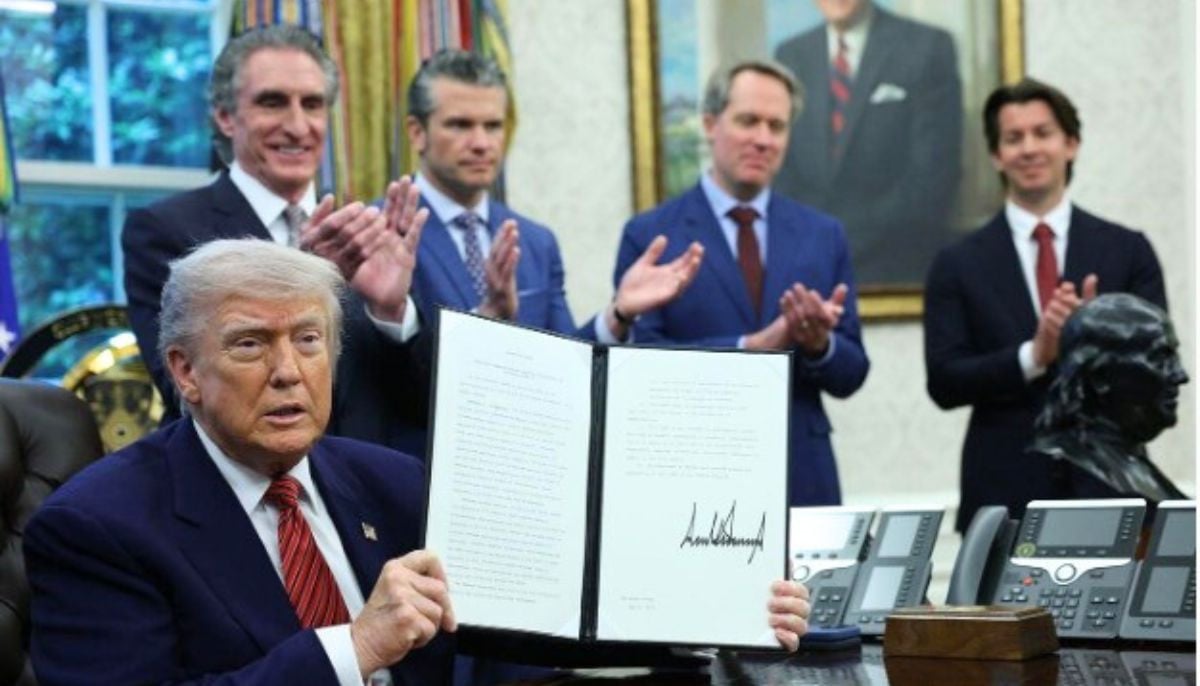
Trump signed an executive order imposing national AI rules on Thursday, December 11, 2025, that aimed at blocking states from enforcing their own artificial intelligence AI regulations.
U.S. President Donald Trump told reporters in the Oval Office at the White House, “We want to have one central source of approval,” reports BBC.
The order, titled 'Ensuring a National Policy Framework for Artificial Intelligence,' aims to replace conflicting state laws with a federal standard to boost U.S. competitiveness.
The order includes various mandates aimed at preventing the regulation of AI, including instructing the Department of Justice to create an “AI Litigation Task Force” whose sole responsibility is to challenge state laws.
The order also demands a review of existing state laws that could “require AI models to alter their truthful outputs.”
The decision likely targets California, which requires companies to disclose their safety testing for new AI models, and Colorado, which requires employers to conduct risk assessments for algorithmic discrimination in hiring and take precautions against it.
The move marks a win for technology giants who have called for US-wide AI legislation, as it could have a major impact on America's goal of leading the fast-developing industry.
While AI company bosses have argued that state-level regulations could slow innovation, and hinder the US in its race against China to dominate the industry, with firms pouring billions of dollars into the technology.
The state of California, which is home to many of the world's biggest technology companies, already has their own AI regulations.
Other states, including Colorado and New York, have also passed laws regulating the development of the technology.
Critics of Trump's executive order argue that state laws are necessary in the absence of meaningful guardrails at the federal level.
Julie Scelfo, from advocacy group Mothers Against Media Addiction, said in a statement, “Stripping states from enacting their own AI safeguards, undermines states' basic rights to establish sufficient guardrails to protect their residents.”


-
 Russia and Ukraine agree to ceasefire, plan November peace talks: What we know so far
 -
 Donald Trump lashes out on 'horrible' reporter, defends viral campaign ad
 -
 Kim Jong Un’s China visit puts North Korea-China ties in focus
 -
 Trump announces new 50 percent tariffs on Canadian goods as Maine Senate race heats up
 -
 Barack Obama joins Sherrod Brown and Abdul El-Sayed in crucial Senate election battles
 -
 Trump demands Rep. Ilhan Omar resign after DOJ court filing references over 'fake' name
 -
 Carney rejects Trump administration’s accusation of Canada interfering in US midterm elections
 -
 Ukraine, Russia and US set to hold key talks in Abu Dhabi in early November
-
 Australia lawmaker Hannah Beazley’s staff threatened days after Helen Haines attack
 -
New York AG Letitia James challenges attempt to disqualify her from Cornell investigation
-
Trump administration targets Alaska Senate race over fears of ballot confusion
-
Gunman near Paris kills one, injures several as mayor suspects ‘racist, Islamophobic’ intent