New study reveals humans snuggle near meerkats in monogamy rankings
A new study suggests that humans are a bit like meerkats when it comes to pairing up
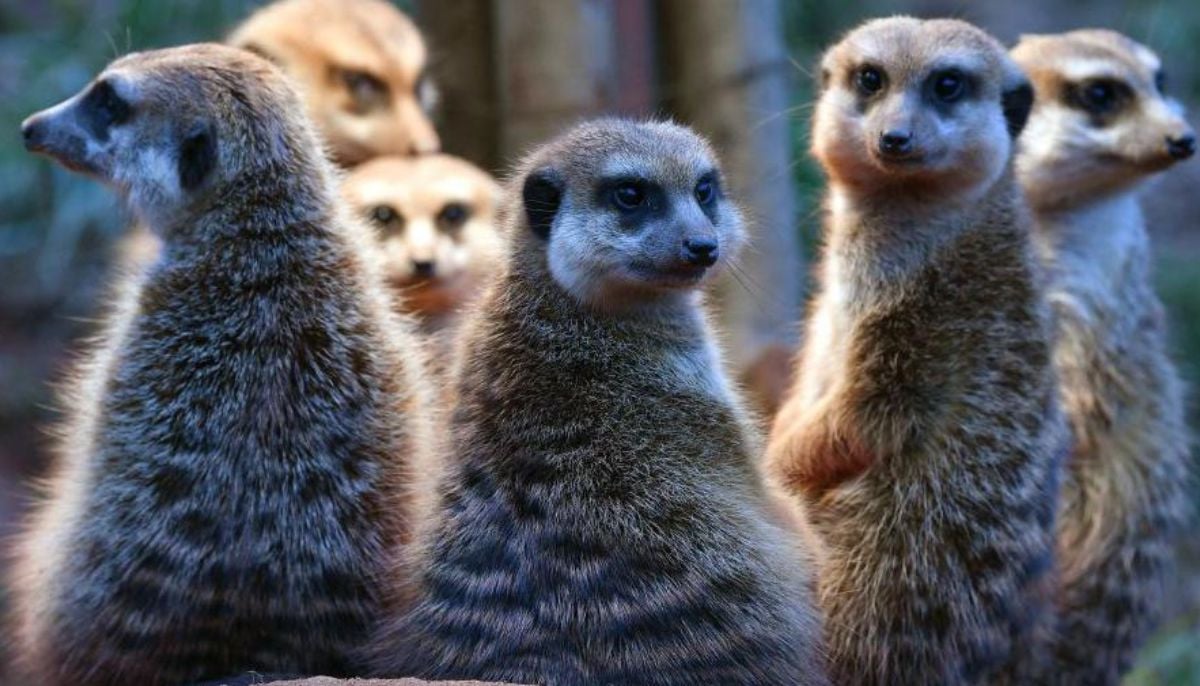
A new study published by the University of Cambridge published in Proceedings of the Royal Society: Biological Sciences, has placed humans in a surprising position: they are a bit like meerkats when it comes to pairing up.
We are closer to these social, close-knit mongooses than we are to our primate cousins, according to a “league table” of monogamy assembled by scientists.
It has been observed that, with a 66% monogamous rate, humans score unexpectedly high, far above chimps and gorillas, and on a par with meerkats.
However, in the animal world, pairing up has its perks, which may be why it has evolved individually in distinct species.
In this connection, experts have proposed several distinct benefits for so-called social monogamy, where mates match up for at least a breeding season to care for their young.
The analysis showed that humans have a monogamy rating measured by 66% full siblings, placing them ahead of meerkats (60%) but behind beavers (73%).
The related species fall at the bottom of the table: mountain gorillas have a 6% rating, while chimpanzees come in at just 4%.
Dr Dyble told BBC News, “Although the rates of full siblings we see in humans are most similar to species like meerkats or beavers, the social system that we see in humans is very difficult.”
He further said, “Most of these species live in colony-like social groups or perhaps live in solitary pairs that go around together. We live in what we call multi-made, multi-female groups, within which we have these monogamous, or pair-bonded units.”
The recent revelation suggests that humans have been monogamous across time and space.
On the contrary, the study concludes that our society's mating patterns are much more distinct from chimps and bonobos because humans have a distinct route when it comes to pairing up.






-
 Can NASA save Swift Observatory telescope? Inside space agency's bold rescue mission
 -
 Scientists found 'super-puff' planets 1,110 light-years away
 -
 Scientists find ancient microbial life in places it shouldn't exist
 -
 Why Marijuana is suddenly sending thousands of dogs to hospitals in US?
 -
 36 years on, Hubble shows how stars actually change over time
 -
 Hidden magma beneath Mars? Scientists' 'unexpected' discovery raises new questions about alien life
 -
 Rare 3,200-year-old coral blue hole discovered in South China Sea
 -
 What happens at black hole’s event horizon? Scientists find the first-ever clue
-
 Scientists discover evidence of fires used by humans 1.8 million years ago
 -
Did NASA just uncover evidence of ancient life on Mars? Key discoveries explained
-
Four powerful earthquakes strike three continents within hours: Scientific link or coincidence?
-
Mysterious interstellar comet passing our solar system may be 12 billion years old, scientists say