NASA told to adopt house budget government shutdown threat looms
NASA has been instructed to adopt House budget plan that protects science missions from the White House’s proposed severe cuts
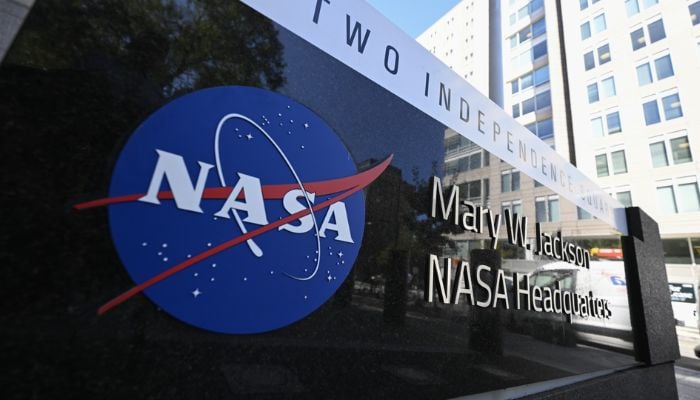
The National Aeronautics and Space Administration (NASA) has received new budgetary instructions from the government, offering an interim reprieve for science missions.
The budgetary guidance will be effective from October 1.
As per the directions of Interim Administrator Sean Duffy, the agency will plan its mission on the basis of the funding levels proposed by the House Appropriations Committee for fiscal year 2026.
With this announcement, the agency got crucial clarity amid a fraught budget process.
Earlier, the White House decided on deep cuts in major NASA operations, seeking to slash the overall budget by $81.81 billion from $24.84 billion.
Its proposal was to cut science programs with the most drastic cuts in the division coming to only $3.9 billion, and to issue closeout plans for around a dozen spacecraft.
The House budget plan, although not as generous as the Senate's, is a more secure alternative.
It keeps NASA at the forefront of funding, with close to 24.84 billion, and spends 6 billion on science.
Even though it continues to make drastic reductions, especially in Earth science, it maintains funding for important missions.
This involves extending the missions of deep spacecrafts, such as the OSIRIS-APEX asteroid mission.
This advice is only a short-term solution to overcome the budget crisis and a possible closure.
It is not a final budget and the direction that Administrator Duffy is taking may take a twist after Congress enacts a full spending bill.
Nonetheless, to scientists and engineers who feared the death of their missions, the House blueprint is giving a life-and-death lifeline and a more promising road ahead compared to the axe that the White House planned to cut.


-
 Diddy moved to low-security prison after reported head injury
 -
 RJ Mitte’s mother shares why she is speaking out now after his death
 -
 Miley Cyrus hits major career milestone
 -
 Katie Zacharia fired as White House Press Secretary
 -
 Kid Rock makes surprising confession about Eminem ahead of his album
 -
 DeSantis pledges to legalize Tesla’s flying Roadster in Florida
 -
 Sean 'Diddy' Combs transfered to smaller prison after injury
 -
 Trump shares key details on full UFO files release in recent interview