Egusi soup in space? Nigerian seeds make history
Nigerian cuisine, egusi soup could one day be consumed on the Moon or on Mars
In a groundbreaking mission, scientists are exploring how foods react to space conditions for future astronauts.
Egusi melon seeds, a key ingredient in the Nigerian staple, could one day be consumed on the Moon or Mars after melon seeds from which the thick, fragrant dish is made orbited the Earth for seven days, and ultimately to be studied by space scientists.
For that purpose, the Nigerian egusi seeds, used to make egusi soup were transported to the International Space Station by a capsule launched from NASA’s Kennedy Space Center in Florida.
While the prime motive of new development is to study how they react to certain conditions in Space.
In this connection, Temidayo Oniosun who particularly selected the seeds for the attainment of this mission said, “The goal is that in the next couple of decades, when people are living on the Moon, on Mars and they’re looking at growing food…foods that are native to Africa would be part of that."
Primarily, the egusi seeds are an excellent source of protein, particularly packed into specialized test tubes on the Crew-11 space capsule launched on August 1, and subsequently some heritage seeds from Costa Rice, Armenia and Guatemala.
According to the Florida scientist, Wagner Vendrame, future scientists would need a better quality of food than the processed dried meals that are space staples.
Oniosun, the Nigerian space scientist behind the egusi seeds journey into orbit, selected the seeds from markets in Oyo state, Nigeria.
He said that the choice was driven by both the seeds' nutritional properties and their cultural and symbolic importance.
The egusi seeds that were in orbit are now being distributed to researchers.
Vendrame was of the view that the seeds will be propagated in the laboratory and studied for further genetic changes caused by their time in orbit.
“By looking at the changes in the planets and the seeds themselves, we can tell-are those plants still the same? Would they still provide the same level of nutrition to astronauts?”


-
 Elon Musk shares story behind his famous 100-hour workweek
 -
 Mitch McConnell’s latest video sparks fresh health concerns
 -
 8 pilots suspended after Independence Day flyover: What went wrong?
 -
 Could SpaceX outvalue all of Earth? Elon Musk thinks so—here’s why
 -
 Trump updates Netanyahu on major US Gulf strategy after renewed Iran strikes
 -
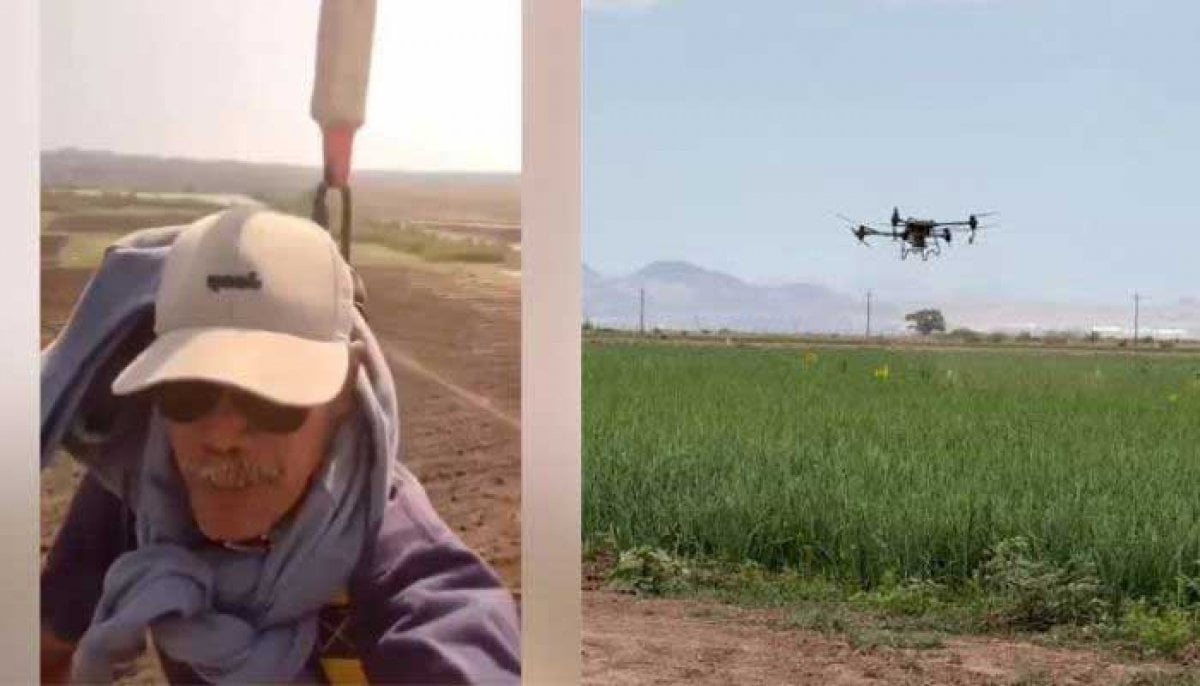 Indonesian farmer goes viral for riding a drone to work
 -
 Call of Duty: Black Ops 1 and 2 hit PS5, prices revealed
 -
 Elon Musk changes tune on Anthropic, calls it ‘leader in AI’