Pakistan's second remote sensing satellite successfully deployed, becomes operational
Satellite will provide capabilities to improve decision-making across multiple sectors
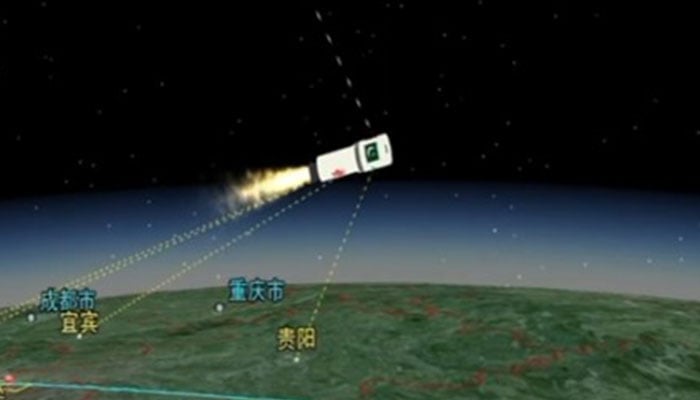
The Space and Upper Atmosphere Research Commission (Suparco) has confirmed that the country's remote sensing satellite, launched last month from the China's Xichang Satellite Launch Centre, has become operational following its successful deployment in the space.
"The satellite has established stable contact with ground stations and begun capturing and transmitting high-resolution imagery, greatly enhancing data availability and reliability for various national sectors," read the statement issued by the Space and Upper Atmosphere Research Commission (Suparco).
The satellite, it added, will deliver high-quality imaging capabilities to support a wide range of applications, revolutionising urban planning, infrastructure development, and regional planning by monitoring urban expansion and growth trends.
Furthermore, it will strengthen disaster management efforts through timely data for early warnings and rapid response to floods, landslides, earthquakes, and other hazards, while also aiding environmental protection by tracking glacier recession, deforestation, and climate change indicators.
The country's second remote sensing satellite after PRSS-1, will enhance agricultural productivity through precision farming, mapping of crop patterns, and improved water resource management, thereby contributing to food security.
In addition, it will play a strategic role in national development projects such as the China–Pakistan Economic Corridor (CPEC) by mapping transportation networks, identifying geohazard risks, and facilitating efficient resource allocation.
"Collectively, these capabilities will not only improve decision-making across multiple sectors but also promote sustainable socio-economic development and strengthen Pakistan’s technological autonomy," remarked Suparco.


-
 Scientists found 'super-puff' planets 1,110 light-years away
 -
 Scientists find ancient microbial life in places it shouldn't exist
 -
 Why Marijuana is suddenly sending thousands of dogs to hospitals in US?
 -
 36 years on, Hubble shows how stars actually change over time
 -
 Hidden magma beneath Mars? Scientists' 'unexpected' discovery raises new questions about alien life
 -
 Rare 3,200-year-old coral blue hole discovered in South China Sea
 -
 What happens at black hole’s event horizon? Scientists find the first-ever clue
 -
 Scientists discover evidence of fires used by humans 1.8 million years ago
-
 Did NASA just uncover evidence of ancient life on Mars? Key discoveries explained
 -
Four powerful earthquakes strike three continents within hours: Scientific link or coincidence?
-
Mysterious interstellar comet passing our solar system may be 12 billion years old, scientists say
-
When do we really become adults? Science has an answer