Why does Mars show shades of yellow, orange in ESA’s dramatic new satellite image?
Layered patterns surrounding planet's crater suggest that ground contained significant water ice
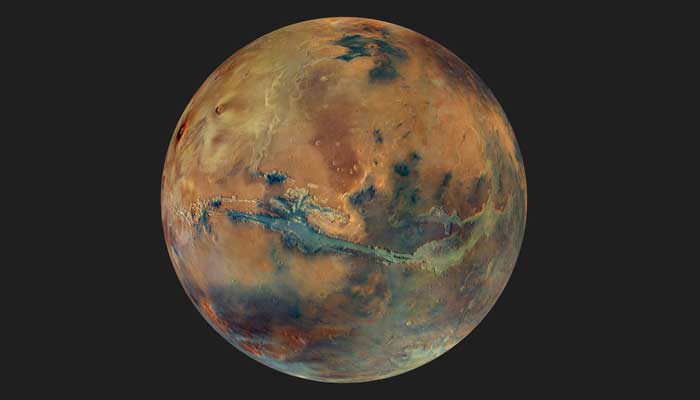
Mars is commonly known as the Red Planet, but a recent satellite image from the European Space Agency (ESA) displays a vibrant blend of yellows, oranges, and browns. The striking view also highlights an impact crater and four dust devils moving across the terrain.
Taken by the high-resolution camera on ESA’s Mars Express orbiter, the image features Arcadia Planitia — a key region for understanding Mars’ geological past and assessing its potential for future human habitation, reported Space.com.
Located northwest of the solar system’s tallest volcanoes, Arcadia Planitia is notable for its ancient solidified lava flows, estimated to be up to 3 billion years old. Scientists also believe the area contains water ice just beneath the surface, making it a key target for upcoming Mars missions, according to ESA.
The region frequently hosts “dust devils,” which are short-lived, whirlwind-like phenomena formed when warm surface air rises and lifts dust. In the image, four dust devils appear as faint white streaks, crossing from the darker to lighter regions of the plain.
In the lower right corner of the photo, a large impact crater measuring about 9 miles (15 kilometres) wide is visible. The layered patterns surrounding the crater suggest that the ground contained significant water ice at the time of impact. The crater’s relatively intact appearance also indicates it formed recently in geological terms.


-
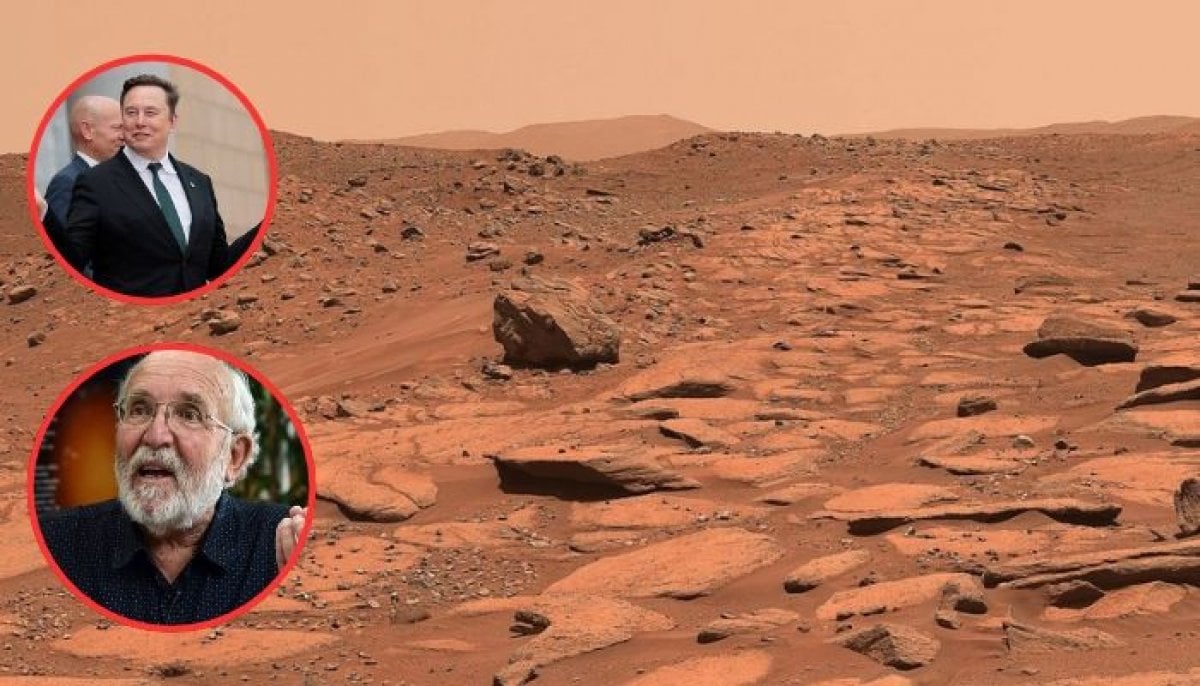 Elon Musk’s Mars colonization dream faces reality check from Nobel laureate
 -
 NASA competition model 2.0 cuts mission selection by 45%
 -
 A ‘neglected’ neutrino may hold the key to why the Universe exists
 -
 Can cancer drugs be made in space? Here’s what the new mission aims to find out
 -
 SpaceX Falcon 9 successfully launches Bandwagon-5 mission with 32 payloads
 -
 Europe launched 8 orbital rockets last year, can it rival Starlink?
 -
 Japan launches world’s first mission to bring sample back from phobos
 -
 Orionid meteor shower 2026: Peak date, viewing tips and what to expect