UN chief warna social media rollbacks fueling hate speech
UN Secretary-General Antonio Guterres says people would become increasingly fearful to engage on social media
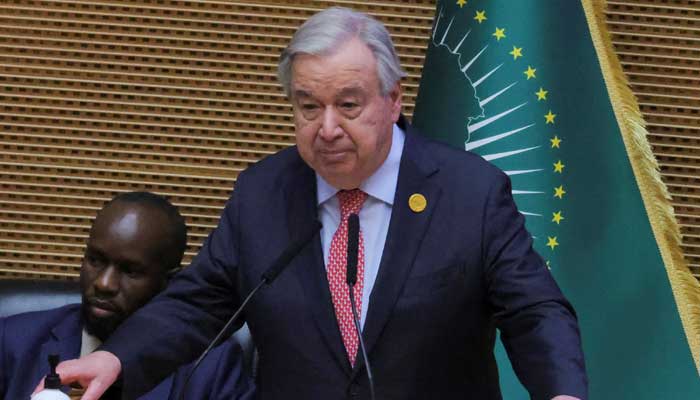
The United Nations Secretary-General Antonio Guterres on Monday cautioned that recent rollbacks in social media fact-checking and moderation could exacerbate hare speech online.
He warned that this toxic environment might deter individuals from engaging freely in on social media platforms
"As fast-moving technologies expand into every aspect of our lives, I am deeply concerned about human rights being undermined," he told the UN Human Rights Council in Geneva.
he UN chief emphasised that while social media can foster respectful debates, it also risks devolving into arenas of conflict and "blatant ignorance". He further highlighted the dangers for verbal assaults to escalate into physical violence.
"A place where the poisons of misinformation, disinformation, racism, misogyny and hate speech are not only tolerated — but often encouraged," he said.
"Recent rollbacks on social media fact-checking and content moderation are re-opening the floodgates to more hate, more threats, and more violence," he added
"Make no mistake. These rollbacks will lead to less free speech, not more, as people become increasingly fearful to engage on these platforms."
Last month, Meta chief executive Mark Zuckerberg ended the company´s US fact-checking programme that aimed to combat misinformation on its platforms. The programme had faced criticism from conservatives who viewed it as censorship.
Under the new system, users will be able to add context to posts, similar to features on X, formerly Twitter, and championed by Elon Musk, the platform´s owner.
Meta has also scaled back its diversity initiatives and relaxed content moderation rules on Facebook and Instagram, particularly regarding certain forms of hostile speech.
UN rights chief Volker Turk said human rights were being "shunned, vilified and distorted" in some social media quarters.
"Digital technologies are widely misused to suppress, limit and violate our rights through surveillance, online hatred, harmful disinformation, harassment and built-in discrimination," he said.
Artificial Intelligence was expanding the threats, he added.
"The splintering of social media platforms into self-selecting channels that cater to their audience contributes to the isolation of individuals, the atomisation of societies, and the loss of a shared public space," Turk warned.
Guterres said the great promise of AI was matched by "limitless peril" to undermine human autonomy, identity and control. He called for human rights to be placed at the centre of AI-driven systems.


-
 Barack Obama joins Sherrod Brown and Abdul El-Sayed in crucial Senate election battles
 -
 Trump demands Rep. Ilhan Omar resign after DOJ court filing references over 'fake' name
 -
 Carney rejects Trump administration’s accusation of Canada interfering in US midterm elections
 -
 Ukraine, Russia and US set to hold key talks in Abu Dhabi in early November
 -
 Australia lawmaker Hannah Beazley’s staff threatened days after Helen Haines attack
 -
 New York AG Letitia James challenges attempt to disqualify her from Cornell investigation
 -
 Trump administration targets Alaska Senate race over fears of ballot confusion
 -
 Gunman near Paris kills one, injures several as mayor suspects ‘racist, Islamophobic’ intent