
Earth's newly-discovered minimoons hold mystery of ancient solar system
Earth's minimoons are easier to reach compared to asteroid Bennu
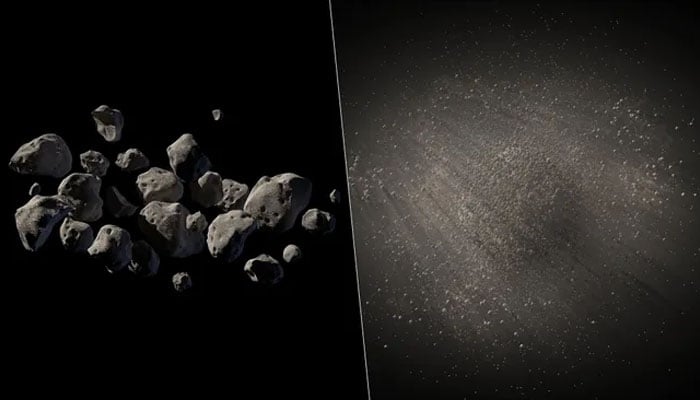
Earth has the existence of extra moons in its orbit in addition to the Moon we know, as per a discovery by scientists.
There are still a lot of mysteries about the solar system that scientists are working to solve. Researchers are looking to space rocks of all kinds, which might contain hints to the forgotten history of our solar system's past, to assist solve these questions.
This strategy is already showing results: Water and carbon, two of the building blocks of life on Earth, were found in October 2023 on the 4.5 billion-year-old asteroid Bennu by Nasa's OSIRIS REx mission.
According to Richard Binzel, a planetary sciences professor at the Massachusetts Institute of Technology, minimoons—tiny cosmic bodies whose orbits are partially governed by Earth and other solar system bodies—among the thousands of asteroids swarming near Earth's orbit could be excellent candidates for learning about the solar system's origins.
"[Minimoons] probably have had a bit of a pinball experience in the inner solar system, being ricocheted around and tugged on by the different planets," Binzel told Live Science. "They finally found themselves in a way that they got tugged into a somewhat circular orbit near the Earth."
Due to their relative proximity to Earth, minimoons are far easier to reach than asteroids like Bennu, requiring a lot less time and fuel to reach. While the exact origin of minimoons is still unknown, a prominent explanation points to the main asteroid belt, which lies between Mars and Jupiter.
These near-Earth asteroids, like Bennu or a minimoon, are "like time capsules," according to Paul Abell, Nasa's lead scientist for small-body exploration, who spoke with Live Science about them. "They give us indications of what the early solar system was like [and] what the conditions were."




-
 Climate change vs Nature: Is world near a potential ecological tipping point?
 -
 125-million-year-old dinosaur with never-before-seen spikes stuns scientists in China
 -
 Scientists stunned as shark appears for first time in Antarctic Southern Ocean waters
 -
 New study suggests universe can end in ‘Big Crunch’ in 20bn years
 -
 Hidden Venus: New data discovers massive underground Lava Tube
 -
 ‘Earth is defenseless against city-killer asteroids’: NASA issues stark warning
 -
 Annular solar eclipse 2026: Where and when to see the ‘Ring of fire’
 -
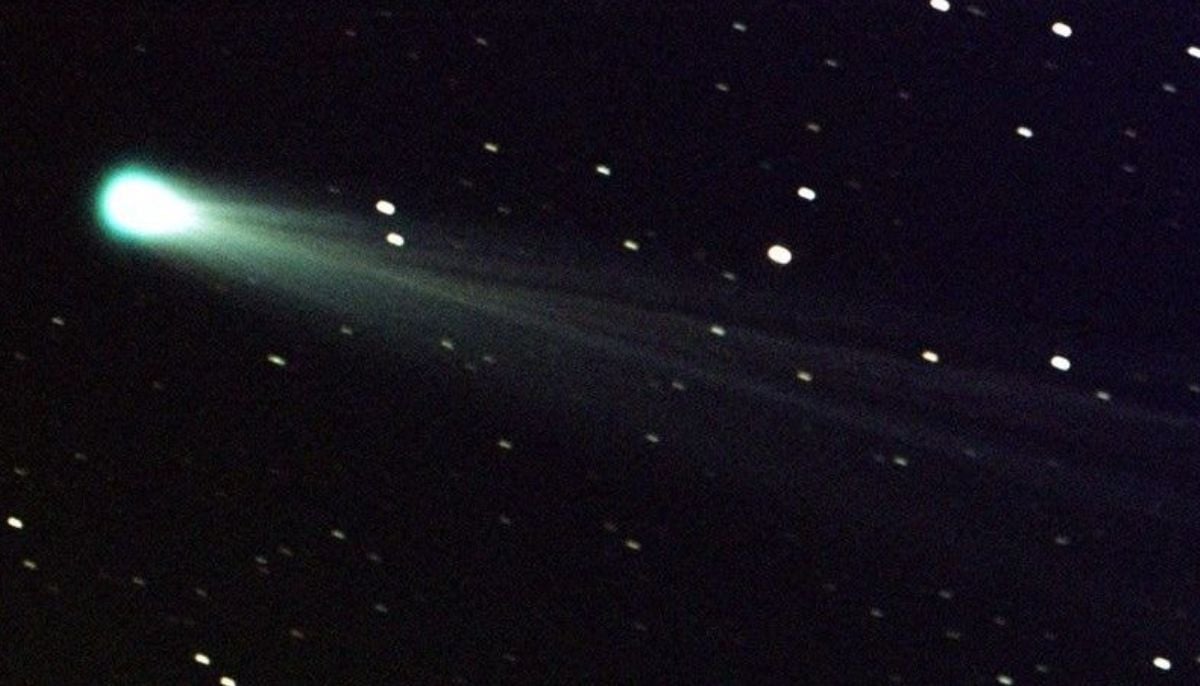 Bright green comet C/2024 E1 nears closest approach before leaving solar system