Can rice water really improve your hair growth?
Rice water is being regarded as beneficial for hair health by TikTokers but experts say otherwise
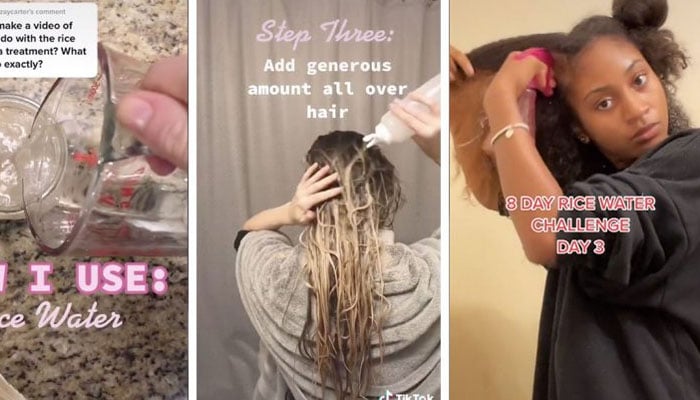
Although rice water has gained popularity as a hair health booster, experts warn that this easy hair growth trick might not be as effective as it seems, despite its strong online following.
TikTokers say that after soaking or cleaning rice, they should rinse their hair in the starchy, murky water to help with hair development and restore any damage.
Even though rice water has garnered a lot of attention for hair health, individual uses and approaches tend to differ. On occasion, people leave the water to ferment, frequently adding citrus peels to cover up the smell. Some use the mixture daily, while others only use it once a month.
Promoters of the hair care technique typically assert that their hair can become silky with healthy locks but dermatologists are unsure.
According to board-certified dermatologist Deirdre Hooper, MD, of Audubon Dermatology, rice is a great source of nutrients. That does not imply, however, that it will always make people's hair seem better.
“The problem is that we’re making this leap that something that is meant to be consumed can be applied to your hair—which is dead cells—and that it can make all these changes,” she told Health.
Nutrients including magnesium, iron, folic acid, thiamin, and niacin are found in rice itself. Additionally, phenols found in rice water may aid in the treatment of alopecia areata.
Experts assert that there isn't enough data to support the claim that rice water enhances hair health just yet. In fact, it might potentially make things worse for some people.
An associate professor of dermatology at the University of Minnesota Medical School named Rhonda Farah, MD, warned against rinsing hair with rice water because it may break more easily in those with coiled hair.
Rice water contains a lot of starch, which can pull moisture from the hair, causing it to become brittle, Farah told Health.
“[Rice water] can actually be harmful because it isn’t actually formulated for your scalp. You don’t get the same delivery to the hair follicle or the hair shaft,” Farah explained.


-
 Health Canada reviewing new mRNA flu vaccine that could prevent more hospitalisations
 -
 Scientists discover hidden drainage route at the back of the eye
 -
 WHO confirms death at Russian research lab, says no plague case registered
 -
 Getting a $90 check from Social Security? Here’s why
 -
 Measles cases in US top 4,000 nationwide, CDC reports
 -
 Sexually transmitted diarrhea spread in US, UK: Why antibiotics are failing against Shigella
 -
 Who is Song Li? China puts her forward for WHO leadership role
 -
 CDC monitors travelers from Siberia after plague worker’s death, director says