
Chinese rover fetches details of hidden structure of moon's surface
The Chinese lunar robot was the first-ever in 2019 to land far on the moon which does not face the Earth
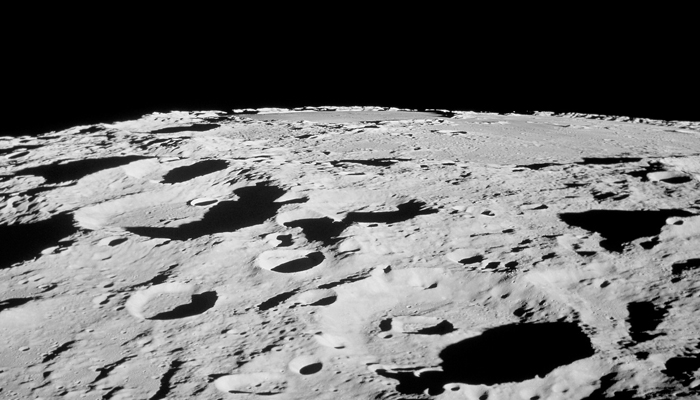
Chinese scientists were able to look more deeply into the moon's far side "hidden structures" below the surface with the help of the Chang’e-4 rover, allowing them to acquire a further understanding of lunar evolution.
The Chinese probe Yutu-2 discovered the structures using Lunar Penetrating Radar (LPR) which allowed the rover to image deep into the moon’s surface by listening to hidden echoes of sound that bounced back off structures deep inside regolith.
The Chinese lunar robot was the first in 2019 to land far on the moon which does not face the Earth.
Earlier, experts launched efforts using the probe’s ground penetrating radar (GPR), however, it only mapped the top 40m, or about 130ft, of the surface. The current discovery is at depths of about 300m (984ft).
According to a new study published in the Journal of Geophysical Research: Planets, scientists found that the first 130ft is made up of layers of dust, soil, and rocks.
The presence of a buried crater was also found that was formed when a large object hit the moon.
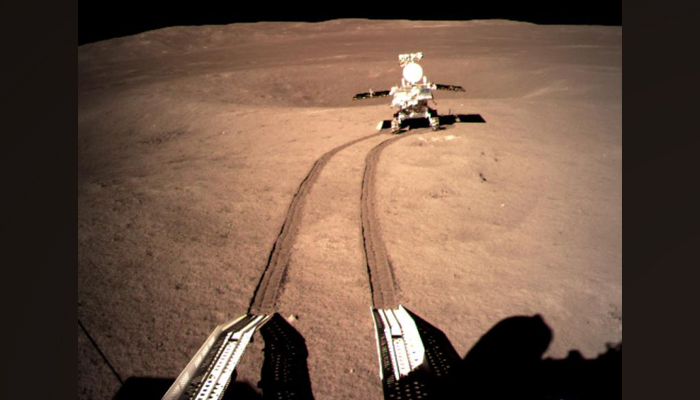
"The GPR sends electromagnetic pulses into the lunar interior and receives echoes from subsurface layers. We use the high-frequency channel data to detect the structure of the upper 40 m along the rover’s path, primarily consisting of rock debris and soil," researchers explained in the study.
Researchers believe that the broken rocks surrounding this formation were likely debris produced by the impact.
They wrote: "Through this investigation, we have discovered multiple layers in the upper 300 m, which likely indicate a series of basalt eruptions that occurred billions of years ago."
The volcanic rock layers were found to be thinner near the lunar surface.
"The thickness variation of these lava flows suggests a decrease in eruption scale over time," they noted.
According to the evidence, they maintained that the lunar volcanic activity cooled gradually since the moon’s formation over 4.5 billion years ago when a Mars-sized object hit Earth and broke off a chunk that eventually became the moon.
Researchers concluded: “The thickness of the strata decreases with the decreasing depth, suggesting a progressively smaller lava effusion rate over time.”


-
 Annular solar eclipse 2026: Where and how to watch ‘ring of fire’
 -
 Scientists discover rare form of 'magnets' that might surprise you
 -
 Humans may have 33 senses, not 5: New study challenges long-held science
 -
 Northern Lights: Calm conditions persist amid low space weather activity
 -
 SpaceX pivots from Mars plans to prioritize 2027 Moon landing
 -
 Dutch seismologist hints at 'surprise’ quake in coming days
 -
 SpaceX cleared for NASA Crew-12 launch after Falcon 9 review
 -
 Is dark matter real? New theory proposes it could be gravity behaving strangely