
Anti-Semitism: Why is a 'lost tribe' of Israel under attack in India?
The Bnei Menashe community claims a lineage tracing back to the biblical "lost tribe" of Israel, specifically the tribe of Manasseh
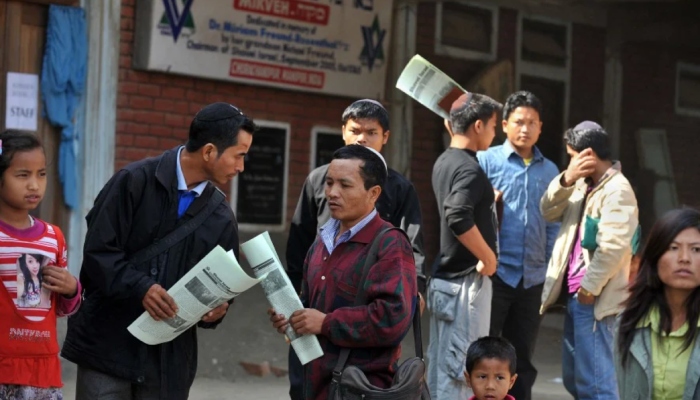
A group known as a "lost tribe" of Israel residing in northeast India has been caught up in a disturbing wave of ethnic violence lasting several months. This violence has led to tragic consequences, including loss of life, the destruction of synagogues, and the displacement of hundreds from the community.
Lalam Hangshing, President of the Bnei Menashe Council, revealed, "Villages have been 'razed to the ground', with two synagogues destroyed and one death confirmed among the 5,000-strong community in India since fighting in Manipur state erupted in May."
The Bnei Menashe community claims a lineage tracing back to the biblical "lost tribe" of Israel, specifically the tribe of Manasseh, which historical accounts indicate was exiled in 720 BC by Assyrian conquerors. However, this community is also part of a larger ethnic group that includes the Kuki minority. Unfortunately, they have been ensnared in ongoing armed conflicts between the Kuki minority and the Meitei majority in Manipur. This conflict has resulted in a substantial loss of life, with at least 120 casualties.
The reasons behind this conflict are multifaceted, encompassing disputes over land and competition for public employment. The inability of both state and national authorities to quell the violence has further exacerbated tensions.
Lalam Hangshing, who also holds the position of general secretary for the Kuki People's Alliance, clarified that this violence stems from ethnic tensions rather than anti-Semitic sentiments. He remarked, "Most people don't even know we exist -- we are seen as part of the Kuki community. You can call it collateral damage."
In the midst of these challenges, efforts are being made to provide assistance to those displaced by the violence. Isaac Thangjom, project director of the Israel-based Degel Menashe community support organization, emphasized their commitment to aiding between 650 and 700 individuals who have lost their homes and belongings. He stated, "Those are people who have been totally displaced, with nowhere to go to -- that is, with their property gone, jobs lost and houses destroyed."
Despite the grim circumstances, there is a prevailing inclination among many affected individuals to seek refuge in Israel, where a portion of the community had resettled during the late 1990s. Hangshing disclosed that numerous individuals are contemplating the move to Israel, although many have lost crucial identification documents due to the destruction caused by the violence. He explained, "They're hoping that they can go get to Israel, where maybe they can rebuild their lives."
While the situation is dire, efforts to extend aid and explore avenues for safety and recovery continue amid the challenges posed by the deep-seated animosity that has taken root in their current location.




-
 Poll reveals majority of Americans' views on Bad Bunny
 -
 Man convicted after DNA links him to 20-year-old rape case
 -
 California cop accused of using bogus 911 calls to reach ex-partner
 -
 'Elderly' nanny arrested by ICE outside employer's home, freed after judge's order
 -
 key details from Germany's multimillion-euro heist revealed
 -
 Search for Savannah Guthrie’s abducted mom enters unthinkable phase
 -
 Barack Obama addresses UFO mystery: Aliens are ‘real’ but debunks Area 51 conspiracy theories
 -
 Rosie O’Donnell secretly returned to US to test safety