Alarm raised over global disaster as North Atlantic currents set to collapse by mid-century
If North Atlantic currents further weakens or stops, it could result in severe weather in Northern Hemisphere, rising sea levels on East Coast of United States
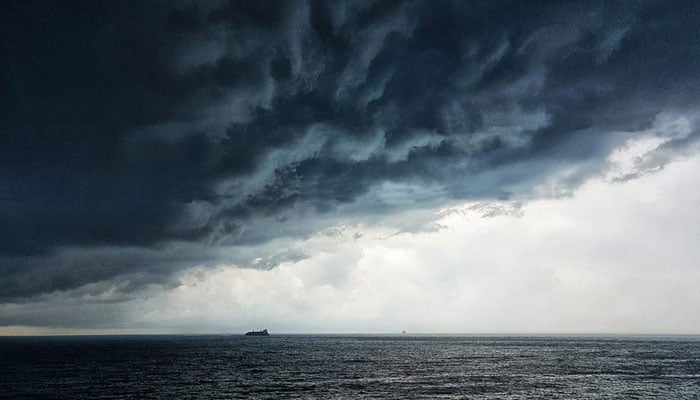
Scientists have warned of an imminent collapse of a vital system of ocean currents due to global warming. The system, known as the Atlantic Meridional Overturning Circulation (AMOC), plays a crucial role in distributing heat around the world, impacting weather and climate conditions on a global scale, according to a groundbreaking new study published in the journal Nature.
The alarming research indicates that the collapse of the AMOC could occur as early as 2025, leading to far-reaching consequences. European countries, including Scandinavia, could experience a drastic drop in temperatures, while the East Coast of the United States might face rising sea levels. Moreover, regions like India, South America, and West Africa, which rely on rainfall for food production, could suffer from disrupted precipitation patterns.
"This would be a very, very large change. The AMOC has not been shut off for 12,000 years," warns Peter Ditlevsen, the lead author of the study from the University of Copenhagen.
The findings challenge previous estimates by the United Nations Intergovernmental Panel on Climate Change, which had suggested that the collapse of the AMOC was unlikely to happen this century. The new research indicates that the timing of the potential collapse could be much closer than previously thought.
While some experts acknowledge uncertainties in the study, they stress the urgency of further research and immediate action to address climate change. Stefan Rahmstorf from the University of Potsdam, Germany, highlights that multiple studies arriving at similar conclusions must be taken seriously, especially when dealing with such high-risk scenarios.
The scientists used advanced statistical tools and historical ocean temperature data from the past 150 years to predict the AMOC's fate. They identified "early warning signals" that the ocean currents exhibit as they become unstable, which paved the way for more accurate predictions.
The thermohaline circulation, part of the AMOC, has been operating in its present mode since the last Ice Age. However, evidence from the study shows that abrupt climate changes have occurred 25 times in the past, leading to extreme temperature fluctuations. Today's climate change, comparatively modest in its rate, is still a cause for concern as it poses serious challenges to vulnerable regions around the world.
As global greenhouse gas emissions continue to rise, the researchers emphasise the urgent need for reducing emissions to mitigate the risks associated with the potential collapse of the AMOC. The study's authors stress that early action is crucial in safeguarding the planet from catastrophic weather changes and their severe consequences.
With the new scientific evidence in hand, the world faces a pivotal moment to address climate change and avert a future of uncertain and volatile weather patterns.


-
 Beluga whale Cyprus dies in California months after leaving Ontario's Marineland
 -
 Australian employers using AI to track workers without their knowledge, report warns
 -
 UK hits back at Hegseth after he questions NATO allies' sacrifices in Afghanistan
 -
 US Supreme Court refuses to restore plea deals for three alleged 9/11 conspirators
 -
 ICE agents accused of using force against US citizen in Long Beach
 -
 Trump is using presidency to make himself richer, say majority Americans in new poll
 -
 Helen Haines, former nurse turned Australian MP critically injured in suspected attack
 -
 Meta admits mistaken suspension of 'No Kings' Instagram account, cites Claude AI glitch
-
 Playing loud music in public transport in UK can lead to £100 fines under new crackdown
 -
French PM calls for partial curfews as nationwide riots and protests escalate
-
Could Putin, Trump and Xi meet to discuss Ukraine? Kremlin responds
-
Putin approves major Russian government reshuffle following parliamentary elections