'Robots will do most of the chores by 2033'
Almost 39% of the time that individuals spend performing any domestic chore will be taken over by robots in next 10 years
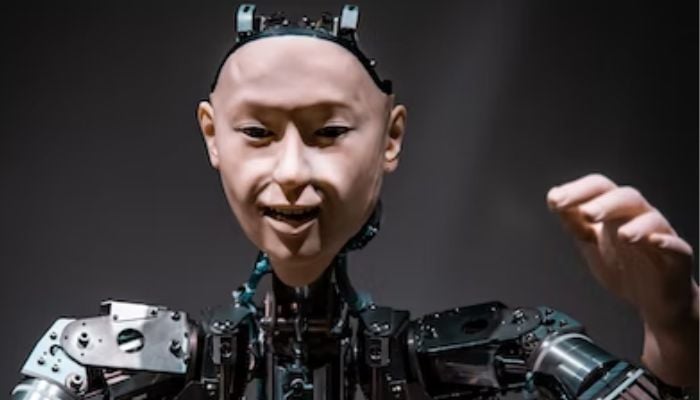
A group of artificial intelligence specialists from the United Kingdom and Japan believe that in the future, a robot will likely spend about 39% of the time you currently spend on household duties. So, prepare yourself for more leisure time!
According to the research team who published their findings in PLoS ONE, within the next ten years, AI may assist in handling many of the unpaid domestic activities that currently consume many hours of our days.
An earlier survey found that individuals in the United Kingdom between the ages of 15 and 64 typically devote roughly 43% of their job and study time to household activities that are not paid. These can include household chores like cooking and cleaning, caring for children or the elderly, and anything else that someone could hypothetically replace with commodities available on the market.
Working-age men take around half as long as working-age women to complete these chores in the UK alone. Compared to Japanese women, Japanese males spend just 18% more time on household chores.
A negligible amount of research, however, has examined how forecasts about automation vary across different AI specialists or how automation compares to unpaid domestic labour. Hence, 29 AI specialists from the United Kingdom and 36 experts from Japan were consulted by the study's authors. The team had to forecast how "automatable" 17 different home and care jobs would become over the following ten years.
Almost 39% of the time that individuals currently spend performing any given domestic chore will be taken over by robots within the next 10 years, according to the experts' pooled predictions.
Of course, estimates differed greatly between assignments. The activity that was most likely to be automated was grocery shopping (59%). Physical childcare was the task that was least automatable (21%). It is interesting to note that more British specialists (42%) than Japanese experts (36%), expected automation will replace domestic work. The authors of the study hypothesise that this may be because technology is more directly linked to labour replacement in the UK than in Japan.
Compared to their female counterparts, British men tend to be more positive about the automation of housework. This is consistent with past research that showed men are generally more optimistic about technology than women.
Nevertheless, among Japanese tech specialists, the pattern was actually flipped, with women being slightly more upbeat. The gender gap in domestic chores in Japan, according to researchers, may have contributed to those findings.
To be clear, the study's authors emphasise that the sample size is too small to apply the project's findings to all AI professionals because it is not statistically representative of the field.
The team also says that these forecasts actively shape the future of employment. They come to the conclusion that it is crucial to increase the gender and cultural diversity of future research.


-
 Europe launched 8 orbital rockets last year, can it rival Starlink?
 -
 Japan launches world’s first mission to bring sample back from phobos
 -
 Orionid meteor shower 2026: Peak date, viewing tips and what to expect
 -
 Why Mars looks blue in NASA’s unedited curiosity panorama?
 -
 Blue Origin upgrades new Glenn rocket launch infrastructure to take on SpaceX
 -
 NASA’s next Mars mission targets Phobos and Deimos, not Red Planet
 -
 Is AI ready to rewrite our understanding of physics?
 -
 Astronomers identify possible first green star in 27 years of research