EU agrees to new sanctions over Russia's war in Ukraine
EU agrees to new round of sanctions over Russia's war in Ukraine on one-year anniversary of Moscow's invasion
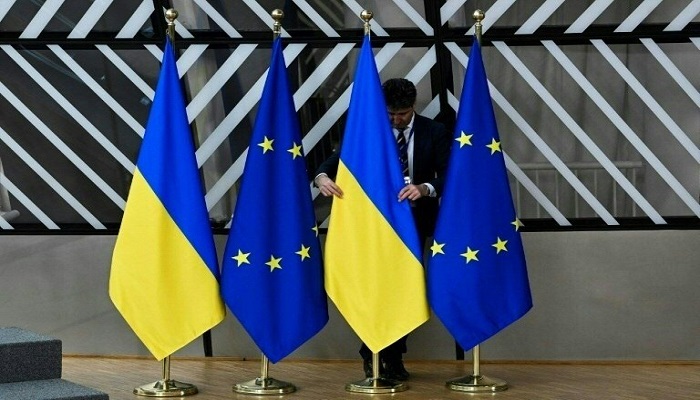
The EU agreed to a new round of sanctions over Russia's war in Ukraine on the one-year anniversary of Moscow's invasion, the bloc's Swedish presidency announced.
The package -- the 10th the EU has imposed since Russia's February 24, 2022 invasion -- contains, it said, "targeted restricted measures against individuals and entities supporting the war, spreading propaganda or delivering drones used by Russia in the war".
Final approval of the sanctions was expected early Saturday if no EU country raises a last-ditch objection.
The details on the listed individuals and entities will then be published in the European Union's official gazette.
One EU diplomat told AFP that 120 individuals and entities, and three more Russian banks, were listed.
The EU's measures echoed sanctions announced earlier Friday by the United States and by Britain, and came in the wake of a G7 statement that warned of penalties for any country abetting Russia in its war.
Another EU diplomat said the agreement on sanctions held "no compromise" to a proposal put forward to member states by the European Commission.
That proposed package promised to cut off industrial goods worth 11 billion euros ($12 billion) to Russia and target drone producers in Iran whose unmanned aircraft containing warheads Moscow has been using to attack Ukrainian targets.
Commission chief Ursula von der Leyen had said the goods put under sanctions for Russia would include electronics and machine parts that can be used in Russian drones, missiles, helicopters and other weapons systems.
She had said that seven Iranian entities providing dual-use products to Russia were also included in the commission sanctions proposal.
The EU has already imposed nine waves of unprecedented sanctions on Moscow, hitting key Russian exports like oil in a bid to cut Russian President Vladimir Putin's war chest.
Several EU diplomats had told AFP that complaints from Poland had slowed down agreement on the latest sanctions because Warsaw had viewed them as insufficient.
Polish Prime Minister Mateusz Morawiecki said Friday, as he visited Kyiv before the EU sanctions agreement was announced, that the proposals from Brussels were "too soft, too weak".


-
 Global food inflation set to accelerate into 2027 as supply shocks mount
 -
 Putin proposes Trump-Xi summit on Ukraine deal, Rubio shares US stance
 -
 France: Macron rejects interior minister Nunez resignation after nationwide riots
 -
 Trump explains why he put Russia sanctions on hold
 -
 Trump says Zelensky 'doesn't want to end this war' after Ukraine attacks Russia
 -
 US indicts California woman accused of spying on Taiwan president's son for China
 -
 Chris Nanos mocked for Halloween video as Nancy Guthrie remains missing
 -
 Driver released after deadly Wichita soccer crash leaves two dead and 10 injured
-
 Andy Burnham targets 'headphone dodgers' with new £100 bus fines
 -
Amazon deforestation drops to lowest level since 1988 as Brazil election looms
-
Alberta separation unlikely as new poll reveals strong support for staying in Canada
-
Obama says Ilhan Omar deportation threat could set dangerous precedent for Americans