Rupee remains stable as IMF talks progress
Greenback loses Rs2.40, trades at Rs265.49 in interbank market
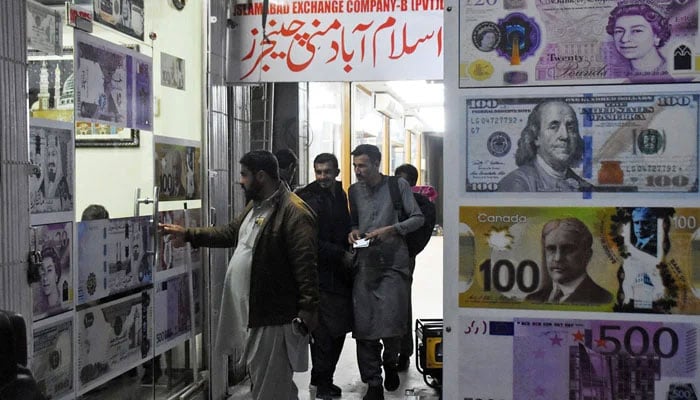
KARACHI: The Pakistani rupee on Thursday remained stable against the dollar as the market is looking for direction amid the government's ongoing tough parleys with the International Monetary Fund (IMF).
US dollar closed at Rs268.83 in the interbank after the local currency lost Rs0.94, according to data from the State Bank of Pakistan (SBP).
The local currency has gained Rs4.15 in the last two days after plunging to an all-time low of Rs269.63 at the start of the week.
Since a cap on the currency was lifted on January 25, the rupee had been falling to shift to a market-driven exchange rate, and closed at an all-time low of 269.63 on Monday.
Capital market expert Saad Ali told The News that the rupee is registering gains due to two reasons: the market's optimism surrounding the continuation of talks between the IMF and the government, and the steps the government is taking and because an element of speculation is receding from the market.
The local currency lost Rs37, or 13.81%, overall since January 25 compared to last Wednesday’s close of Rs230.89 to a dollar, according to the State Bank of Pakistan (SBP) data.
Following the massive plunge the rupee became the region’s worst-performing currency so far this year, slumping 16%.
The crisis-hit country is dealing with a serious balance of payments crisis and has just about three weeks’ worth of import coverage in foreign exchange reserves. Pakistan is scrambling to secure foreign financing to avoid default.
As of January 20, the foreign exchange reserves of the central bank stood at $3.7 billion.
It should be noted that after the government's move to remove the self-imposed cap, the exporters have drawn more loans even though export activity was low. This suggests that exporters borrowed in the local currency (at high rates) but did not bring in their export proceeds.
Analysts estimate this figure to be around $2.5 billion. Now having a windfall they may not wait for the rupee to depreciate further in a race to pay back their high-interest money and to quickly procure raw materials before the prices jump up, according to Tresmark.


-
 OPEC+ agrees to keep November oil targets steady amid market uncertainty
 -
 Meta’s AI data centers: What to know about its major tax strategy
 -
 Tesla’s Cybercab faces a tough test after rocky Austin debut: Here's why
 -
 Trump pushes South Korea on Alaska LNG deal: Why Seoul is hesitant
 -
 AI boom could trigger severe market shocks, Bank of England warns
 -
 US inflation rises less than expected: What to know
 -
 OpenAI’s revenue run rate nears $70 billion: What to know
 -
 Canada’s economy records zero growth in July as key sectors decline
-
 UK diesel price hits all-time high amid Middle East supply crunch, RAC warns
 -
Meta’s Muse AI agent gets new tools for small businesses: What to know
-
China weighs allowing ByteDance, Alibaba to purchase new Nvidia RTX Pro 5500 chips
-
Why Bill Gates is calling for stronger AI rules amid growing safety concerns