 Today is April Fool’s Day, and we are sure most of you will have a great time hoaxing friends and relatives. Although the day, also called All Fools’ Day, has been celebrated for several centuries by different cultures, its exact origins remain a mystery. There are many theories but the most plausible one, according to some historians, dates back to 1582, when France switched from the Julian calendar to the Gregorian calendar in 1563. People who were slow to get the news or failed to recognize that the start of the new year had moved to January 1 and continued to celebrate it during the last week of March through April 1 became the butt of jokes and hoaxes. These included having paper fish placed on their backs and being referred to as “poisson d’avril” (April fish), said to symbolize a young, easily caught fish and a gullible person.
People like to play pranks on their friends and relatives on this day, but that is not where the buck stops. Some corporations also have made it their tradition to hoax people by playing mind blowing pranks on their clients.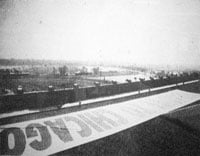
Us takes a look at some hoaxes perpetrated on the gullible public by individuals and corporations...
April 1, 1698: As reported in Dawks’s News-Letter, “several persons were sent to the Tower Ditch to see the Lions washed.” This is the earliest known record of an April Fool’s Day prank. The joke was that there were no lions being washed in the Ditch (i.e. moat) of the Tower of London. It was a fool’s errand. For well over a century after this, the prank of sending unsuspecting victims to see the “washing of the lions” at the Tower of London remained a favorite April Fool’s Day joke. In the mid-nineteenth century, pranksters even printed up official-looking tickets that they distributed around London on April first, promising admittance to the (non-existent) annual lion-washing ceremony.
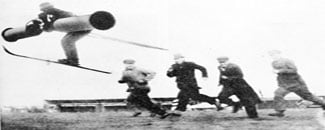
 April 1, 1934: Many American newspapers (including The New York Times) printed a photograph of a man flying through the air by means of a device powered only by the breath from his lungs. Accompanying articles excitedly described this miraculous new invention. The man, identified as German pilot Erich Kocher, blew into a box on his chest. This activated rotors that created a powerful suction effect, lifting him aloft. Skis on his feet served as landing gear, and a tail fin allowed him to steer. What the American papers didn’t realize was that the “lung-power motor” was a joke. The photo had first appeared in the April Fool’s Day edition of the Berliner Illustrirte Zeitung. It made its way to America thanks to Hearst’s International News Photo agency which not only fell for the hoax but also distributed it to all its U.S. subscribers. In the original article, the pilot’s name was spelled “Erich Koycher,” which was a pun on the German word “keuchen,” meaning to puff or wheeze.
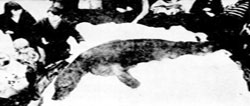
April 1, 1972: Newspapers around the world reported the sensational news that the dead body of the Loch Ness Monster had been found. A team of zoologists from Yorkshire’s Flamingo Park Zoo had come across it while working at the Loch. The researchers tried to take the Nessie corpse back to Yorkshire, but Scottish police promptly stopped them, citing an old law that made it illegal to remove “unidentified creatures” from Loch Ness. However, subsequent examination of the creature determined that it wasn’t actually Nessie. Instead, it was a large bull elephant seal from the South Atlantic. But how had it gotten to Loch Ness? This was revealed the next day when the Flamingo Park’s education officer, John Shields, confessed responsibility. The seal had died the week before at Dudley Zoo. He had shaved off its whiskers, padded its cheeks with stones, and kept it frozen for a week, before surreptitiously dumping it in the Loch, intending to play an April Fool’s prank on his colleagues. He admitted the joke got somewhat out of hand when the police became involved.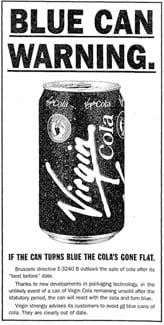
 April 1, 1980: The BBC’s overseas news service reported that Big Ben, in order to keep up with the times, was going to be given a digital readout. The segment included people’s nostalgic reminiscences about the world’s most famous clock, such as anecdotes about the day it stopped and when it chimed 13 instead of 12. Finally, the service announced that the clock hands, being no longer needed, would be given away to the first four listeners to contact them. One Japanese seaman in the mid-Atlantic immediately radioed in, hoping to be among the lucky callers. However, the BBC was shocked when it then began receiving a massive volume of calls from listeners who were furious that Big Ben was going to be meddled with. “Surprisingly, few people thought it was funny,” admitted Tony Lightley of the service. The BBC had to spend several days apologizing to listeners for upsetting them.
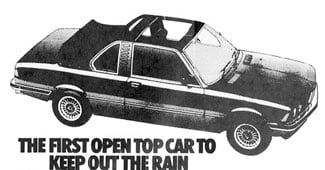
April 1, 1983: BMW’s UK division ran an ad in British papers revealing that one of its engineers, Herr Blöhn, had designed a sunroof that could be kept open even in the rain, thanks to jets of air that blasted the water away from the top of the car. The system worked completely automatically, even in a car wash. Those seeking more information were directed to query “Miss April Wurst” in the BMW marketing department. The ad was the start of a long tradition of the company creating spoof ads every April 1st. In fact, BMW has probably been creating April Fool ads longer and more consistently than any other company, and the success of their ads played a large role in convincing other companies to run spoof ads on the first of April. This practice has now become so widespread that many companies say they feel compelled to create spoof ads for April 1, lest their customers think they lack a sense of humour.
 April 1, 1988: The Soviet newspaper Izvestia reported that the world-renowned Argentine soccer star Diego Maradona was in negotiations to join Spartak Moscow, who were to pay him $6 million to play on their struggling team. The Associated Pressquickly picked up this surprising story and distributed it to their subscribers, but had to publish a retraction after querying Izvestiafor more details and receiving the response that they should be mindful of the date (April 1st). The AP had believed the story because Soviet papers had never before published an April Fool’s Day hoax. It was simply unheard of for the dour, state-run publications to crack a joke. The sudden display of humor was credited to Mikhail Gorbachev’s policy of glasnost, or openness, instituted the previous year.
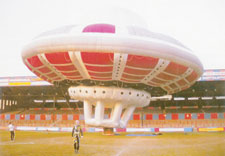
March 31, 1989: Thousands of motorists driving on the highway outside London looked up in the air to see a glowing flying saucer descending on their city. Many of them pulled to the side of the road to watch the bizarre craft float through the air. The saucer finally landed in a field on the outskirts of London where local residents immediately called the police to warn them of an alien invasion. Soon the police arrived on the scene, and one brave officer approached the craft with his truncheon extended before him. When a door in the craft popped open, and a small, silver-suited figure emerged, the policeman ran in the opposite direction. The saucer turned out to be a hot-air balloon that had been specially built to look like a UFO by Richard Branson, the 36-year-old chairman of Virgin Records. The stunt combined his passion for ballooning with his love of pranks. His plan was to land the craft in London’s Hyde Park on April 1. Unfortunately, the wind blew him off course, and he was forced to land a day early in the wrong location.
One of the policemen who had to approach the craft later admitted, “I have never been so scared in 20 years of being a policeman.”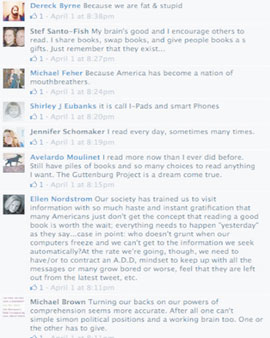
April 1, 1992: Airline passengers descending into Los Angeles Airport might have experienced a momentary feeling of panic when they looked out the window and saw an 85-foot-long yellow banner on the ground that spelled out, in 20-foot-high red letters, “Welcome to Chicago.” It was raised above the Hollywood Park race track, which lay directly along the flight path for arriving planes, about three miles from the airport. Park spokesman Brock Sheridan explained, “It was something we always wanted to do. We thought it would be kind of funny and our new management... thought it would be a great practical joke.” The sign remained up for two days.
 April 1, 1996: Virgin Cola ran an ad in British papers announcing that in the interest of consumer safety it had integrated a new technology into its cans. When the cola passed its sell-by date, the liquid reacted with the metal in the can, turning the can bright blue. Virgin warned that consumers should therefore avoid purchasing all blue cans. Coincidentally, Pepsi had recently unveiled its newly designed cans which were bright blue.
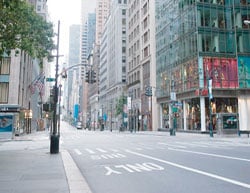
April 1, 2000: A news release informed the media that the 15th annual New York City April Fool’s Day Parade would begin at noon on 59th Street and proceed down to Fifth Avenue. It would include a “Beat ‘em, Bust ‘em, Book ‘em” float created by the New York, Los Angeles, and Seattle police departments, portraying “themes of brutality, corruption and incompetence.” There would also be an “Atlanta Braves Baseball Tribute to Racism” float featuring John Rocker “spewing racial epithets at the crowd.” CNN and the Fox affiliate WNYW promptly sent news crews to cover the parade. They arrived at 59th Street at noon and patiently waited for the parade to start. It never did. The prank was the handiwork of long-time hoaxer Joey Skaggs, who had been issuing press releases announcing the nonexistent parade every April Fool’s Day since 1986
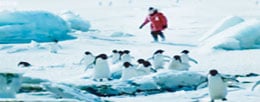
 April 1, 2008: The BBC announced that camera crews filming near the Antarctic for its natural history series Miracles of Evolution had captured footage of Adélie penguins taking to the air. It even offered a video clip of these flying penguins, which quickly became one of the most viewed videos on the internet. Presenter Terry Jones explained that, instead of huddling together to endure the Antarctic winter, these penguins took to the air and flew thousands of miles to the rainforests of South America where they “spend the winter basking in the tropical sun.” A follow-up video explained how the BBC created the special effects of the flying penguins.
 April 1, 2014: On its Facebook page, NPR News shared a link to an article with the provocative title, “Why Doesn’t America Read Anymore?” The link generated hundreds of comments. Some agreed with the premise. Others disagreed. But what the responses shared in common was that the people who posted them had unwittingly demonstrated the relevance of the question by failing to take the time to click on the link and read the article. If they had, they would have discovered a short paragraph stating, “We sometimes get the sense that some people are commenting on NPR stories that they haven’t actually read. If you are reading this, please like this post and do not comment on it. Then let’s see what people have to say about this ‘story.’”