
Migrants return to ‘Balkan route’
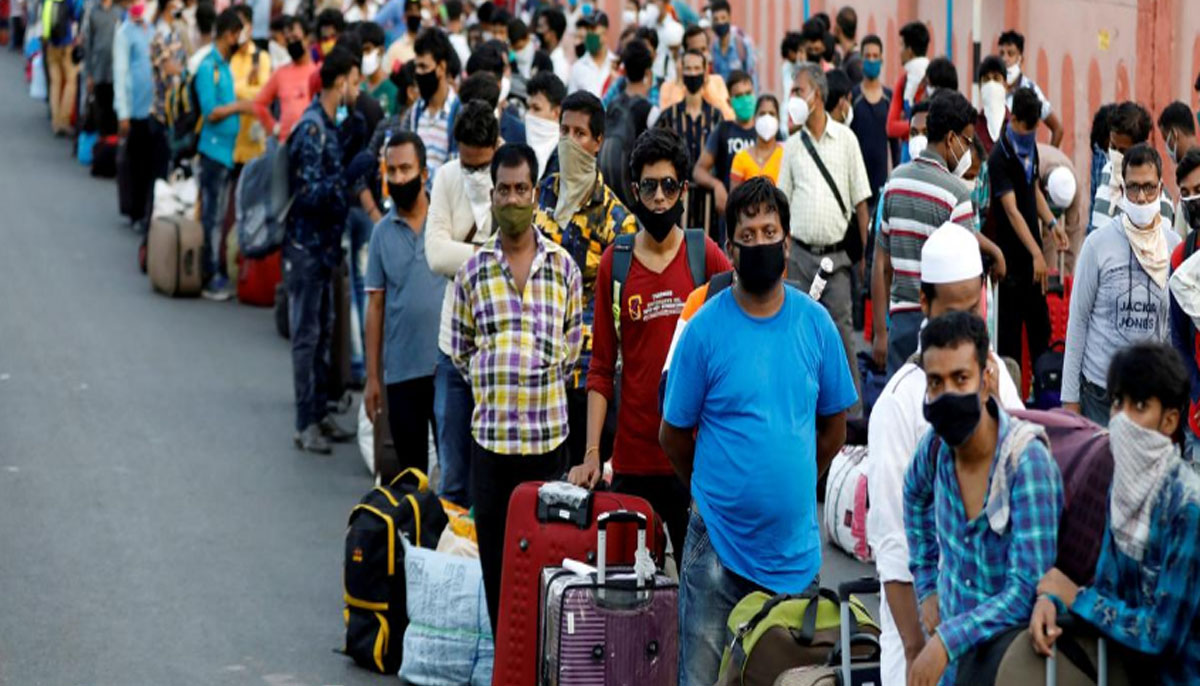
The first rays of the morning sun reveal entire families lying on the railway line or in abandoned wagons but when Greek police patrols appear, they evaporate into nearby fields.
Among them is Abdullah, a 20-year-old Syrian, waiting for a train to take him to a better life. In the buffer zone of Idomeni, on the border between Greece and Northern Macedonia, Abdullah watches for the right moment to sneak on to a train, in the hope of following the "Balkan route" taken by hundreds of thousands of migrants in 2015.
For the last few days he has been camping in a dilapidated building near the train station. "I will do everything to cross the border," Abdullah told AFP. The young Syrian has been living for several months in Greece, without work, and "sees no future" there.
"My brother lives in Italy and I want to find him," he says. During the great migration crisis of 2015, hundreds of thousands of people crossed this "no man’s land" on foot to Europe. But the European dream quickly fell apart. In March 2016, EU countries locked their borders and Greece built a wall along its northern border.
Tens of thousands of exiles fleeing wars, persecution or poverty were stranded in Idomeni, which effectively became a refugee camp, before being forcibly evacuated by the Greek authorities.
Since then, camps on the Greek mainland, and even more so on Aegean islands, have been overflowing with migrants, with new arrivals turning up every day. And with a surge of 120,000 asylum seekers in Greece today, as many migrants find themselves homeless in Athens as they do on the border with North Macedonia. "Every day nearly 200 people arrive in Idomeni," says Lazaros Oulis who lives near the border crossing.







-
 Meghan Markle’s Plans To Move With Prince Harry: Insider
 -
 Jamie Lee Curtis Embraces New Role In Life: 'Greatest Lessons, Hardest Days'
 -
 Prince Harry And Meghan's Wedding Video Used For Engagement Farming
 -
 Prince William’s Biographer Breaks Down If Harry Can Find His Way Back To The Firm Before Coronation
 -
 Noah Schnapp Covers Up Relationship Mystery With ‘April Fools’ Prank
 -
 Macron Slams Trump: ‘Neither Elegant Nor Up To Standard’ Over Mockery
 -
 Kanye West Grows Frustrated Mid-performance During Comeback Show: 'Stop It, We Went Over This In Rehearsal'
 -
 Why Princess Anne's Son Had To Take Extra Step Before Remarrying?
 -
 Kylie Kelce Shuts Down 'ridiculous' Questions About Taylor Swift And Travis Kelce Wedding
 -
 Khloe Kardashian Shares Her Kids' Brutal Reaction To New Snack Line
 -
 Olivia Rodrigo Finally Announces The 'You Seem Pretty Sad For A Girl' Album
 -
 Elijah Wood Gets Candid About Hilarious Reason Why People Call Him ‘Spider-Man’
 -
 Malcolm McRae Celebrates Marriage Milestone With Anya Taylor-Joy: 'You’re Better Than Me Except In Thumb Wars'
 -
 Prince Harry Furious Over Meghan Markle's Big Move
 -
 'Harry Potter' Star Admits His Younger Self Was 'deeply Unhappy'
 -
 Becky G Opens Up About Private ‘painful Heartbreak’