
2016 – An outstanding year in three aspects
ISLAMABAD: Three most inspiring and optimistic achievements made during the outgoing year -- decisively dealing with terrorists across Pakistan, taking care of target killers and mafias in Karachi and record acceleration of work on the China-Pak Economic Corridor (CPEC) project -- became possible only due to superb consensus among all stakeholders.
The credit for these extraordinary accomplishments for which the previous year ought to be cherished by all and sundry equally goes to the government, political parties, parliament, superior judiciary and armed forces. It will be cruel to undermine the due share of any side in this historic task that appeared impossible because of expediency, incompetence or negligence before determination and resolve was shown to do it.
All the arms of the government deserve full marks for restoring desperately-awaited peace in Karachi and decimating terrorists and militants. The year 2016 experienced much less terrorist attacks compared to any time during more than a decade when this scourge hit Pakistan. This tremendous change evaporated colossal panic and fear in the people at large that always apprehended attacks by terrorists at will.
Former army chief Gen (retd) Raheel Sharif worked single-minded to annihilate terrorists in the tribal areas and elsewhere in Pakistan. He took the bull by horns, an initiative that his predecessors had been skipping. However, the armed forces were able to do this job only with the complete support of the government, judiciary, parliament and political parties. Had any stakeholder stood in strong opposition to this campaign, the drive would have suffered and would not have been blessed with the results that it scored, making Pakistan quite safe and secure.
Basically, it was the government that took the decision to deal with the menace; all political parties supported it; the parliament passed the requisite amendments in the Constitution and law; and the judiciary did not strike them down. Thus, every organ made its own immense contribution for which it is worthy of praise and acclaim.
The Nawaz Sharif government came under criticism from some sides on continuing the widespread operations against mafias in Karachi, but it remained undeterred and unwavering. At times, it was deprived of the credit that it deserved, but still it went ahead with its complete backing to the campaign.
Massive smashing of the militant wing of Altaf Hussain-led Muttahida Qaumi Movement (MQM) London, arrest of a number of its hardcore miscreants and their trial made peace possible in Karachi. In this connection, the Sindh Rangers played the lead role. But Karachi police too worked hard and resolved some most complicated terrorist cases without any delay.
The Intelligence Bureau (IB) quietly kept giving its input to the Sindh police about the trouble-makers, terrorists and militants. However, the spy agency always remained in the background and refrained from taking credit for the excellent job it had been doing. After many years, the IB is focused on its real assignment instead of trailing and tapping political rivals of the government.
It was because of the Rangers’ operations that the MQM became incapacitated to shut down Karachi that has been its favourite pastime for several years even over trivial developments. It did give some calls of shutter-down, but these proved to be dud, which exposed its inability and incapacity. Much before Aug 22, the MQM has been elaborately sidelined, but Altaf Hussain’s incendiary speech on that day, turned out to be the last straw that broke the camel’s back.
The MQM Pakistan disowned its supremo for his anti-Pakistan remarks and finally dumped him to lick his wounds in London with a small coterie of advisers, mostly dual nationals, who have no plan to come back to Pakistan. It was the toughest year for Altaf Hussain during the past three decades that saw him extremely marginalized and pushed to a hole out of which there are no prospects for him to come out in the near future.
All the political parties expressed rare consensus on the CPEC projects more than once, but some of them subsequently kept articulating reservations only for petty political gains. The Khyber Pakhtunkhwa (KP) government of the Pakistan Tehreek-e-Insaf (PTI) stood out in this unseemly controversy. However, as the year was closing, Chief Minister Pervez Khattak’s objections, which in reality were hardly cogent and convincing, removed after he attended a meeting of the Pak-China Joint Coordination Committee in Beijing where six projects of his province were included in the CPEC.
Regardless of the needless alarm bells rung by Khattak or any other side, the federal government remained on the fast track to complete a large number of projects of power generation and infrastructure all over Pakistan specifically in Balochistan. Before the present government came in place, the CPEC was largely confined to paperwork. However, it gave a tremendous fillip to it so that the fate-changer is translated into a reality.
In the current year, the focus will remain on consolidating the gains made in the campaigns against terrorists and militants across Pakistan and mafias in Karachi and the CPEC. If the same pace was maintained, they will change the destiny of Pakistan it has been longing for decades.






-
 Ed Sheeran, Martin Garrix Drop New Collab 'Repeat It': Watch Here
 -
 Chicago Bears’ 2026 NFL Schedule Features 7 National Prime-time Matchups: Full Details
 -
 FBI Offers $200K Reward For Former Agent Monica Witt Accused Of Spying For Iran
 -
 Kate Middleton’s Relationships Turn Complicated: ‘She's Become Incredibly Protective’
 -
 Why Seth Rogen Broke Down At Cannes Premiere Of New Film 'Tangles'?
 -
 Oil Prices Rise After Trump Says China Wants US Crude Oil
 -
 Kodak Black Detained Again In Fresh Police Action
 -
 Taylor Swift Makes Unexpected Move After Wedding Details Leak: Report
 -
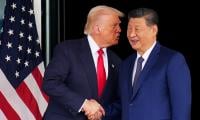 Trump Hails 'fantastic Trade Deals' After Private Meeting With Xi In Beijing
 -
 Ariel Winter Finally Breaks Silence On Shocking Split From Luke Benward
 -
 Britney Spears' Restaurant Drama: What Really Happened?
 -
 Lainey Wilson Gives Insights Into Marriage With Devlin 'Duck' Hodges
 -
 Emilia Clarke Believed She Had 'cheated Death': Here's Why
 -
 Charlie Puth Melts Hearts With Rare Glimpse Of Newborn Son
 -
 Drake Announces Three Albums Dropping Tonight Sending Fans Into Shock
 -
 Drake Drops Emotional Bombshell: 'My Dad Got Cancer Right Now’