
Islam grows, Christianity slips as share of world population: Pew Research Centre
This was reported by Washington Post’s Angie Orellana Hernandez
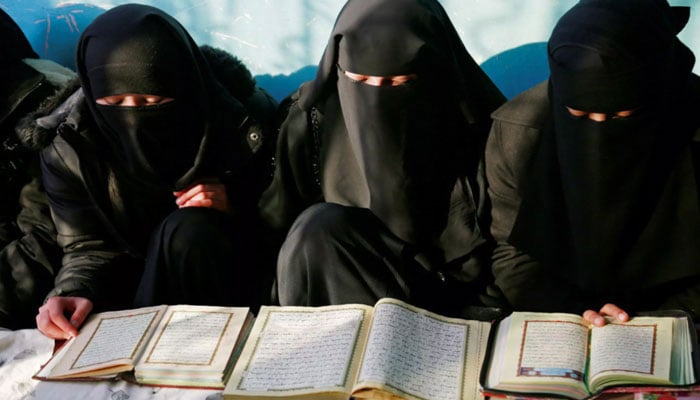
Islam is on track to overtake Christianity as the world’s largest religion, as global shifts in age, fertility, and disaffiliation reshape the religious landscape, a new Pew Research Center report finds. While Christians still make up the largest group globally, their share of the population declined over the past decade, even as the number of Muslims and religiously unaffiliated rose significantly.
This was reported by the Washington Post’s Angie Orellana Hernandez. The report is as follows: while Christians remained the world’s largest religious group at the end of the decade that ended in 2020, Christianity’s growth did not keep up with global population increase. But Islam — the world’s fastest-growing major religion — increased its share of the world population, as did the religiously unaffiliated, the Pew Research Center found in a report released Monday.
Even as the overall number of Christians — counted as one group, across denominations — continued to climb to 2.3 billion, the religion’s share of the world’s population decreased by 1.8 percentage points to 28.8 percent, a falloff driven in large part by disaffiliation. The Muslim population, on the other hand, increased by 1.8 percentage points to 25.6 percent, according to the report, which examined changes in religious demographics through an analysis of more than 2,700 censuses and surveys.
“It’s just striking that there was such dramatic change in a 10-year period,” said Pew’s Conrad Hackett, the lead author of the report. “During this time, the Muslim and Christian populations grew closer in size. Muslims grew faster than any other major religion.”
The report attributed the growth in Islam to a younger Muslim population — with an average age of about 24, as opposed to a global average age among non-Muslims of about 33 as of 2020 — along with higher fertility rates in some areas and lower rates of disaffiliation as compared with other religions, including Christianity.
“Among young adults, for every person around the world who becomes Christian, there are three people who are raised Christian who leave,” Hackett said.
The largest share of Christians — about 31 percent — can be found in sub-Saharan Africa, according to the study. Previously, Europe was home to the largest number of Christians in the world.
“And that’s the result of high fertility, youthfulness and rapid growth in general of sub-Saharan Africa,” Hackett said, “as well as the aging, lower fertility and disaffiliation going on in Europe.”
Religion switching — seen in high numbers among Christians — contributed to the global rise of unaffiliated people, the report found. Nearly a quarter of the world’s population did not identify with a religion in 2020 (24.2 percent), as opposed to 23.3 percent in 2010.
The world’s biggest unaffiliated population is estimated to be in China: 1.3 billion people, out of 1.4 billion, followed by the United States, with 101 million disaffiliated out of 331.5 million, and Japan, with 73 million out of 126.3 million.
In China, it is common for people to have religious beliefs, but only 10 percent of the population formally identify with a particular denomination or religion, the Pew Research Center reported in 2023. In a similar way, the new report measures the self-described affiliations of people around the world and may not capture the nuances and fullness of complex and evolving identities. Many people hold religious or spiritual beliefs or attend worship services but eschew formal labels.
Another group that underwent significant a loss in population were Buddhists, the only religion that had fewer members in 2020 (324 million) than in 2010 (343 million); this was due to disaffiliation and a low birth rate. Those who identified as Hindu and Jewish maintained rates steady with the world’s population, the report found.
“Sometimes we hear rumors of religious revival, and it’s certainly possible that in particular places religion could grow,” Hackett said. “But in this careful 10-year study that we’ve done, the broad trend is that in many places people are moving away from religion.”
Based on patterns of religion switching and differences in age and fertility, Hackett estimated that the “movement towards convergence” between Christians and Muslims will continue, with Islam set to grow to become the world’s largest religion in years ahead, unless trend lines shift.
“The next step of our ongoing work in this project will be to do some demographic population projections to provide new estimates of sort of exactly when they might converge,” Hackett said.







-
 Melania Trump Appears With Humanoid Robot At White House
 -
 ‘Addictive By Design’: Meta, YouTube Found Liable In Historic Verdict
 -
 Bruce Willis' Mom Marlene Makes Another Family Amid Son's Battle With Dementia
 -
 Roblox Safety Warning For Parents: Developer Says Kids Need 24/7 Monitoring
 -
 Chelsea Handler Explains Why She Dates Younger Men
 -
 Chappell Roan's Security Guard Takes 'full Responsibility' For His Interaction With Jorginho's Daughter?
 -
 Rosalía Cuts Concert Short Over Sudden Illness, Fans Shocked
 -
 'Buffy' Star Nicholas Brendon's Death Case Takes Massive Turn
 -
 FKA Twigs Takes Legal Stand Against Ex Shia LaBeouf
 -
 ‘Progressive’ Kate Middleton Snubs Outdated Royal Etiquette
 -
 Kylie Kelce Explains Why She Avoids Raising Kids With 'silver Spoon'
 -
 Meghan Markle Is Above Royal Family ‘empty Threats,’ Says Insider
 -
 Anne Hathaway Opens Up About 'defeated' Feeling As Working Mom
 -
 Shamed Andrew Should Testify In Epstein Case As ‘act Of Service’
 -
 What Really Happened Before Nicholas Brendon Was Found Dead At Home?
 -
 Sarah Ferguson Branded ‘most Famous Missing Person’ In UK Right Now