
Refugee dilemma
Now, entire generation, born and raised in Pakistan, faces odds of returning to war-torn country
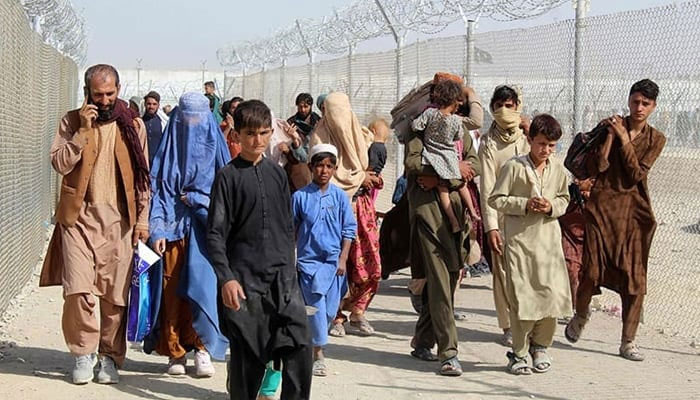
With scepticism surrounding the repatriation of Afghan refugees and whether the process is per international protocols, it is crucial to examine the situation from Pakistan’s perspective, particularly that of Khyber Pakhtunkhwa, the province that has shouldered the greatest burden over the past four decades.
KP has been home to the majority of Afghan refugees, providing shelter, livelihoods, education, healthcare and a sense of belonging. The province has not only offered hospitality but has also endured the brunt of the fallout from regional conflicts, initially during the 1970s until the withdrawal of troops in Aug 2021.
Now, an entire generation, born and raised in Pakistan, faces the odds of returning to a war-torn country. Many are being forced to liquidate the possessions they have accumulated over a lifetime, uprooting themselves from a country they have known as home, only to start afresh in complete uncertainty. A report submitted by the federal government to the Supreme Court in the Farhatullah Baber vs Federation of Pakistan case indicates that by January 2025, a total of 784,954 refugees had been repatriated since the rollout of the Illegal Foreigners Repatriation Plan (IFRP) in November 2023.
While the emotional gravity of the situation is undeniable, Pakistan has played its neighbourly and brotherly part and must now focus on the security and development of its own citizens, who have also faced the consequences of persistent conflict next door. However, certain stark realities cannot be ignored. The repatriation process poses significant challenges. Many of the returnees lack formal documentation, property or support systems in Afghanistan – leaving them vulnerable to exploitation, displacement and insecurity. The question of their legal status, especially for those born in Pakistan, also remains unresolved under both national and international law.
The federal government had fixed March 31, 2025 for the voluntary repatriation of Afghan Citizen Card (ACC) holders and visa overstayers. Afghan refugees fall into three categories. The Afghan Citizen Card Holders (ACC), Visa Overstaying Afghan Nationals and the Proof of Registration Card holders. ACC holders are Afghan nationals who were processed and registered by Pakistan’s National Database and Registration Authority (NADRA) under a federal initiative approved by the federal cabinet on February 7, 2017.
The strength of ACC cardholders in KP is estimated at 360,000. The visa-overstaying Afghan nationals include those who entered Pakistan on a valid visa but have not returned even after expiry of their visas. Their estimated strength in KP is between 143,000 and 160,000. Lastly, Afghan nationals residing in KP under the Proof of Registration Card Holders (POR) are estimated at 700,000. They are residing under the Tripartite Agreement, which was unanimously agreed upon by the Pakistan government, the Afghan government and the UNHCR and have till June 30, 2025 for voluntary repatriation.
The validity of the POR was extended pursuant to the federal cabinet's approval on July 20, 2024. If they agree to return voluntarily to Afghanistan, POR refugees are currently being provided $375 per individual. They enjoy all types of GOP facilities, including health, business and education. They currently reside in urban and semi-urban areas and in 43 camps in KP.
The repatriation process needs a prudent and considerate approach, not only because Afghanistan is a neighbouring country but also because decades of hospitality and support risk being overshadowed by resentment and hostility if the situation is mishandled. Reports of Amnesty International further mandate caution. Despite nominal support from the international community in managing refugees, critics have been harsh. Amnesty International has called for the IFRP’s immediate withdrawal, citing its “opaque” nature, lack of legal basis, and violation of non-refoulement: the principle prohibiting returns to unsafe conditions (Amnesty International, March 2025). Amnesty’s critique details several issues, including the demonisation of Afghans as criminals or terrorists, leading to racial profiling, especially of Pashtuns; arbitrary detentions and the devastating impact on families, many of whom have lived in Pakistan for decades. Court interventions, such as the Islamabad High Court’s directive to cease harassment of PoR cardholders and the government’s January 2025 assurance to the Supreme Court that registered refugees would not be targeted, have offered limited relief.
Khyber Pakhtunkhwa, which hosts over half of Pakistan’s Afghan refugees, has adopted a cautious approach. Chief Minister Ali Amin Gandapur has clearly emphasises voluntary and dignified repatriation. The provincial government has even established a 1700 helpline dedicated to addressing complaints and providing support related to the repatriation of Afghan refugees, ensuring a dignified and harassment-free process.
A key driver of KP's caution is the fear that strained Pakistan-Afghanistan relations could create a vacuum for external powers, particularly India, to exploit. A fear that has been communicated repeatedly by the provincial government, ultimately prompting the federal government to undertake timely diplomatic interventions. India’s growing engagement with the Taliban, through humanitarian aid and a diplomatic presence in Kabul, has heightened these concerns. The provincial government worries that mass deportations could push Afghanistan closer to India, potentially enabling anti-Pakistan elements like the TTP to gain traction. This fear is not unfounded: India’s historical investments in Afghan infrastructure and soft power through education and aid position it as a counterweight to Pakistan. A destabilised border, coupled with a weakened bilateral relationship, could amplify security risks for a province already grappling with militancy.
Economically, Afghan refugees are integral to certain aspects of the province's markets, including gemstone trading (estimated in millions of dollars in exports) and carpet weaving (70 per cent of the industry). Their repatriation threatens these sectors. The loss of skilled Afghan labour could disrupt local economies, particularly in Peshawar and other refugee-heavy areas.
As Pakistan navigates the complex challenge of Afghan refugee repatriation, the Khyber Pakhtunkhwa government remains committed to a dignified and voluntary return process. While the federal IFRP serves national priorities, the KP government has taken it upon itself to advocate for diplomacy and work towards a humane and context-sensitive approach that considers humanitarian concerns and cross-border relations.
Khyber Pakhtunkhwa emphasises the need for careful coordination to prevent the rise of resentment, which could strain bilateral ties and invite external interference, particularly from hostile actors like India. To mitigate these risks, the provincial government has called for sustained engagement with Kabul, inclusive dialogue, and international cooperation, particularly from UN agencies and donor partners.
The writer is the information adviser to the chief minister of Khyber Pakhtunkhwa.


