Hidden topological universe found in entangled light
Quantum researchers map complex signatures in 48 dimensions using everyday lab equipment
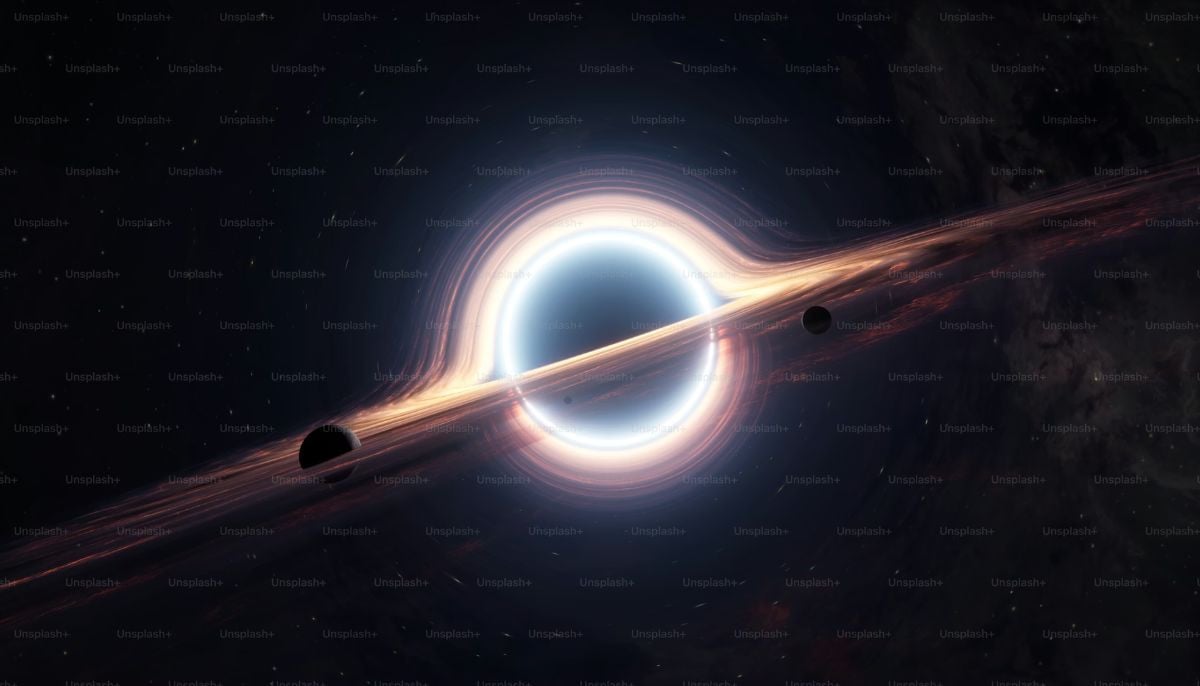
A team of scientists from the University of the Witwatersrand, South Africa, and Huzhou University, China, has discovered a hidden “topological universe” inside entangled light. Using everyday laboratory equipment, the researchers identified over 17,000 unique patterns across 48 dimensions.
Entangled photons, which are produced by spontaneous parametric down-conversion (SPDC), have spatial correlations that result in the formation of topologically robust structures.
“We report a major advance in this work. We only need one property of light, orbital angular momentum (OAM), to create topological patterns,” said Wits School of Physics Professor Andrew Forbes. In the past, scientists thought it took two properties, often OAM and polarisation.
In this study, the process results in the mapping of these “doughnut-like” structures to 48 dimensions, yielding more than 17,000 topological signatures, the richest set ever recorded in any physical system. “You get the topology for free, from the entanglement in space.
It was always there; it just had to be found,” said Pedro Ornelas, a key team member. Theoretical guidance from Professor Robert de Mello Koch of Huzhou University assisted in locating the precise spots where these patterns exist in terms of quantum field theory concepts.
Topological entanglement helps preserve quantum information from noise, a significant problem in quantum computing and communication. The OAM-based systems, once thought to be fragile, might now allow for more robust quantum communication systems.
The researchers explained that these 17,000 patterns represent a quantum alphabet that might allow for secure communication systems that are hack-proof.





-
 5 times video games actually went to space
 -
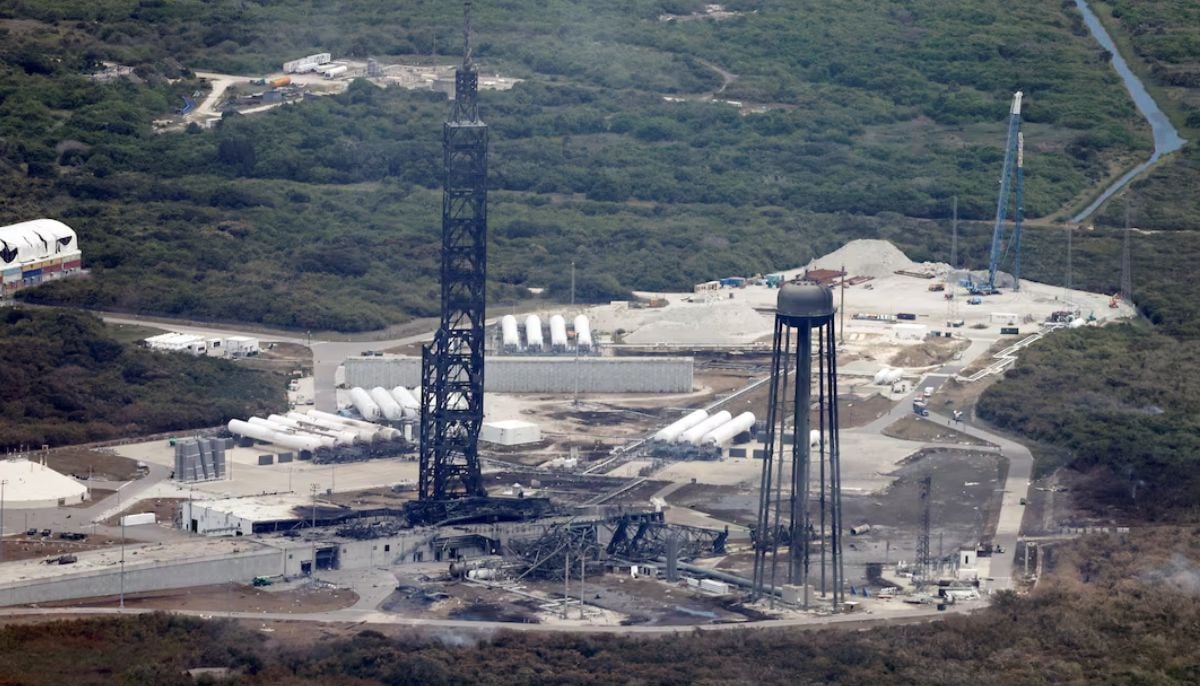 Blue Origin hit with months-long delays after rocket explosion damages launch pad
 -
 Blue Moon 2026: Everything to know about the rare celestial event
 -
 Blue Origin’s New Glenn rocket explodes: NASA responds to impact on lunar base mission
 -
 Scientists map hidden Antarctic Marginal Ice Zone in Southern Ocean for first time
 -
 Who are the Artemis 3 astronauts? NASA announcement coming June 9
 -
 Blue Moon 2026: How it highlights the mechanics of our Solar System
 -
 China sends artificial embryos into space—Could humans reproduce in zero gravity?