
UN officials lead sessions at PAS campus
Amanullah, senior advisor at UNDP Pakistan, analysed SDGs in context of Pakistan’s economic trajectory
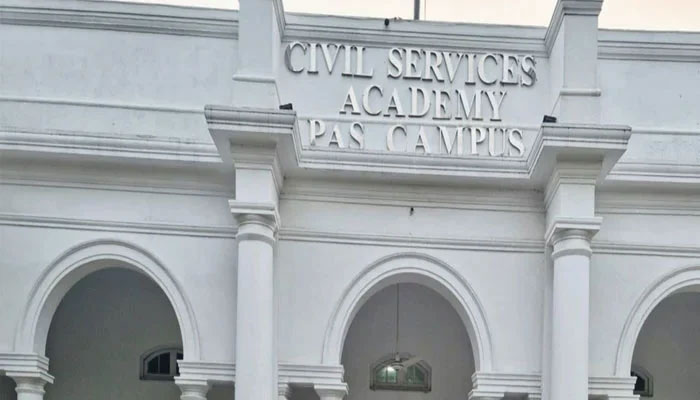
LAHORE: The Pakistan Civil Services Academy (CSA) hosted a series of insightful sessions at the Pakistan Administrative Service (PAS) campus, led by prominent United Nations (UN) officials.
The discussions, which covered crucial issues such as sustainable development, gender equality, labour standards, and environmental policy, aimed to address global challenges and highlight Pakistan’s role in tackling them.
Ms Afke Bootsman, head of the UN Resident Coordinator’s Office, outlined the United Nations’ strategic framework for accelerating the implementation of Sustainable Development Goals (SDGs). She stressed the need for global cooperation and innovative solutions to combat challenges like poverty, inequality, and climate change. She also advocated for a Summit of the Future to accelerate SDGs implementation.
Dr Muhammad Amanullah, senior advisor at UNDP Pakistan, analysed the SDGs in the context of Pakistan’s economic trajectory. He stressed the need for inclusive growth, particularly following setbacks from COVID-19 and the 2022 floods.
Jamshad Kazi, Country Representative for UN Women, discussed gender equality and women’s empowerment in Pakistan, emphasising the role of gender-responsive policies in boosting economic participation.
Dr Luay Shabaneh, Country Representative for UNFPA, highlighted the implications of Pakistan’s young population and the importance of investing in education and skills development.
Gier T Tonstol, Country Director for the ILO, emphasised labour standards and workers’ rights, while Antony Tam from UNESCO addressed the importance of education in achieving SDG 4, ensuring inclusive education for all. Sessions also focused on innovative approaches, such as eLearning for law enforcement by Saad Ayub of UNODC and refugee protection laws by Tauseefullah of UNHCR. Environmental sustainability was discussed by Ms Mushtaq Ahmed Memon of the UN Environment Programme, and Ms Ammara Aamir Khattak from the UN Resident Coordinator’s Office talked about combating sexual exploitation in humanitarian settings.
These sessions offered a comprehensive understanding of global challenges and the policies Pakistan can adopt to align with international standards. Special acknowledgment was given to Farhan Aziz Khawaja and Dr Sajid Chohan for their efforts in organising these important discussions.






-
 'Stranger Things' Star David Harbour Furious As Lily Allen Moves On With New Man
 -
 Some Grief Never Goes Away—Scientists Now Know Why
 -
 Meghan Markle Takes A Page From Prince William’s Book Alongside Harry
 -
 Jim Carrey Ex Reveals Truth About Viral Clone Rumors
 -
 Kris Jenner Sparks Copycat Claims With Shocking Style Transformation
 -
 King Charles Has A Good Reason For Not Seeng Harry In Montecito: 'Harry Knows How Things Are'
 -
 Kristi Noem's Husband Was Blackmailed By Hostile Intelligence Services?
 -
 Leonardo DiCaprio Makes Big Announcement After Oscar Date With Vittoria Ceretti
 -
 Andrew’s Hopes For Princess Beatrice, Eugenie's Royal Roles Crushed
 -
 King Charles’ Standing Is In Trouble: This Always Happens When A Monarch Is Terminally Ill
 -
 Trump Signals Possible US Exit From Nato, Claims Allies ‘weren’t There For Us’
 -
 First Royal Family Wedding Of 2026 Confirmed After Andrew's Shocking Scandal
 -
 Experts Call On Google To Ban Youtube AI Videos For Kids
 -
 Comment: I’m Panicking That I’m Obsessed With 'Harry Potter' AI Videos
 -
 Could There Be Life On Mars? NASA Jared Isaacman Claims Chances Are 90%
 -
 Queen Elizabeth Always Stood By Andrew Despite Epstein-linked Allegations