
A look at crucial role of regulators in power sector
SIFC focuses on renewable energy such as $200m investment to convert thermal plant into 300 MW solar facility
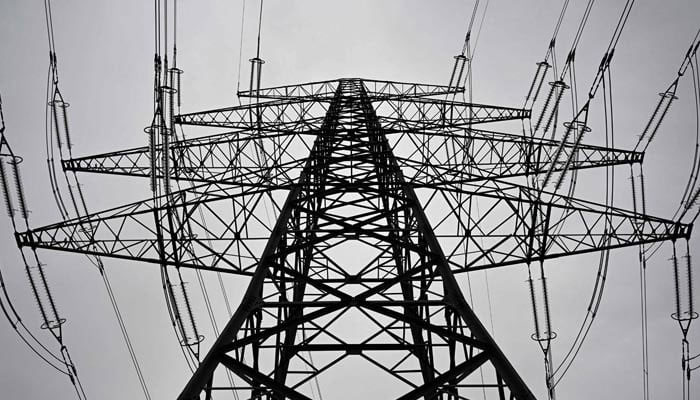
ISLAMABAD: As Pakistan’s economy shows promising signs of recovery, the power sector plays a pivotal role in driving sustainable growth.
The Economic Update and Outlook for November 2024 highlights a significant surge in foreign direct investment (FDI) within the sector, with $414 million invested in the first four months of FY2025 — comprising 46% of total FDI. This influx is part of a broader $585.6 million investment in energy, encompassing electricity, oil, gas and renewables.
The Special Investment Facilitation Council (SIFC) is central to this positive momentum, transforming the investment landscape and enhancing energy infrastructure. The SIFC’s focus on renewable energy is evident through initiatives such as a $200 million investment to convert a thermal plant into a 300 MW solar facility and establish a 3 GW solar panel and battery manufacturing plant in Karachi. These projects not only foster clean energy transitions but also position Pakistan as a regional leader in renewable technologies.
However, a critical challenge undermining progress in the power sector is the persistent issue of rising circular debt, largely driven by inefficiencies in operations of Discos. High transmission and distribution (T&D) losses and poor recovery rates have placed immense financial strain on the sector. The Discos’ inability to recover billed amounts effectively, coupled with power theft and management issues, has significantly contributed to the circular debt, now exceeding Rs2.6 trillion and expected to rise further.
This burden is borne by all power customers in Pakistan, even those in Karachi who have zero contribution to the circular debt. This is evident from the PHL charges applied in KE bills, despite KE, a private entity, not parking its losses in the circular debt, unlike Discos.
The privatisation of Discos emerges as a viable solution to address these structural inefficiencies. It is also a condition outlined by the International Monetary Fund (IMF), with progress expected by early 2025. Transitioning to private management can enhance operational efficiency, governance, and customer service. Initial privatisation targets reportedly include GEPCO, LESCO, and MEPCO. Privatised entities like KE demonstrate how private investment and accountability can reduce T&D losses, improve infrastructure, and better serve customers. Privatisation aligns with Pakistan’s broader reform strategy, including the introduction of Competitive Trading Bilateral Contract Market (CTBCM).
A compelling example of successful privatisation is Tata Power Delhi Distribution Limited (TPDDL), privatised in 2002. The TPDDL achieved remarkable success through policies balancing fair tariffs and operational costs. This approach ensured financial viability and significantly improved service delivery. Operating without circular debt, the TPDDL reduced AT&C losses from 53% to single digits over two decades, investing over $1.3 billion in infrastructure. Supportive policies, such as opt-in subsidies and special courts for theft cases, bolstered its success, with $160 million paid in shareholder dividends.
Pakistan could benefit from studying such examples to guide its path toward effective privatisation and sectoral reforms. A sustainable tariff mechanism is essential for the sector’s stability and growth. Current tariffs should reflect the true cost of electricity supply, mitigating financial pressures on both Discos and consumers. Regulatory bodies, particularly the National Electric Power Regulatory Authority (Nepra), play a crucial role in addressing these challenges by ensuring tariffs are fair, transparent, and reflective of market realities.
However, Nepra must reconsider assuming a 100% recovery rate when developing tariffs. The current system, where unrecovered costs are ultimately shifted to consumers as PHL surcharges, is inefficient. Establishing ambitious yet achievable recovery targets, with Discos funding any over- or under-recovery, could sustainably reduce tariffs and facilitate privatisation. For instance, HESCO and SEPCO’s recovery rates in 2022-23 were 75.88% and 68.19%, respectively, while QESCO’s recovery was a mere 36.92%. No investor will fund such significant gaps. NEPRA should adopt a phased reduction strategy similar to the TPDDL’s case, supported by a sustainable business model for Discos. In conclusion, Nepra’s balanced regulatory decisions, coupled with decisive government actions to privatise and restructure Discos, will reaffirm Pakistan’s position as a reliable and attractive destination for international investment. By prioritising recovery improvements and sustainable tariffs, the power sector can become the cornerstone of Pakistan’s economic revival.







-
 AutoScientist Lets AI Models Train Themselves Faster
 -
 US Businesses Hit By Soaring Wholesale Inflation As Fuel Prices Climb
 -
 Kate Middleton Meets Camilla In Italy
 -
 Barry Keoghan Says It’s Ok To Be Unconventional Dad In Blunt Interview
 -
 'Robots Are The Future': British Tech Firm Humanoid Targets US IPO By 2030
 -
 Iran War Could Cost US Taxpayers $1 Trillion, Expert Warns
 -
 Alibaba Shares Fall After Sharp Decline In Core Profitability
 -
 Barbra Streisand May Avoid Singing Forever After Oscars Backlash
 -
 Nebius Revenue Surges As AI Cloud Demand Fuels Rapid Growth
 -
 How Did Brandon Clarke Die?
 -
 Vin Diesel Brings 'Fast & Furious' Family Reunion To Cannes
 -
 The Frontrunners Who Could Replace Keir Starmer As Party Leader And British Prime Minister
 -
 Sydney Sweeney Video With Scooter Braun Draws Reactions From Taylor Swift Fans, Trump Supporters
 -
 Buckingham Palace 'hostage' Released After King Charles Safe Return
 -
 Taylor Swift Wins BMI Songwriter Crown For Third Year In A Row
 -
 Former NBA Player Jason Collins Dies After Brain Cancer Battle