
Russia proposes hikes to taxes to increase spending
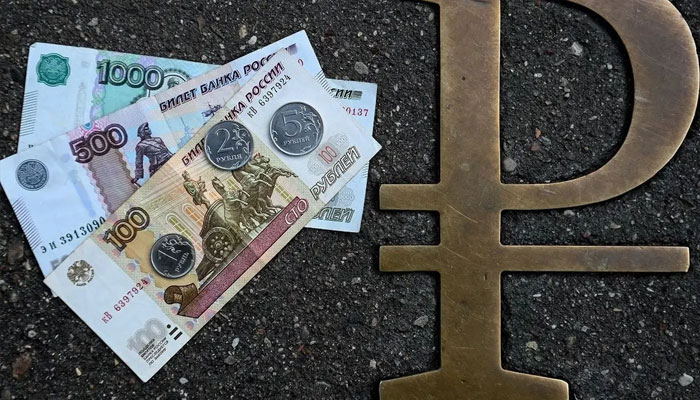
LONDON: Russia’s proposed tax hikes for companies and the wealthy, which may add an extra $30 billion to next year’s budget revenues, will allow Moscow to further ratchet up spending, including on its war in Ukraine, without compromising fiscal stability.
The finance ministry insists the tax hikes, proposed on Tuesday, are fair and target Russia’s wealthiest. It says tax changes should solve national problems, reduce inequality and help develop Russia’s regions.
The changes will cover President Vladimir Putin’s more than 11.5 trillion roubles ($128 billion) in infrastructure and social spending pledges for his new six-year term, analysts say, without requiring a reworking of Russia’s budget rule.
That would leave funds left over for Moscow to pump additional money into the huge resources it is devoting to defence and security for what it calls its ‘special military operation’ in Ukraine. Overall budget spending is planned at 36.6 trillion roubles in 2024, more than double what it was in 2019.
“The overall appetite of the finance ministry is calculated in trillions of roubles,” said Sergei Aleksashenko, a former deputy governor of the Bank of Russia who has criticised Russia’s war in Ukraine and been designated a ‘foreign agent’ by Russia's justice ministry.
“Yes, war is not a cheap thing.”
The finance ministry estimates that new taxes -- extra progressive income tax rates, a 5.0 per cent corporation tax hike and new mineral extraction taxes -- will bring in an additional 2.6 trillion roubles in 2025, a 3.6 per cent increase in budget revenues according to Rosbank analysts, and 17 trillion roubles by 2030.
“The expected revenues of 2.6 trillion roubles in 2025 and about 3 trillion roubles per year in 2026-2030, at first glance, completely cover additional budget expenditure s,” said Dmitry Polevoy, investment director at Astra Asset Management.
The tax adjustments carry no risks for budget fulfilment, said Yevegeny Kogan, professor at Russia’s Higher School of Economics.
“Moreover, the finance ministry will be able to increase spending next year provided the economy does not stagnate,” Kogan said.
FISCALLY SOUND
Crucially, the proposed amendments to income and corporation tax target non-oil and gas revenues, meaning no changes to Russia’s budget rule or impact on the National Wealth Fund (NWF).
“Accordingly, there will be more money in the budget that can be spent with fewer restrictions,” said Expert RA Chief Economist Anton Tabakh.
Under its budget rule, Russia sells foreign currency from its NWF to make up for any shortfall in revenue from oil and gas exports, or makes purchases in the event of a surplus.
The tax increases are the ‘most balanced’ way to meet the budget’s emerging need for additional funds since 2022, especially considering that the NWF has been largely exhausted, said Sofya Donets, Tinkoff Investments’ chief economist.
The NWF’s liquid assets have dropped to $56.4 billion, from $112.7 billion before Russia’s invasion of Ukraine.
FAIR DISTRIBUTION?
Finance Minister Anton Siluanov’s buzzword since announcing the proposals has been “fairness”, with the increases in income tax affecting just 3.2 per cent of the workforce, or 2 million people.
All earners in Russia pay a flat rate of 13 per cent income tax. In 2021, earnings over 5 million roubles were taxed at 15 per cent. Now, the finance ministry is proposing a 15 per cnet rate for annual incomes from 2.4 to 5 million roubles, with a progressive scale up to 22 per cent for earnings exceeding 50 million roubles.
But Tabakh said wage growth and inflation could see 5-10 per cent of the workforce paying more tax in the coming years.
Furthermore, investment income -- on deposits, dividends and the sale of securities -- will be taxed at just 13-15 per cent.
“Taxation will be more beneficial for investment income than salaries...which does not quite correspond to a more equitable distribution of the tax burden,” said Finam analyst Olga Belenkaya.
Tabakh noted that income from labour was set to be taxed more heavily than from capital.“In fact, this means increasing the burden on the working middle class,” Tabakh said.
Business will shoulder the majority of the increase, with the rise in corporation tax to 25 per cent from 20 per cent to yield 1.6 trillion roubles in 2025.
That change will leave companies with fewer resources, Belenkaya said, and impinge on investment activity, especially when high interest rates at 16 per cent limit borrowing potential.
In a blow to SMEs, companies with annual revenue above 60 million roubles will lose their VAT exemption.But there were trade-offs, too. Last year’s one-off excess profits tax will not be revived, and Siluanov promised to abolish exchange-rate-linked export duties in return for higher mineral extraction taxes.
“Whether (these tax changes are) enough for the next six years in case of shortfalls in planned tax revenues or additional expenditure, is not yet clear,” Belenkaya said.







-
 Chris Hemsworth Gets Candid About Daughter’s Drawings That Inspired Several Of His Tattoos
 -
 UK To Experience Rare 'Blood Rain' On Tuesday Feb. 24, 2026: Know Every Detail
 -
 Maria Shriver Shares Heartbreaking Reminder After Eric Dane's Death: 'Next Week Isn't Guaranteed'
 -
 Andrew Mountbatten Windsor Gets New Moniker After Losing ‘Prince’ Title
 -
 Jack Black Shares Unseen Moments With Tanya Haden: 'My Love'
 -
 Shamed Andrew Made Taxpayers Fund Personal ‘massages’
 -
 What Could Be Nick Reiner's Fate After Pleading Not Guilty Parents’ Murder Case?
 -
 Princess Kate Talks About 'hard Conversations' With Kids Amid Andrew Drama
 -
 Prince William Mocked For Being ‘most Reluctant’ King-in-waiting
 -
 Prince William Makes Rare Admission After Andrew Arrest
 -
 ‘Got A Lot Of People Gunning For Me’: Trump Makes First Comments On Mar-a-Lago Intruder
 -
 What Countries Have A Say In Andrew Removal From Line Of Succession?
 -
 How Did Luci4 Die? Police Probes 'BodyPartz' Sudden 'suspicious' Death
 -
 King Charles Criticized By Princess Anne Over Andrew Drama
 -
 Kelly Osbourne Hits Back At 'absolutely Devastating' Body Shaming Comments
 -
 Hailee Steinfeld Details Preparations Ahead Of Welcoming First Kid With Josh Allen