
Ex-FBR chief says banks reluctant to integrate data for tax base expansion
Shabbar Zaidi said that bankers are not ready to integrate their data with FBR, which hinders expansion of narrow tax base in the country
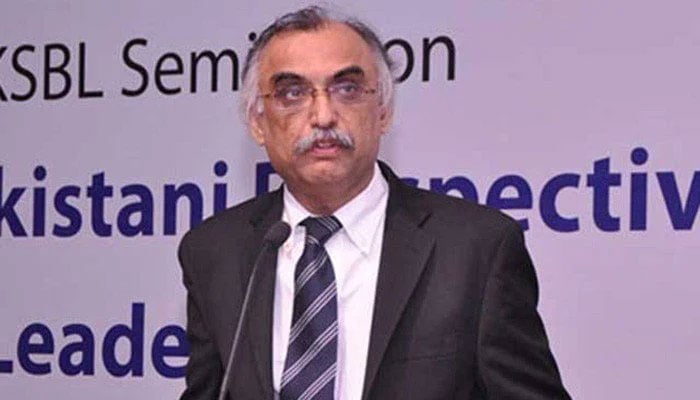
ISLAMABAD: Former chairman of the Federal Board of Revenue (FBR) Shabbar Zaidi has said that bankers are not ready to integrate their data with the FBR, which hinders the expansion of the narrow tax base in the country.
Various experts pointed out flaws in the governance structure and reduction in bureaucracy’s footprint as major hurdles for the economy. They stressed the need for deregulation to open up the economy and achieve the country’s real potential to boost growth. With higher GDP growth, taxes will ultimately flow into the national treasury. The economic experts strongly opposed the IMF’s prescriptions that focus solely on taxation in a way that would strangle economic growth. This was the crux of discussions held in different panels during the first day of the third Economy Festival EconFest at the Gandhara Citizens’ Club, Fatima Jinnah Park, F-9, Islamabad, organised by the Pakistan Institute of Development Economics (PIDE) in collaboration with others on Saturday. Hundreds of students from various universities participated in this EconFest.
Dr. Nadeemul Haque, former deputy chairman of the Planning Commission and Vice-Chancellor of PIDE, said Pakistan stands at a crossroads, grappling with a government footprint exceeding 64% of the economy, policy uncertainties, excessive regulations and a fixation on the tax and GDP ratio that stifles investment and innovation. He emphasised that it was imperative to allow people to invest and grow, fostering a society built on trust and opportunity.
Dr. Durre Nayab, Pro Vice-Chancellor of PIDE, emphasised the necessity for a comprehensive approach to address Pakistan’s economic challenges. PIDE’s agenda targets key areas, including regulatory modernisation, tax reform, market liberalisation, energy sector efficiency, and improvements in agriculture and banking.
Daniyal Aziz, Nargis Sethi, and Taimur Jhagra spoke about “Islaah for Public Administration”. They addressed critical inefficiencies in Pakistan’s governance system, proposing comprehensive reforms across various sectors, including the cabinet, civil bureaucracy, judiciary, and local government. They highlighted the necessity to reduce the size of the federal cabinet, limit political appointments and emphasise expertise and performance in governance roles.
Shabbar Zaidi, former federal minister and former chairman of the FBR, addressed misconceptions about taxes in Pakistan, highlighting that 54% of tax revenue is allocated to provinces, which often show surplus budgets. He questioned the accountability of provincial spending, noting that funds are frequently used for luxuries rather than essential projects. A significant portion of federal taxes goes towards debt servicing, while provinces also collect their taxes. Due to political reasons, the government avoids tax collection, especially in real estate. Zaidi compared Pakistan’s low property taxes to higher rates in Indian cities like Pune, pointing out disparities. Non-taxpayers often question the return on their taxes.
At the Economy Festival 2024, experts addressed the critical issue of election manipulation in Pakistan. Rasul Bakhsh Rais highlighted the need to enforce the Constitution and ensure judicial independence to achieve a genuine democratic transition. Arifa Noor and Saroop Ijaz discussed systemic issues, including media dependence on government revenue and structural voting challenges, advocating for political solutions to restore trust in elections and democracy. They called for broader political engagement, electoral reforms and better representation for marginalised regions to address these challenges and reduce incentives for election rigging.
Shahid Kardar highlighted that Pakistan has participated in approximately 14 IMF programmes over the last three decades and now has 58 withholding taxes, which account for 70% of direct tax payments. He pointed out that the Neelum-Jhelum project, initially contracted for 85 billion rupees in 2007, has exceeded 500 billion rupees and remains incomplete.
Mehtab Haider noted that while individuals in Pakistan are advancing, the country as a whole is regressing due to widespread cleverness and self-interest. He identified elite capture, particularly by the military and judiciary, as a major issue, emphasizing the need for reforms among the powerful. Dr. Nadeem expressed opposition to the IMF’s focus on taxation overgrowth, which he believes hinders economic progress. Kardar called for adjusting misplaced priorities, reducing import duties to foster competition, and reviewing the NFC Award. He stressed that the coexistence of the current power sector and the country’s development is unsustainable, suggesting the formation of a financial commission and shutdown of the FBR, with Mehtab Haider adding that an alternative should be proposed if the FBR is closed.







-
 Trump Administration Labeled ‘misogynistic’ Following Dismissal Of Pam Bondi And Kristi Noem
 -
 Trump Mocks Starmer As UK–US Tensions Rise Over Defence
 -
 'Peaky Blinders' Has Major Casting Shakeup For Lead Role In Upcoming Sequel Series
 -
 Quantum Computing Threat: Why Global Cybersecurity Could Collapse Soon
 -
 Jessica Simpson Reveals Rare Approach To Mastering 'Daisy Duke's Glow
 -
 Princess Beatrice’s Real Feelings About Andrew, Fergie: ‘They Ruined Nearly Every Aspect Of Her Life & Marriage’
 -
 AI Cyberattacks Set To Outpace Human Hackers, Experts Warn
 -
 China Tightens Rules On Digital Humans And Addictive Kids’ Content: Here’s Why
 -
 Britney Spears’ Eldest Son Pays Quiet Tribute To Popstar After Latest Reunion
 -
 Prince Harry, Meghan Get Sweet Chance To Reunite With Royal Family In Britain
 -
 US Disrupts Global Malaria And HIV Supply Chains, Sparking Health Crisis Fears
 -
 King Charles Holds Key To Meeting Prince Archie, Princess Lilibet
 -
 Meryl Streep Claps Back At ‘The Devil Wears Prada’ Being A ‘chick Flick’
 -
 Uffizi Galleries Hit By Cyberattack, Valuables Moved To Bank
 -
 Why Google Launched The Gemma 4 AI Model: Here’s Everything To Know
 -
 Royal Family Secret Travel Rules: Why Members Always Pack A Black Outfit