
AKU to install 3.3MW solar system as part of its de-carbonisation plan
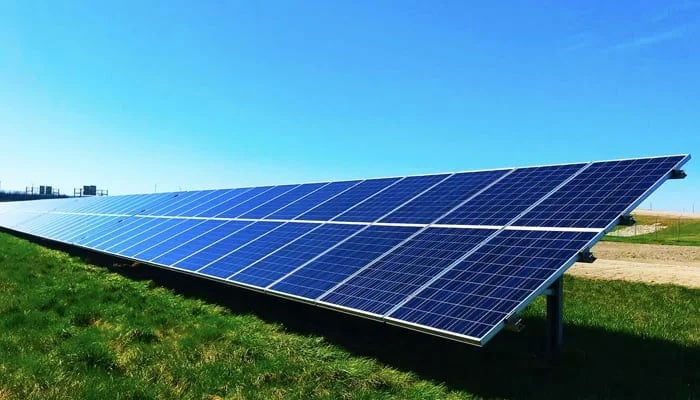
As part of its commitment to net zero by 2030, the Aga Khan University (AKU) is installing its largest solar photovoltaic (PV) project to date.
For commencement of the project, a signing ceremony was recently held with Exide Pakistan Limited that would be executing the project at the AKU’s Stadium Road Campus in Karachi, Pakistan.
Renewable energy is one of the most effective ways to reduce greenhouse gas emissions and transition to clean energy systems. Solar irradiation is very high in Pakistan which makes solar PV ideal for energy generation in the country.
In 2022, the AKU installed 550-kilowatt solar PV on three of its campus roofs, resulting in highly positive environmental impact.
In the project recently launched, 3.3-megawatt solar PV would be installed across the remaining roofs as well as three large parking areas of the campus, providing the much-needed shade to the cars parked below. The installation of the new panels would take place in phases and its completion has been aimed by April 2025.
AKU President Dr Sulaiman Shahabuddin called it a major step forward in implementing the AKU’s de-carbonisation plan that was set in 2022.
The AKU’s goal of net zero emissions by 2030 involves reducing absolute emissions in line with science using renewable energy and other strategies. Renewable energy must go hand in hand with increased energy efficiency, such as improved buildings, efficient equipment and behavioural changes.
The AKU is rapidly progressing on all these areas of emissions reduction and has been closely monitoring its emissions footprint while aligning with the university’s plan.
“The partnership between AKU and Exide Pakistan Limited to provide clean and free electricity is commendable. Not only does it benefit AKU, but it also sets a shining example for other hospitals and universities,” said Exide Pakistan’s Altaf Hashwani.
The solar project would also reduce the varsity’s dependence on the K-Electric and improve local air quality. The solar PV not only provides carbon-free electricity and reduces noise and air pollution, but also significantly lowers the cost of electricity. The project is expected to save 1,900 tonnes of carbon dioxide emission every year, or the equivalent emissions produced by burning 800,000 litres of petrol in a car.







-
 Erika Kirk Dating Claims Surface As She Reclaims Charlie Kirk's Legacy
 -
 Karoline Leavitt Joins Erika Kirk At Washington Event
 -
 Princess Beatrice’s Husband Edo ‘questioning Marriage’: ‘His Standing & Status Is Impacted’
 -
 Petition To Strip Blake Lively Of 'It Ends With Us' PGA Credit Gains Massive Support
 -
 New Development In Blake Lively Lawsuit After Judge Dismisses Major Claims
 -
 Blake Lively, Taylor Swift Texts Resurface After Court Ruling
 -
 Prince Harry’s Behavior Towards Queen Elizabeth Gets Exposed: ‘He Drove Her To Paranoia’
 -
 Blake Lively, Justin Baldoni's Legal Case Receives Latest Update
 -
 Kylie Jenner Says Goodbye To Her Halloween Era: 'I've Retired It'
 -
 Mel B Reveals Why Spice Girls Documentary May Never Happen
 -
 Maggie Gyllenhaal Recalls Emotional Impact Of Seeing Husband With Other Woman
 -
 Scarlett Johansson Shares Wild First Concert Story
 -
 Inside King Charles, Queen Camilla's First US State Visit
 -
 Tiger Woods' Situation Deemed 'too Far Down The Line' After DUI Crash
 -
 List Of Blake Lively’s Dismissed And Allowed Claims Against Justin Baldoni
 -
 Dolly Parton's Rare Approach To Battle Grief Following Tragic Loss Of Late Husband Laid Bare