
Inadequate healthcare
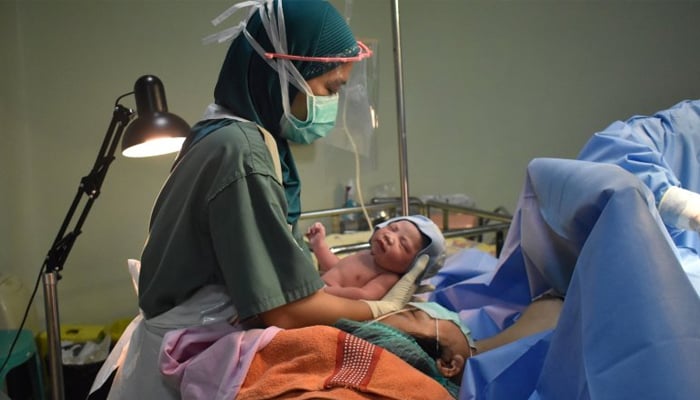
According to a study by the WHO, Unicef and the London School of Hygiene and Tropical Medicine, Pakistan is among the worst-affected countries in terms of preterm births, with a preterm birth rate of 14.3 per cent. This is around three to four times the rate in the least-affected countries, with around 13.4 million babies being born early, accounting for approximately 10 per cent of all live births. Experts say that pre-term babies are more vulnerable to life-threatening health complications – preterm birth is one of the leading risks behind neonatal mortality – and require special care. Unsurprisingly, Pakistan also has one of the world’s highest rates of neonatal mortality, with 41 deaths out of every 100 live births according to a study published in The Lancet. The country is ranked third in 2020 among the 10 countries with the highest number of neonatal mortality, maternal deaths and stillbirths.
These alarming statistics point to gross inadequacies in our national healthcare network, particularly when it comes to quality maternal and newborn care. Beyond healthcare, the problem can also be traced to our continued inability to provide basic amenities to much of the population. Malnutrition is closely linked to preterm births as is adolescent pregnancy, highlighting our failures to advance the rights of women. More than anything, the high rate of preterm births and maternal and neonatal deaths points to how successive governments have simply ignored the healthcare needs of the underprivileged, who are often the ones who need it most. While there are a lot more hospitals and medical colleges in the country than in previous decades, their services remain largely for those who can pay for them, which given our economic circumstances leaves much of the population with precarious access to health services at best.
Ignoring a glaring need does not mean it is going to go away. The state’s current approach to healthcare has only led to a mounting healthcare burden over time. The country’s high rate of preterm births is a good illustration of this phenomenon. According to the WHO, aside from being linked to higher neonatal mortality, preterm births are also tied to poor health and growth and intellectual and mental disabilities in those children that do survive, which require long-term care in order to deal with. Thus, we can see how ignoring more immediate healthcare needs tends to exacerbate our healthcare problems. The longer we delay the development of a comprehensive universal healthcare network that can provide high-quality care to all, regardless of wealth and income, the more daunting this task will become.







-
 Prince Philip Never Wore ‘heart On Sleeve’ For Queen Elizabeth II
 -
 Prince William, King Charles Differ On Approach To Beatrice, Eugenie
 -
 Jorginho Frello Admits 'he Was Wrong' On The Chappell Roan Security Controversy
 -
 Kylie Kelce Reveals Which Daughter Shows CEO Potential
 -
 Queen Elizabeth II ‘real Feelings’ About Brexit Spilt By Obama
 -
 Why Nobody Wants Shamed Andrew’s 30-room Mansion In Windsor?
 -
 Prince William Told He Will Need Princess Eugenie, Beatrice After Becoming King
 -
 Brandi Glanville Reveals How Viral Remedy Turns Into Medical Emergency
 -
 BTS’ RM Opens Up About Haters Wanting Them Disbanded: ‘You Guys Had Your Little Fun’
 -
 Brooklyn Beckham’s Ex Comes Forward About David, Victoria: ‘The Family Caused Me A Lot Of Anxiety’
 -
 Ruby Rose Turns To Police After Accusing Katy Perry Of Sexual Assault
 -
 Sarah Ferguson Believes She Still Controls The Narrative Amid Jeffrey Epstein Controversy
 -
 Kanye West’s Early Artwork Now Valued At Millions: Watch
 -
 Katy Perry Breaks Silence On Ruby Rose’s Assault Allegation
 -
 Prince William ‘absolutely Refuses’ Prince Harry A Big Olive Branch: ‘It’ll Send The Wrong Message’
 -
 Alix Earle And Alex Cooper's Drama Hits Peak After Call Her Daddy Podcast Host Speaks Out