
Call for political consensus
A group of politicians and bureaucrats is organizing a series of seminars across the country aimed at bringing about a “political consensus for restructuring the governance structures of Pakistan”
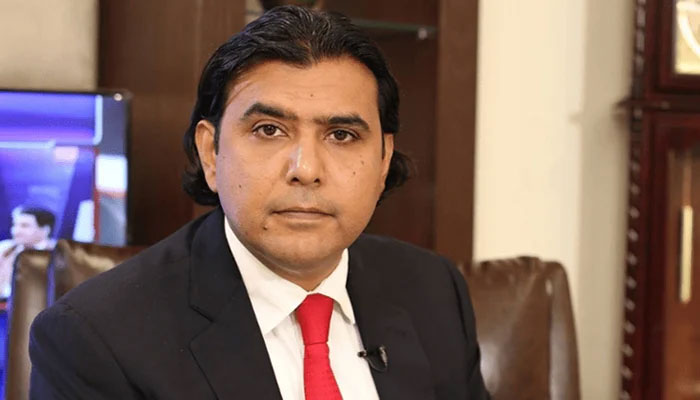
KARACHI: A group of politicians and bureaucrats, including former PPP senator Mustafa Nawaz Khokhar, former finance minister Miftah Ismail and former prime minister Shahid Khaqan Abbasi, is organizing a series of seminars across the country aimed at bringing about a “political consensus for restructuring the governance structures of Pakistan”.
The initiative was announced by Khokhar on Monday via a Twitter thread in which he announced that the first seminar would be held on Saturday, January 21 at Noori Khan Cultural Complex in Quetta hosted by “Lashkari Raisani, Humayun Kurd and friends”.
Khokhar wrote that he had been discussing current political, economic and social situation in the country with colleagues and friends in a bid to “rethink or reimagine” the governance structures of Pakistan at a time when “”individual and collective rights are under severe stress causing a widespread dissatisfaction of people across regional and ethnic divides”.
Talking to The News, Mustafa Nawaz Khokhar explained the thinking behind this “nonpartisan effort” and said that: “From political uncertainty to economic meltdown to polarization in society that has reached dangerous levels of intolerance, Pakistan is not facing just one crisis but multiple crises at the same time. Today we are at a juncture where we are actually at a ‘naazuk morr’ — a phrase that we always hear but only when powerful quarters don’t want something to be talked about”.
Former finance minister Dr Miftah Ismail in a comment to The News elaborated on the essential ethos behind the series of seminars, saying that: “I think it is safe to say that Pakistan is not living up the dreams of our founders, our father, our mothers. And it is up to us to change things.”
About the group behind this initiative, Dr Ismail said: “Shahid Khaqan Abbasi has been a former prime minister; I have served as a minister; Mustafa [Nawaz Khokhar] has also been in government; Fawad Hasan Fawad has been principal secretary to the PM. This country has been very good to all of us -- there are many others who are part of our group as well. We have [all] been part of governance in this country and I think we owe it to our country now to bring about a consensus among all the stakeholders to move this country forward. That is the aim of these seminars”.
Khokhar said he and “like-minded friends and colleagues” had decided to hold these seminars to form a political consensus on “issues that really matter” because, according to him, “we need to talk about everything that we have been told not to talk about over the last seven decades — from human rights violations to missing persons to religious extremism to political representation to class divisions to income disparity to the judiciary’s role in politics to the establishment’s role.”
Who will the stakeholders be? “A wide variety of activists, students, labour leaders, intellectuals, opinion leaders, politicians -- politicians that agree with us, politicians that don’t agree with us -- will all be invited” to the seminars, explained Dr Miftah Ismail. He added that the group is planning “five seminars -- one each in the provincial capitals and one in Islamabad. In each province, we will discuss some of the issues of that particular province as well as obvious national issues”.
After Khokhar announced the seminar series on Twitter, Asad Ali Shah, also part of the group, tweeted that: it is “no longer possible to continue with ‘business as usual’. It has to be business as Unusual. It [is] my personal opinion that an open national debate and analysis is required across party lines between political parties, businesses, professionals etc to work out minimum agenda of structural reforms in areas of governance and public financial management to drastically improve service delivery, reduce cost of doing business, and improve human capital - the most important asset of the country”.
Uzair Younas, director of the Pakistan Initiative at the Atlantic Council’s South Asia Center and host of the podcast Pakistonomy, applauded the initiative on Twitter and added that “the seminars should be accompanied by white papers and executable roadmaps on reforms and how to achieve them. Too often the right set of things is said but the process through which execution happens is never laid down.”


