This week, the writer takes us on a journey to the magnificent Tharparkar. Read on…
travelogue
There’s a place in Sindh where the desert breathes ancient tales and the sun whispers across sand dunes. It’s called Tharparkar - a name woven from ‘Thar’ (the desert) and ‘Parkar’ (to cross over). Once lush and green, this land slowly turned into a golden sea of sand, sometime between 2000 and 1500 BCE. But if you listen closely, you’ll hear the stories the wind still carries - of rivers, resilience and religions living in harmony.
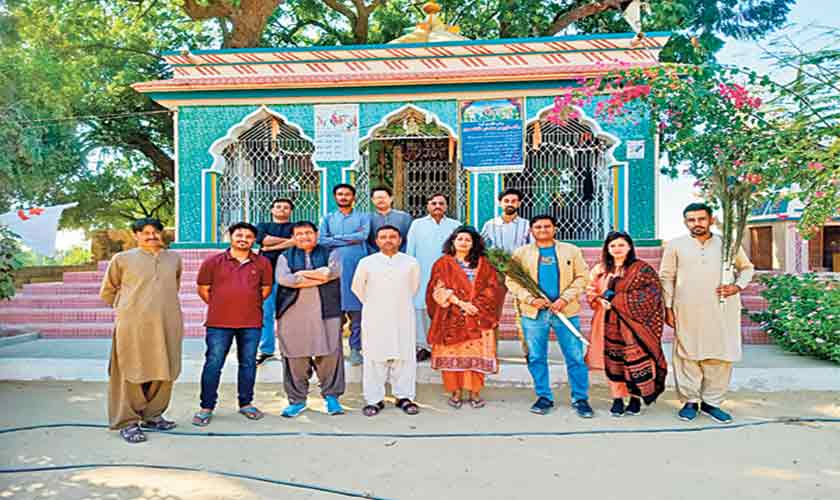
Recently, I had an opportunity to visit Tharparkar. A spontaneous plan with my office colleagues turned into a soulful escape to Mithi, the administrative capital of the Tharparkar District. We had a three-day trip to Tharparkar to explore the beauty of the desert and breathe in the cultural values of the community. Read on…
Mithi – Where harmony prevails
We had a five-hour drive to reach Mithi. As we entered the town, it felt like stepping into a storybook where faiths don’t clash - they coexist. We passed a gurdwara, then turned a corner and saw a dargah alive with music and colour. Not far ahead, a mandir and a masjid stood side by side. People sat peacefully outside in bright traditional dress, their clothing itself reflecting both Hindu and Muslim communities. No speeches. Just shared air. That moment wasn’t just seen; it was felt.
After checking into our rooms and freshening up, we visited Gadi Bhit in the evening - the highest point of Mithi, built atop a sand hill. It offers a breath-taking panoramic view of the town. The cinematic feel rivalled the scenic heights of Islamabad’s Monal or Daman-e-Koh.
Our next destination was the village of Malanhore Veena. It was a dream woven in sand and sound. Walking barefoot on the desert sand, peacocks freely strolled beside us, as if guiding our path. Have you ever heard the sand sing? It does - when peacocks walk and the wind moves softly, you hear nature’s music. A beautiful evening wrapped in desert serenity.
At night, we all went to a local hotel to enjoy the food of Tharparkar. We enjoyed delicious vegetables and naan. Surprisingly, we also had paneer rice and vegetable koftas.
Nagarparkar – The city of history and architecture
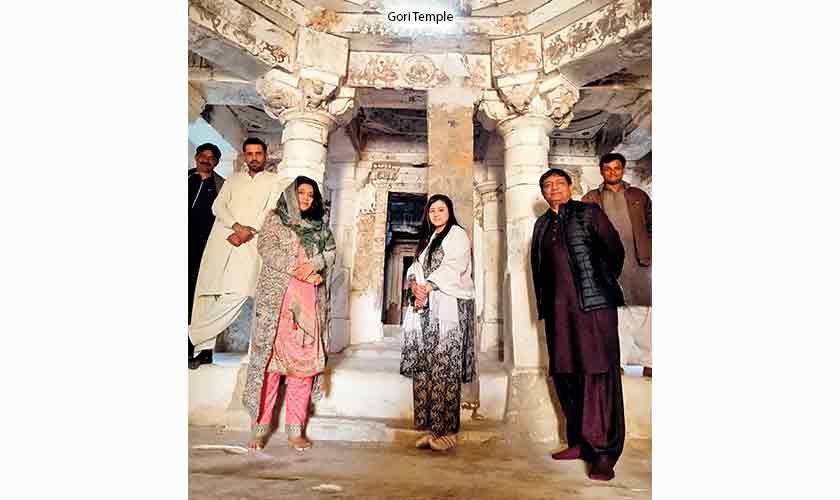
The next morning, after having channa and puri, we began our journey from Mithi to Nagarparkar - an hour’s drive to reach Nagar. Our first stop in Nagarparkar was the historic Gori Temple, built in 1376 AD by the Jain community. Tharparkar was once a significant centre for Jainism. The Gori Jain Temple, dedicated to Lord Parshwanath, is part of the Nagarparkar Cultural Landscape, which was inscribed on UNESCO’s tentative list for World Heritage status in 2016.
The temple is a beautiful portrayal of Jain architecture, with a white dome and intricate artwork inside. Unfortunately, the merciless hands of time have taken their toll and we witnessed broken pieces of stone and rooms that seem to be waiting for the attention of preservation institutions.
We were fortunate to be guided by Mr Partab Shivani, CEO of the Thar Education Alliance - a living encyclopaedia of the region. As our leader, he brought the landscape alive with tales of culture, architecture and spirituality.
Outside the temple, two local men sang a Kabir kalam on a tambura. Their voices floated into the sky, creating an atmosphere of soulful Sufi tranquillity. It felt as if the desert had paused to listen.
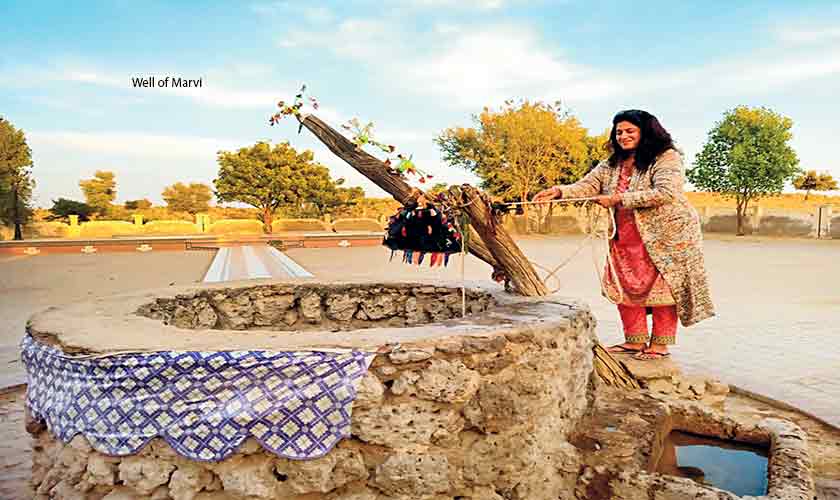
The well of Marvi and Museum: From the silence of Sufism, we stepped into the legendary world of love and resilience: the tale of Umar Marvi. The Well of Marvi and the museum dedicated to her belongings transported us into her world. Marvi, a local Thari woman, was kidnapped by King Umar several thousand years ago at the well’s spot. The museum houses a sculpture, her jewellery and other belongings. The well has not dried up; it is maintained by the management and provides an opportunity to fetch water.
The Rann of Kutch: Our journey led to one of the most thrilling moments - stepping into the Rann of Kutch, a long-held dream I finally lived. The white salt desert, once a part of the Arabian Sea, had dried up over centuries. This surreal landscape glowed under the winter sun. During British rule, the harvesting of salt was banned and the protests against it sparked movements that added to the region’s historical weight. On our journey back, the Rann echoed with silence like an ancient lullaby.
Bhodesar Temple: Leaving our footsteps there, we moved to Bhodesar Temple and its ancient water tank, Bhodesar Talao. Though it was dry, it fills with blue water during the rainy season. The temple, built with stones without mortar in the 9th century CE has partially collapsed. I urge the government to preserve this historical treasure before it fades into dust. During the rainy season, the lake revives, making it a tranquil oasis.
Our day ended at a rest house maintained by local residents, adorned with cultural touches. Small chaunras were there, rooms were available and there was a space for a bonfire or gathering. A bonfire, singing songs, sharing poetry and exchanging experiences - I realised that the absence of internet and mobile signals was a blessing. It helped us reconnect with nature, with culture and with each other. In those conversations around the firelight, I realised how much these simple human connections matter.
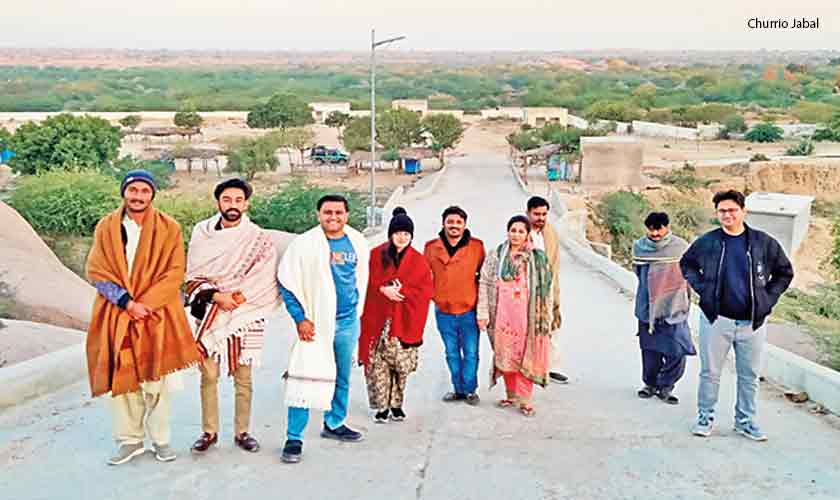
Churrio Jabal: The next morning, we witnessed the beauty of the mountains. The darkness of night had faded and the rest house was surrounded by peaks - an eye-catching view. Then we headed toward the Churrio Jabal Temple in Churrio village. Surrounded on three sides by the Great Rann of Kutch, it is reputed to be one of the world’s largest salt marshes. To reach Churrio Jabal, we hired a local jeep, as cars are not feasible due to the kacha rasta - no carpeted or smooth roads. To reach the temple, we had to climb countless stairs. From the hilltop, the scene was dramatic as we saw the border from the top of the temple. It was surreal to stand so close to the border. Though the border stopped us from exploring and running freely across the vast Rann of Kutch, the rising sun gave us strength to renew our vows of peace and harmony.
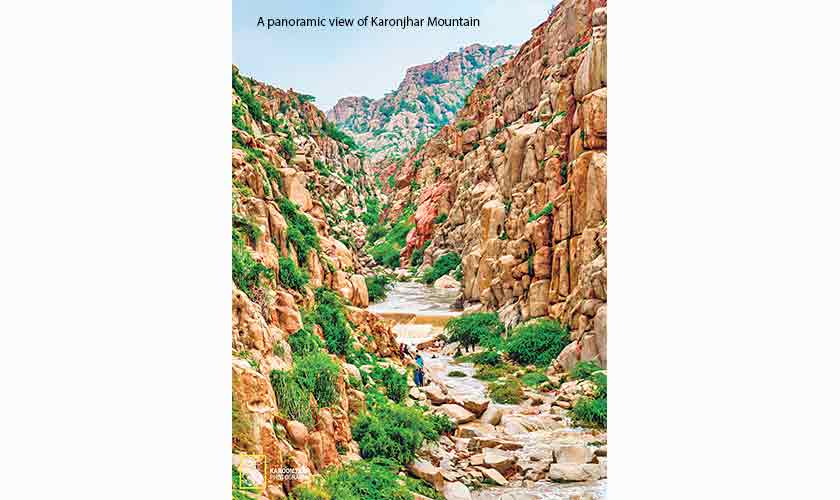
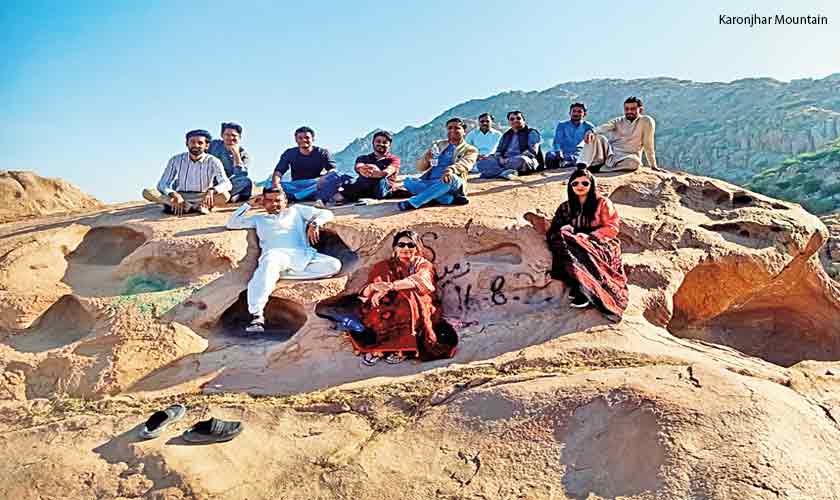
Karonjhar Mountain: After viewing the border, we moved to the small dam and initiated our journey toward our rest house for brunch. After the heavy brunch, we headed to Karonjhar. Imagine a mountain placed lovingly by the heavens into the desert. Its red stones, carved by time and wind, form shapes that seem to speak. Some resemble animals guarding a forgotten paradise, while others look like they’re whispering secrets to each other.
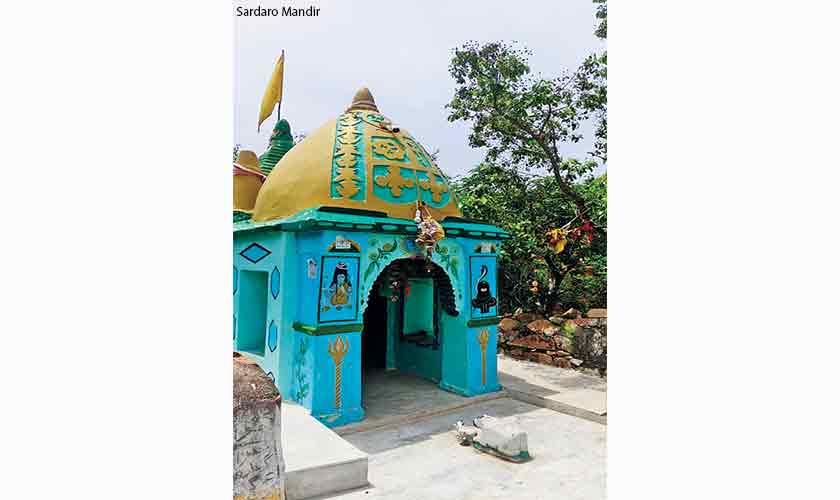
We also visited Sardaro Mandir, nestled in the Karonjhar Mountains. Mr Partab Shivani told us about the sacred practice of Asthi Visarjan carried out here. According to Hindu belief, Shiva once stayed at the site and a tributary of the River Ganga once flowed into its pond. It is a final resting place, where ashes of the departed are immersed with reverence. Sadly, the pond was unclean, reflecting a lack of maintenance. Such sacred sites deserve respect, cleanliness and care.
We enjoyed the mountain’s beauty and then came a playful moment. A group of village children approached us and said they could climb Karonjhar and return within five minutes. We laughed it off - impossible, we thought. But one child, Zarar, proved us wrong. With the agility of a mountain spirit, he climbed and returned swiftly. He told us he attends school and climbs the mountain each evening to earn some money for his mother. If the government supports such skills, no wonder these children could become world-class mountain climbers one day.
Tharparkar is a desert where silence sings and stories breathe. Throughout our journey, the peacocks became our companions. This journey wasn’t just about travel - it was about connection with the land, with faiths, with people and with ourselves. In a time of division, Tharparkar reminded us that coexistence is not just possible, but beautifully natural.