According to the International Labour Organization’s latest gender pay gap report, women in Pakistan are consistently paid less than men even when they have the same level of education and experience. You! takes a look…

At 28, Samia*, a digital journalist and creative, was on track to become head of her team. With eight years of experience under her belt, it was a moment of pride - her joy doubled and her confidence boosted by the praise she received for her work at every meeting. However, when it came time to negotiate a salary raise tied to a prospective promotion, her employer’s reaction was not only unexpected but cruel: laughter. The figure she had quoted was ‘almost close’ to what her male employer was earning and was therefore deemed impossible to match.
Samia’s experience is not an isolated one. According to the International Labour Organization’s latest gender pay gap report, women in Pakistan are consistently paid less than men even when they have the same level of education and experience.
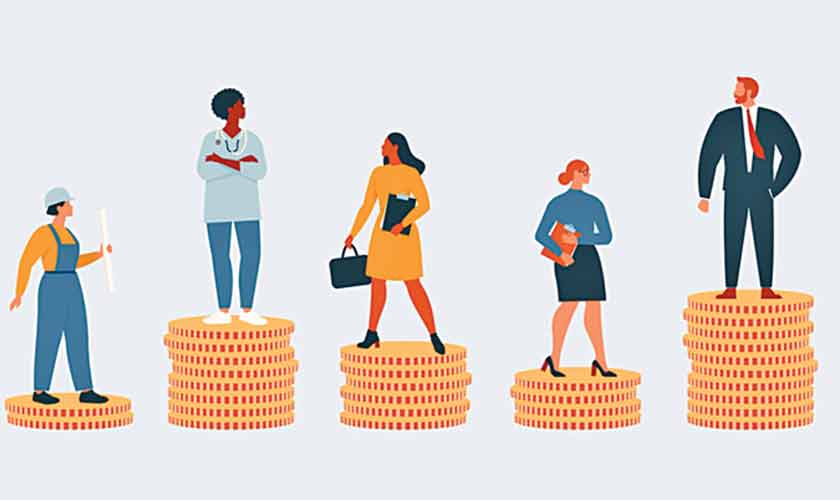
In numbers: for every 100 rupees a man earns, a woman with similar credentials earns only about 75 rupees - and this is only among women in salaried jobs. Data collected between 2013 and 2021 shows a 56 per cent gap in employment between men and women, a figure that does not even account for the vast number of women working as unpaid family workers.
The ILO report analysed the drivers of the wage gap among salaried employees, categorising them into ‘explainable’ and ‘unexplainable’ factors. Explainable factors are those that can be measured, such as education, age, or job type. But a significant portion of the gap could not be explained by such differences - a portion likely reflecting direct or indirect discrimination.
Having been part of the workforce for quite some time, I have had a front-row seat to the discrimination women must navigate in spaces that were simply not designed for them. A disapproving sigh often hangs thick in the air from male colleagues - whether for holding the same role as them, sitting beside them, being appreciated, or being confided in.

Beyond the rhetoric of women’s rights and empowerment, the glass ceiling in Pakistan remains firmly in place, threatening to undo whatever progress has been made toward closing the gender gap in the labour force.
Bilquees Anwar, a 26-year-old scriptwriter at a real estate development firm, had to memorise the invisible rulebook of ‘workplace etiquette for women,’ which counted on her silence to be considered well-behaved. “The moment I voice something, I become ‘too much’,” she says. “The moment I set a boundary or speak up, I’m labelled insecure or a feminist, as if that’s an insult. People joke, ‘ye tumhari izzat uchaal degi’ (she will ruin your reputation), and even women treat me differently for not staying quiet,” adds Bilquees.
Maryam, 27, is constantly forced to perform additional ‘emotional labour’ to be accepted as the lead of her digital marketing team. “Men don’t take women seriously otherwise. I have to balance being a boss, a supportive colleague, managing my own boss, and maintaining my sense of girlhood - without seeming too bossy, too soft, or like the boss’s pet,” elucidates Maryam.
The labour of being likeable - of avoiding being perceived as either too aggressive or too submissive - does not translate into higher pay. In fact, women are deliberately hired into lower positions and paid less than men to reinforce the latter’s default role as ‘providers’ in society.

The conspicuous gender imbalance has been a feature of nearly every workforce in Pakistan. This reality led Nida Usman Chaudhry - a lawyer, diversity and inclusion advocate, and founder of the Women in Law Initiative Pakistan - to educate herself and push for the systemic changes professional women need.
“There’s an expectation for women to be pleasant, agreeable, and non-threatening, which adds an invisible layer of work that men are rarely expected to perform. This emotional labour often goes unrecognised yet affects career progression,” she laments.
According to Nida, there are no laws ensuring fair treatment of employees in terms of pay, leave, or protection from subtle forms of aggression. Even when such laws and policies exist, gaps in implementation and accountability remain.
Mehwish’s* case is an example: she was denied maternity leave twice at two different schools despite clear policies existing on paper. At one, the head yelled at her for asserting her right; at the other, she was offered an extension of her probation period instead.
After a tense confrontation with her employer following the complicated birth of her first child, Mehwish began experiencing panic attack symptoms - heart palpitations, overwhelming anxiety, and mental breakdowns. She eventually made the difficult decision to leave for the sake of her mental and physical health, albeit at the cost of financial stability.
Discussing maternity leave laws, Nida explains that in most private institutions and corporate offices, leave provisions depend entirely on company policy.
“In multinationals, the culture is better, but in smaller local firms, there’s often no concept of it at all. There are huge gaps in the law that need to be addressed,” she expresses.
The ILO report corroborates the lack of accountability, highlighting gaps between the public and private sectors. “There are many laws on workplace harassment, maternity leave but what is their implementation like? Technically, supervisors shouldn’t ask someone to return before their leave ends. Yet people are often unaware of their rights. And when somebody does try to raise a complaint, the redressal systems, such as the courts, are so slow that by the time a resolution comes, it may be too late,” explains Hadia Majid, Associate Professor of Economics at LUMS.
One might assume that teaching - a profession traditionally preferred for women in Pakistani society - offers dignity and autonomy. However, the ILO report highlights that it falls under ‘occupational segregation’, where women are concentrated in sectors that pay less than those dominated by men. “Many women work in teaching or healthcare because these fields offer flexibility to balance domestic responsibilities, but that flexibility often comes at the cost of pay and career growth,” points out Hadia.
Those who manage to break into corporate or industrial sectors often find themselves worn down by structural and behavioural inequities that keep employment rates low and wage gaps glaring. For Bilquees, these inequities translate into persistent character assassination for not fitting the mould of a ‘good woman’, along with social exclusion and unfair work expectations. “I have tattoos and piercings, and a colleague used that to attack me - calling me a drug addict, lying about seeing me buy cigarettes, and saying my septum piercing is ‘not something decent people get’. I even started flipping the ring inside just to avoid comments. The same person chews tobacco, but the hypocrisy doesn’t matter,” recalls Bilquees.
In our society, there is only so much space for women to exist. After all, isn’t it considered an act of generosity that they are even ‘allowed’ to work and earn? In return, they are expected to remain culturally aligned and conform to the regressive codes of behaviour designed for them.
For a nation that once cheered Halime Sultan - holding a horse’s reins in one hand and fending off enemies with the other - Pakistan is quick to scoff at women who dare to step outside their homes and claim the same economic benefits they contribute to.
According to Maryam, these double standards begin right at recruitment. “HR or content writing roles are ‘considered’ more female-oriented,” she observes. “Managers often say not to hire women for certain roles because ‘unky bohat nakhry hoty hein’ - meaning they won’t stay after hours due to family commitments, can’t come in bad weather, or will eventually take marriage or maternity leave,” she adds.
The dual role of working women is conveniently overlooked when setting job expectations, yet weaponised when it comes to promotions and salary raises. Nida notes that a man getting married is often perceived as more stable and deserving of a raise, while a woman is relegated to the role of secondary earner.
“This idea (of the secondary worker) is prevalent. When layoffs happen, women are the first to be let go because managers assume the man is the primary earner. Gender norms directly influence job security and wage progression,” comments Hadia.
Hadia also highlights that women are more prone to career breaks due to ‘time poverty’ - the unrelenting burden of unpaid domestic labour. While men bond with senior colleagues after hours, women are typically tied to household responsibilities. Even those earning more than the men in their families are still expected to shoulder childcare and housework to ‘make up’ for pursuing their careers.
This is why Nida advocates not only for bringing more women into workplaces, but also for bringing men into the home. “We need policies, cultural shifts, and awareness that normalise men sharing domestic responsibilities,” she stresses.
Amra Mubashir, General Manager of Human Resources at Tapal Tea and a diversity and inclusion expert, echoes this sentiment. “If you have day-care, make it open for dual careers. Don’t open it only for women - let men also bring their children. Flexible policies, maternity, paternity, everything has to be inclusive.”
She emphasises the need for evolving HR systems that are gradually addressing bias through recruitment training, line manager mind-set shifts, and succession planning. “HR systems have evolved a lot… but it will take time for our social lens to change,” she reflects.
Still, women like Bilquees and Mehwish argue that progress is meaningless when workplace administrations and colleagues fail them entirely. “I’ve been diagnosed with severe depression and PTSD, and I’m open about it so people can at least be kind. Instead, they use it as a weakness, isolate me, and push me into panic attacks,” shares Bilquees.
These forms of micro aggression often go unaddressed because they are either not recognised as harmful or simply disregarded since men are unaffected by them. This lack of support from male colleagues remains a troubling roadblock. “The more organisations emphasise gender diversity, the more internal resistance from men increases. That is not helpful. Organisations need to work both ways - creating inclusivity for all genders, and building a culture of trust, integrity, and professionalism,” suggests Amra.
The main legal tool for women in Pakistani workplaces is the workplace harassment law, amended in 2022 to include gender-based discrimination. But it remains too broad to address the specific biases women face.
According to Hadia, “Legal reforms respond to societal pressure - and societal pressure, in turn, responds to legal reforms. Women may not be fully aware of their rights, and even when they are, they may hesitate to assert them. Effective implementation requires both legal and cultural change.”
“One of the key drivers of gender diversity is advocacy and sponsorship from leadership - especially male managers. They need to open doors to opportunities, and women must demonstrate their skills to sustain them,” emphasises Amra.
While the stories of Samia, Bilquees, Maryam, and Mehwish lay bare the lived reality of Pakistan’s gender pay gap, expert’s stress that meaningful change will only come through structural reform. Equal pay laws must be strengthened - if they even exist - by embedding the principle of ‘equal pay for work of equal value’ into every labour law.
Workers in the informal sector, where the pay gap is widest according to the ILO report, must be transitioned into the formal economy with full protections. Maternity leave should be standardised for each child, paternity leave made compulsory, and affordable childcare expanded so that domestic labour does not fall solely on women. Labour surveys should more comprehensively track unpaid care work, gender perceptions, and wage disparities, while researchers should be given access to administrative data to better analyse and address inequities.
These measures would target not only the visible wage gap but also its ‘unexplained’ component - the discrimination and entrenched norms that quietly shape hiring, pay, and promotion. Without systemic change, the glass ceiling will remain intact, and women’s lived experiences in the workforce will continue to echo the testimonies shared in this piece.
*Names have been changed to retain privacy.
Bazigah is a journalist who is passionate about uncovering societal issues, cultural dynamics and the nuanced portrayal of women in South Asia. She can be reached at bazigahmurad01@gmail.com