HAPPENINGS
“When we speak of the lover and the beloved, it doesn’t regard the story of a novel or the setting of a film.
The Beloved is that yearning for the greater in life and the lover the search for it.
The Beloved is that for which you set yourself free.”
These introductory lines from Some Lover to Some Beloved, a documentary feature film, sounded too philosophical in the beginning but by the end of the documentary they began to make sense.
While watching this hour-long film at Pakistan International Film Festival ’18, I realized, amidst exhausting distractions, we hardly get any time to admire literature and reflect on it. Literature has answers to some of the most complex questions in life, but we always fail to understand them.
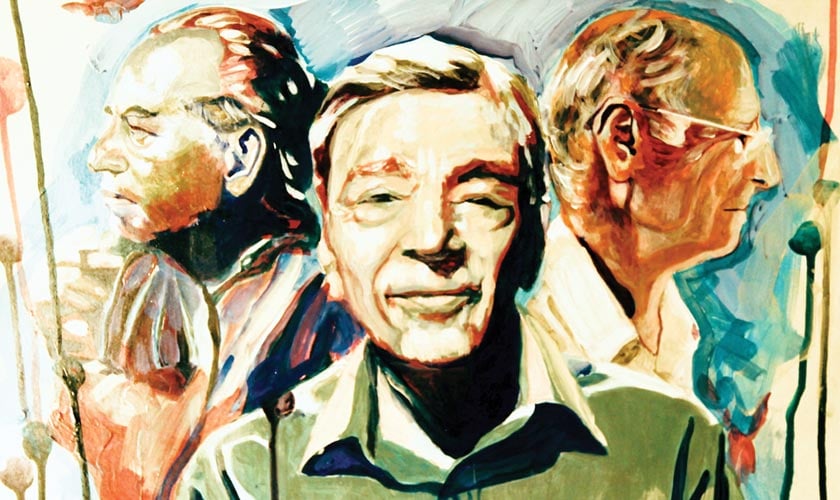
Some Lover to Some Beloved, titled after Faiz’s poem, celebrates Zia Mohyeddin, an iconic Pakistani actor. Zia Mohyeddin himself takes us on a delightful trip down memory lane. Reflecting on his favourite childhood memories, Zia tells the audience how acting as a 10-year old in a play written by his father introduced him to the magical world of stage.
Zia beams with pleasure as he walks us through his exciting acting career. After his training at Royal Academy of Dramatic Art, he got a chance to perform at West End theatres followed by an opportunity of starring as Tafas in Lawrence of Arabia (1962) which also earned him great respect at home. In Pakistan, he produced and presented TV shows and recited literature at various platforms.
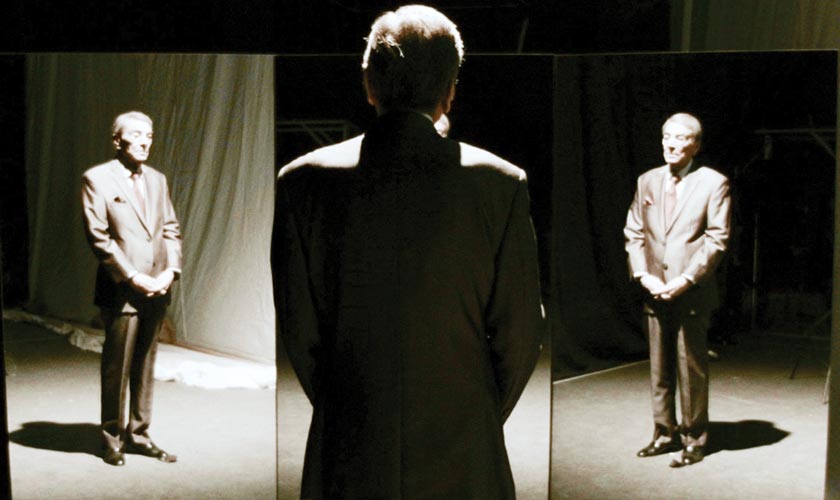
In this stunningly photographed documentary, we see Zia rehearsing in front of mirrors before the annual readings on New Year’s Eve in Lahore. For him, the art of recitation that is reading, interpreting and projecting other people’s thoughts is of utmost importance. “That’s the core of my work - to be an interpreter - and that’s why I have fallen in love with language itself,” Zia emphasizes.
A considerable part of the documentary is dedicated to the lives of Faiz Ahmed Faiz, an Urdu poet, and Prof. Rahbar Dawood who were greatly revered by Zia Mohyeddin.
Zia repeatedly expresses his gratitude for the influence they had on his life. The film shows the footage of one evening in Lahore on the 31st of December where Zia pays tribute to the legendary poet, Faiz Ahmed Faiz, by only reading his poetry.
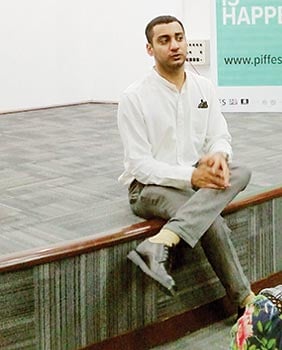
In conversation with Us, Umar Riaz, Student Academy Award Nominated filmmaker and the director of the Some Lover to Some Beloved, shares his experience of making this remarkable documentary feature film.
Tea and the readings
“I have been attending Mr. Zia Mohyeddin’s readings since I was a child. You could say that my first job was to bring him tea backstage before his performances. Once I began film school, I decided to film one of his readings. As fate would have it, it was the year of Faiz Ahmed Faiz’s 100th birthday and Mr. Zia did a performance dedicated to Mr. Faiz’s poetry and prose. I took the footage back to school in New York with me and showed it to my professors and classmates. They were very intrigued and wanted to know more. Thereon, I began a long journey to explore the stories behind the poetry and its performance.”
The best and the worst moments
“The most meaningful moment was showing a rough cut to Minos Mohyeddin, Mr. Zia Mohyeddin’s eldest son, privately. He didn’t say much after the film and was overcome with the kind of emotion which is deeply felt rather than spoken. It meant a lot to me.
“The worst moment was being ambushed by two dozen monkeys while filming mountains in the north of Pakistan. They had me cornered with my equipment at the edge of a cliff. A local tribesman saw what was happening and saved me at the last minute!”
Youth and identity crisis
“I often hear in the local industry that my work and especially this film would only appeal to a niche, elder, ‘intellectual’ audience. I completely disagree with this and feel that people who have this perspective, many of whom are gatekeepers, are out of touch with the wants and needs of our youth. I had the good fortune of attending Mr. Zia Mohyeddin’s readings since childhood. At the time, I couldn’t understand much of literary Urdu but simply the exposure meant the world to me. I’ve visited and given talks at schools and colleges; our youth wants to connect with culture which they can call their own. But for that they have to be exposed to it first. So, I’ve made this film as much for the youth as I have for the elder connoisseurs of poetry and performance. At one point in the film, Zia Sahab recites Noon Meem Rashid’s poem Zindagi Se Darte Ho. The first verses go, ‘Zindagi se darte ho? Zindagi tou tum bhi ho. Zindagi to hum bhi hain.’ Something like that is applicable as much to youth as it is to the aged.”
Advice for young filmmakers
“Find the stories you feel no one else is going to tell. Then, give it your all - every available fibre of your being - and don’t give up.”
Hosted by Karachi Film Society, the inaugural Pakistan International Film Festival (PIFF) ’18 was attended by people from all walks of life. “At PIFF ’18, you could find professional and young amateur filmmakers, storytellers, actors, scriptwriters, students and even people who knew nothing about film,” Rafay Rashdi, the producer of the festival, tells Us about PIFF ’18.
In bringing together the best of Pakistani and world cinema, to delight the audiences, PIFF ’18 supported the development and production of feature films, documentaries and short films from established and emerging filmmakers in Pakistan.
Rafay said, “We had mobile screenings all over the city before the festival and digital story telling workshops were organized for students. In a three-day seminar, we had 30 students who got a chance to learn the art of filmmaking under the supervision of some of the great filmmakers in the industry; Sarmad Khoosat, Javed Jabbar, and Sharmeen Obaid Chinoy, Rizwan AQ were among the mentors.
“We have to push the boundaries of filmmaking locally and internationally, strengthen friendship between all countries, connect filmmakers, investors, exhibitors, and improve networking. To make sure cinema thrives as an industry, Pakistan needs to stand at the forefront and showcase talent to wider audiences. The exchange of knowledge is important here.”