Padmaavat is classic Sanjay Leela Bhansali cinema to the extent that at times you lose track of where Bajirao Mastani ends and Padmaavat begins. That, by the way, is one of its flaws.
INSTEPREVIEW
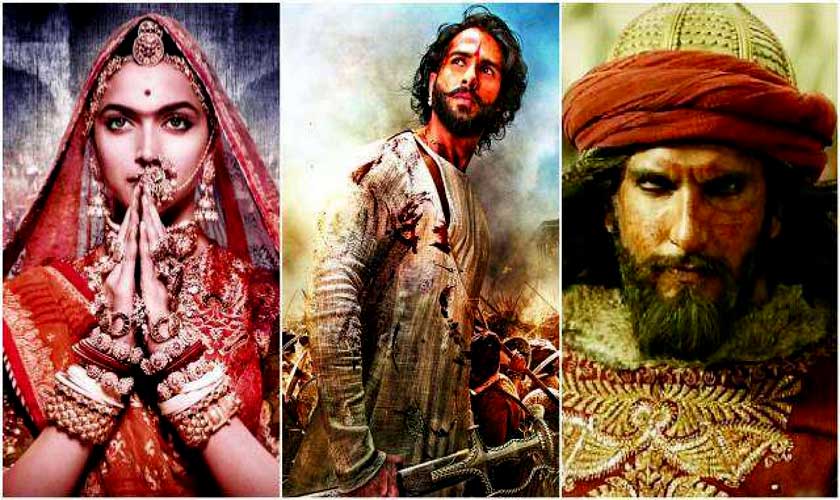
Padmaavat is a film that serves all the senses. There is grandeur in every frame; there is poetry in every dialogue. The film is honoured by brilliant actors, in this case Ranveer Singh, Deepika Padukone and Shahid Kapoor, who pay homage to a 16th century poem written by sufi poet Malik Muhammad Jayasi. It is fuelled by brilliant costumes, exorbitant sets, CGI effects in drawn-out scenes of battle and warfare, a rich soundtrack and a general sense of opulence that justifies its mammoth INR 200 crore budget. Padmaavat is classic Sanjay Leela Bhansali. In fact, it’s classic Sanjay Leela Bhansali to the extent that at times you lose track of where Bajirao Mastani ends and Padmaavat begins. That, by the way, is one of its flaws. ‘Malhari’ for example, could easy be switched with ‘Khalibali.’
Padmaavat is the mythical story of Rani Padmaavati (Deepika Padukone) who is married to Maharaja Rawal Ratan Singh (Shahid Kapoor) and whose beauty is the reason behind Alauddin Khilji’s interest in invading Chittor. Legend has it that her beauty is what attracted him to the region; he planned the invasion solely to capture the famously beautiful queen. Some say he used the Queen’s beauty as a reason to invade and capture Chittor, which was considered impenetrable. It’s the story of a power-hungry, ruthless and immoral emperor Alauddin Khilji (Ranveer Singh) versus the upright, honourable Rajputs, who choose death over amorality.
Very strong disclaimers before the film begins relieve it of all responsibility concerning the historical accuracy of the story and characters, costumes, customs and basically everything. India’s Rajput community has been protesting the characterization of Raja Ratan Singh and the idea of a romance between their revered queen and a Muslim conqueror, but it is in fact the Muslims that should be objecting to the misrepresentation of Alauddin Khilji, who on screen is more a medieval barbarian than the revolutionary emperor/conqueror that he actually was. Shantanu David of News 18 criticized the portrayal of Khilji in the film as “an intemperate, sadistic horn dog with no morals and severe impulse control issues”. So one thing is for sure, Padmaavat is all fiction.
Is it worth the three hours you’ll spend in the cinema? If you’re a fan of the SLB genre of movie making then yes, you’ll sit riveted by every frame, as I was. The film is a visual extravaganza. The characters are the second pillar of the film and while people may be applauding the three main characters – Ranveer Singh and Shahid Kapoor are brilliant in their armour but I found Deepika Padukone disappointingly static with her perpetually wet eyes and faraway yet determined look – it is the smaller actors that I came away most impressed with. Jim Sarbh, who plays Malik Kafur, Khilji’s eunuch slave/companion/general, is epic in his portrayal. I’d love to see him in more movies. Aditya Rao Hyderi has a small but significant role as Mehrunisa, Allauddin’s wife and she too has done justice to her role. Ratan Singh’s commander in chief is so honourable and valiant that one would happily trust him with their life. Reverting to the main cast, I have read about the intensive training that the lead actors put themselves through and with Ranveer Singh and Shahid Kapoor, it shows. While Ranveer’s is a more boisterous and attention-seeking role, I have to confess that it is the smaller Shahid that delivers the chops with more finesse.
The only problem with Padmaavat – and this is a big problem – is in its endless and long drawn-out glorification of jauhar, or self-immolation, a tradition practised by Rajput women in which they’d throw themselves into the fire to avoid being taken captive by conquerors. Jauhar is portrayed as a beautiful, lyrical ritual that women – uniformly dressed in red as brides - would whole-heartedly and happily embrace. Historians remember it as quite the opposite. It was brutal and ugly and women would mostly be forced to partake in the ritual as the honour of the Rajput men was held higher than the life of the women. Honour killing. Sound familiar?