NASA releases highest-resolution image of Jupiter's moon Europa
The latest image, captured on September 29, has puzzled astronomers
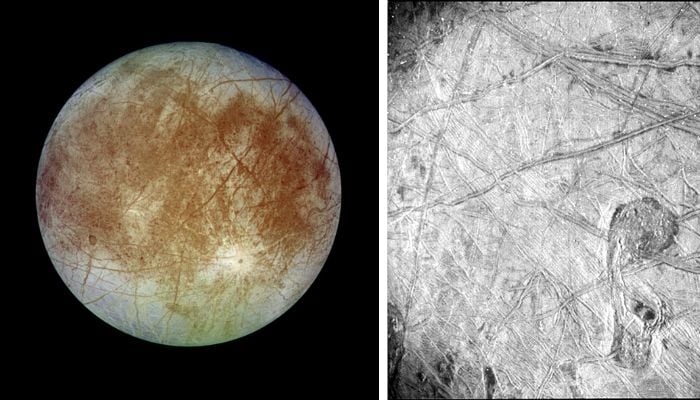
NASA's Juno spacecraft which monitors the surface of Jupiter has captured a one-of-its-kind image of Europa, which is the gas giant's most popular moon.
The image shows a region of 150 kilometres by 200 kilometres of the surface of the moon known for having water. In the picture, a "crisscrossed network of fine grooves and double ridges" can be seen.
The latest image, captured on September 29, has puzzled astronomers. The spacecraft reached almost 400 km above the surface of the moon which will soon have its own mission.
The Stellar Reference Unit (SRU) is a star camera used to orient the spacecraft which captured the black-and-white image with a resolution never seen before.
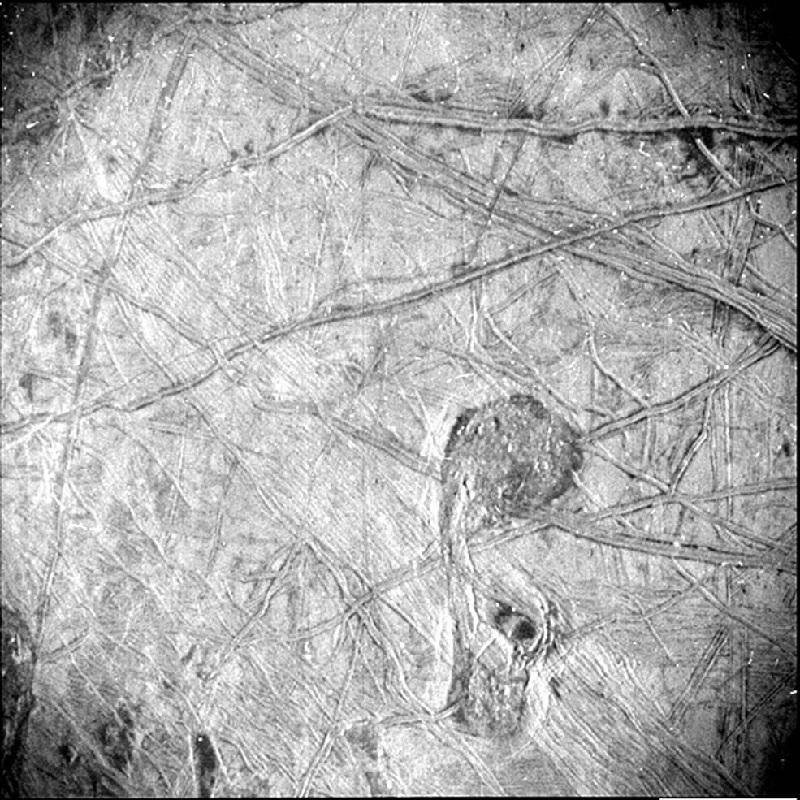
"Designed for low-light conditions, the SRU has also proven itself a valuable science tool," NASA said in a statement.
The icy Jovian moon has dark stains which scientists believe could be a result of eruptions on the surface.
NASA said that the white dots seen on the image could be signs of "penetrating high-energy particles from the severe radiation environment around the moon."
Juno scientists will spend the upcoming weeks studying the image. The current and exact position of the spacecraft can be seen on the official website.
“This image is unlocking an incredible level of detail in a region not previously imaged at such resolution and under such revealing illumination conditions,” said Heidi Becker, the lead co-investigator for the SRU.


-
 Starship flight 14: Why SpaceX’s first-ever orbital test matters to NASA’s Artemis
 -
 New study explains 364-day Qumran calendar puzzle
 -
 Why does time feel faster as you age? Science explains
 -
 Scientists name newly discovered snake after Guns N' Roses' Slash
 -
 SpaceX secures three new NASA crew flights: What to know
 -
 Sovereign AI fund in talks to back Political Sciences: What to know
 -
 What recent discovered Moon Crater Means for Future Astronauts
 -
 Scientists discover new wild cat species in Bolivia for the first time in a century