WHO cautions against travel curbs after discovery of new coronavirus variant
European nations announce travel curbs for South Africa where new strain first detected through surveillance
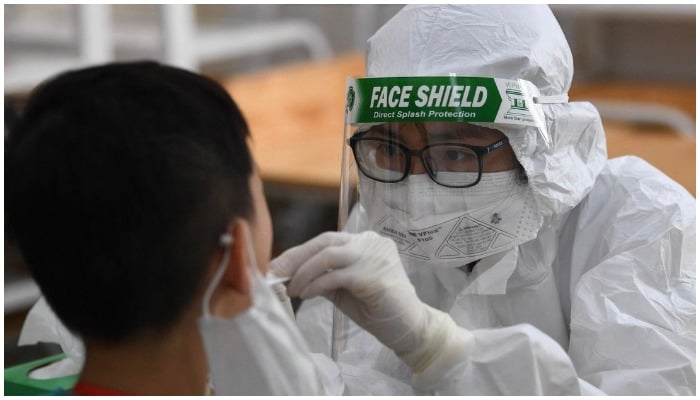
GENEVA: Amid the tightening of travel curbs by European nations in light of the new COVID-19 variant, the World Health Organisation cautioned against imposing travel restrictions due to the B.1.1.529 coronavirus variant, saying it would take weeks to understand the implications of the newly discovered strain.
The World Health Organisation said its Technical Advisory Group on Virus Evolution (TAG-VE) was holding a meeting Friday to discuss the variant first detected through surveillance in South Africa.
As European nations began banning flights from South Africa, the UN health agency said countries should take a risk-based and scientific approach when considering travel curbs in light of the variant — but cautioned against restrictions.
"WHO is closely monitoring the recently reported variant B.1.1.529," spokesman Christian Lindmeier told a media briefing in Geneva.
"Early analysis shows that this variant has a large number of mutations that require and will undergo further study.
"It will take a few weeks for us to understand what impact this variant has.
"Researchers are working to understand more about the mutations and what they potentially mean for how transmissible or virulent this variant is, and how they may impact on diagnostics, therapeutics and vaccines."
Germany and Italy on Friday joined Britain and other European countries in banning most travel from South Africa as governments scramble to prevent the spread of the new variant.
Singapore and Malaysia said they would restrict arrivals from seven African countries.
The WHO is cautious on imposing travel restrictions relating to Covid-19.
"At this point, again, implementing travel measures is being cautioned against," Lindmeier said.
The TAG-VE group began a virtual meeting at 1100 GMT to discuss whether B.1.1.529 should, at this stage, be classified as a variant of interest, or the more troubling variant of concern.
There are currently four variants of concern: Alpha, Beta (which was first documented in South Africa), Gamma and the overwhelmingly dominant Delta.
There are also two variants of interest: Lambda and Mu.


-
 Francis Halzen wins 2026 Nobel Prize in Physics for IceCube neutrino discovery
 -
 Burnham weighs delaying defence spending plan amid NATO pressure
 -
 South Korea orders emergency probe after AI-powered cyberattacks target major banks
 -
 Pakistan, Turkiye, Saudi Arabia activate Makkah pact's defense commitments
 -
 Quebec voters could bring back separatist Parti Québécois to power
 -
 Toronto Pearson gold heist trial begins more than 3 years after $20mn theft
 -
 France school protests: 15-year-old loses hand after picking up police grenade
 -
 Cornell police sought phone evidence that lawyer says never reached prosecutors
-
 Warnings over Christa Pike’s veins were raised before failed execution, lawyer says
 -
Karoline Leavitt joins Fox News after stepping down as White House press secretary
-
Ex-House speaker Dennis Hastert dies at 84, years after molestation allegations
-
US Marine’s arrest over Okinawa killing sparks protests across Japan