
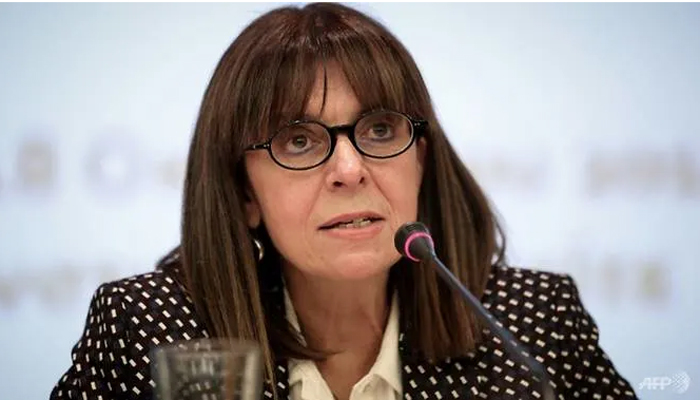
ATHENS: Greece's parliament on Wednesday elected the first woman president in the country's history, a senior judge with no party-political allegiance.
A cross-party majority of 261 of the 294 MPs present at the session voted in favour of 63-year-old Ekaterini Sakellaropoulou, parliament chief Costas Tassoulas said.
"Ekaterini Sakellaropoulou has been elected president of the republic," Tassoulas said.
"This is a very important day for the Greek republic," said Prime Minister Kyriakos Mitsotakis, who nominated her for the post.
"Parliament has elected a remarkable jurist, a consensus figure who symbolises the transition to a new era."
The new EU Commission President Ursula von der Leyen agreed. Tweeting her congratulations to Sakellaropoulou, she added: "Greece is moving ahead into a new era of equality."
Sakellaropoulou herself set out her priorities to assembled journalists shortly after the vote: the economic crisis, climate change and mass migration, all of which required international cooperation.
The new president, until now the head of Greece's administrative court, the Council of State, will be sworn in on March 13, taking over from Prokopis Pavlopoulos.
The daughter of a Supreme Court judge, Sakellaropoulou completed postgraduate studies at Paris's Sorbonne university. She was the first woman to lead the Council of State, the country's top administrative court.
As a jurist, she has particular expertise in environmental and constitutional law.
A consensus candidate
Although the president is nominally the head of the Greek state and commander-in-chief, the post is largely ceremonial.
Greek presidents confirm governments and laws and technically have the power to declare war, but only in conjunction with the government.
Backed by the main opposition leftist Syriza and socialist KINAL parties, Sakellaropoulou's candidacy secured one of the highest vote counts in parliament history.
Mitsotakis had emphasised that the selection broke with tradition not only because Sakellaropoulou is a woman, but because she is not a member of a political party.
Past presidents have often been senior party figures, such as former ministers.
Some commentators have welcomed Sakellaropoulou's nomination as a consensus candidate during a difficult time for Greek foreign policy, amid tension with Turkey over energy exploration, Aegean territorial rights and migration.
"The time has come for Greece to open up to the future," Mitsotakis said earlier this month, as he submitted Sakellaropoulou's name for the parliamentary vote.
When Mitsotakis became prime minister in July, he was criticised for appointing just a handful of women to his cabinet.
A 2017 Eurobarometer poll found 63 percent of Greeks thought gender equality had been achieved in politics, 69 percent at work and 61 percent in leadership positions.
But Eurostat figures from the same year show a pay gap between men and women in Greece of more than 12 percent in average gross hourly earnings.
Unemployment is also higher among women, with one in five jobless, according to the latest official figures.




-
 Oil prices spike amid Middle East conflict: How governments worldwide are responding
 -
 Iran conflict shocks markets: Oil jumps 25% but gold falls—Why?
 -
 Oil price climbs to $108 as escalating Iran conflict raises fears of global energy crisis
 -
 Georgian Bay ice rescue sees 23 anglers saved after drifting ice leaves them stranded offshore
 -
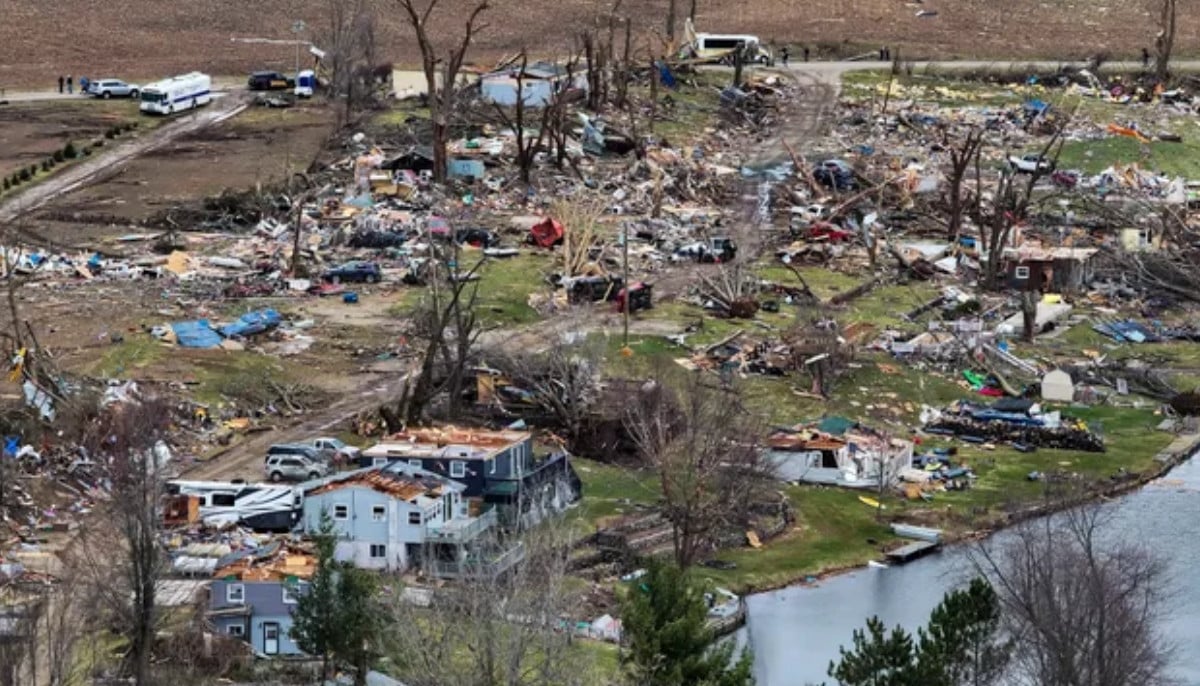 Michigan tornadoes kill 6 including child as powerful storms rip through Midwest and Oklahoma
 -
 Fortis power outage risk rises as damaging winds sweep across Alberta, BC and Saskatchewan
 -
 Who is Mojtaba Khamenei, the secretive son of Iran's former supreme leader?
 -
 Mojtaba Khamenei chosen as Iran’s new supreme leader succeeding father Ayatollah Ali Khamenei