
Quebec moves to ban hijab and other religious symbols in public service
Canada´s Quebec province on Thursday unveiled controversial draft legislation that would ban a significant section of public servants from wearing religious symbols such as a crucifix, yarmulke or hijab.
Highlights
- The city moved to ban a significant section of public servants from wearing religious symbols such as a crucifix, yarmulke or hijab.
- It was panned by PM Justin Trudeau said: "For me, it´s unthinkable (that) a free society would legitimize discrimination against anyone based on religion."
- The bill would also enshrine into law a rule previously adopted that denies government services to people wearing face veils.
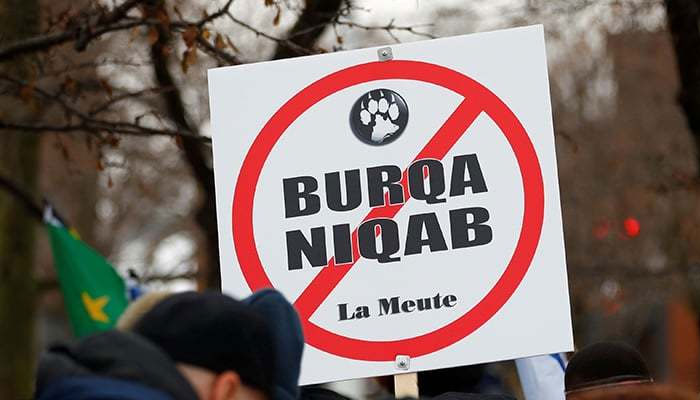
Canada´s Quebec province on Thursday unveiled controversial draft legislation that would ban a significant section of public servants from wearing religious symbols such as a crucifix, yarmulke or hijab.
The measure -- which applies to police, teachers and others in positions of authority -- is expected to become law by June with Premier Francois Legault´s government holding a majority of seats in the Quebec legislature.
But it was swiftly panned by Prime Minister Justin Trudeau who said: "For me, it´s unthinkable (that) a free society would legitimize discrimination against anyone based on religion."
Montreal mayor Valerie Plante voiced "serious concern about the message that this bill sends to minorities about their fundamental rights."
The important thing, she said, was that the process of making laws was secular, not that people divested themselves of religious attire and symbols.
Teachers unions said they would not enforce the law, while pundits and the government´s own lawyers, according to reports, anticipate a court challenge for contravening Canadians´ Charter right to personal religious freedom.
The Quebec government, however, has already made it clear that it would invoke a rarely-used constitutional clause to quash any rights challenges.
"Some people will find that we are going too far, others not enough, and we are convinced that we have struck the right balance," Quebec Immigration Minister Simon Jolin-Barrette told a press conference.
The government said the measure -- combined with the removal of a cross installed in the main chamber of the national assembly in 1936 -- underscored Quebec´s break with religion a half century ago, when it rejected the Catholic Church´s powerful influence in local politics.
- ´Serene debate´ -
The secularism bill would also enshrine into law a rule previously adopted by Quebec that denies government services to people wearing face veils, reflecting a backlash against Muslim immigration.
Jolin-Barrette argued that this was intended to simply bolster safety and security by being able to verify the identity of people accessing services.
Both measures, along with curbs on immigration, were promised by Legault during an election campaign last year, after a decade of divisive debate on secularism and religious freedom that was influenced by a similar discourse in France.
In addition to France, eight other European countries enforce restrictions on religious attire.
"We will do whatever we can to bring together people," Legault said Thursday before the law was presented.
"That should be the objective of everyone in the weeks ahead, to have a serene debate. We are responding to what a large majority of Quebeckers want."
The opposition, however, accused the government of rushing the legislation, with Liberal Helene David saying not enough time has been allotted to debate its impacts on "living together" as a society.
This is the fourth attempt by successive Quebec governments to pass a secularism law.
What began as a pushback against a few cases of religious accommodation of minorities in public institutions and private businesses led to a public inquiry.
The tribunal heard testimony on the merits of secularism that ranged from the metaphysical to the absurd -- such as outrage that an eatery had removed pork from its pea soup to accommodate Muslims.
Jews and Sikhs were also the subject of controversy, but the focus shifted to Muslims -- Muslim women in particular.
One previous government tried but failed to impose a values charter that would have limited "ostentatious" displays of religiosity.
In the end, the regulations were narrowed to apply only to public servants.





-
 Heavy snowfall disrupts operations at Germany's largest Airport
 -
 France sees record 102mn international tourists in 2025
 -
 ICE deports Congolese mother despite fears she could be killed
 -
 Keir Starmer appoints 'Dame Antonia Romeo' as first female head of UK service
 -
 Russia sounds alarm over Iran tension as US forces surge in region
 -
 France on red alert: Storm Pedro batters southwest following record 35 day rain streak
 -
 Headway made in Nancy Guthrie case: report
 -
 'Pulp Fiction' actor Peter Greene died in accidental gunshot, officials confirm