AI makes hundreds of math breakthroughs as OpenAI declares ‘new era of discovery’
The company shared 722 manuscripts on GitHub on October 6

OpenAI in a recent AI-related progress unveiled hundreds of mathematical breakthroughs, ushering into a “new era of discovery” as declared by Sam Altman.
The ChatGPT-maker company has released 722 manuscripts organized into 372 result families, containing 377 new mathematical results generated by an unreleased frontier AI model.
The company shared manuscripts on GitHub on October 6, covering advances on roughly 4,000 open problems in number theory, geometry, and more
The significant collection includes a claimed proof for the full Birch-Swinnerton-Dyer leading-term formula for elliptic nerves over the rational numbers. But it applies under specific conditions rather than the complete generality of the conjecture.
Another major Standouts include a zero-free region for the quasi-Riemann hypothesis beyond Re(s) >7/8 and a new upper bound of 9/4 on the matrix multiplication exponent.
According to the tech giant, a typical result requires a compute equivalent to about three hours of ChatGPT Pro-level reasoning. The papers are currently unverified and require independent expert validation as well as revisions to citations.
OpenAI also coordinated with the independent Advisory Group on Mathematics and Artificial Intelligence at the Institute for Advanced Study and aligned the study with their advice and public recommendations.
OpenAI notes all claims await peer review and independent verification through Lean formalizations and upcoming workshops.
The release lands amid growing industry competition including rival efforts from labs like Anthropic and ignites debates over research priority and academic integrity.
OpenAI’s released breakthrough took the internet by storm, drawing mixed responses from users. Mathematician Alex Kontorovich posted on X, “Quasi-RH?!?!???! Are you kidding me? If a human did this, it would be an instant Fields Medal, no questions asked.”
“RH says zeta has no zeros in Re(s)>1/2. The best we had until a second ago was a region that got thinner and thinner the higher up the imaginary axis you go. I thought maybe they’d fatten that up a bit, that’d be a massive breakthrough. But no. They got a zero free strip!!!! Insane”
Another user commented, “OpenAI is downplaying this for PR reasons. If you’re a mathematician, you must feel like a nuclear bomb hit, and you’re at ground zero.”
OpenAI president Greg Brockman wrote, “Towards acceleration of scientific discovery and improving quality of life for everyone.”
The third one joked, “PhD students clicking this link with the fear of god in their hearts.”


-
 Tesla FSD Europe approval faces safety doubts: Here’s what to know
 -
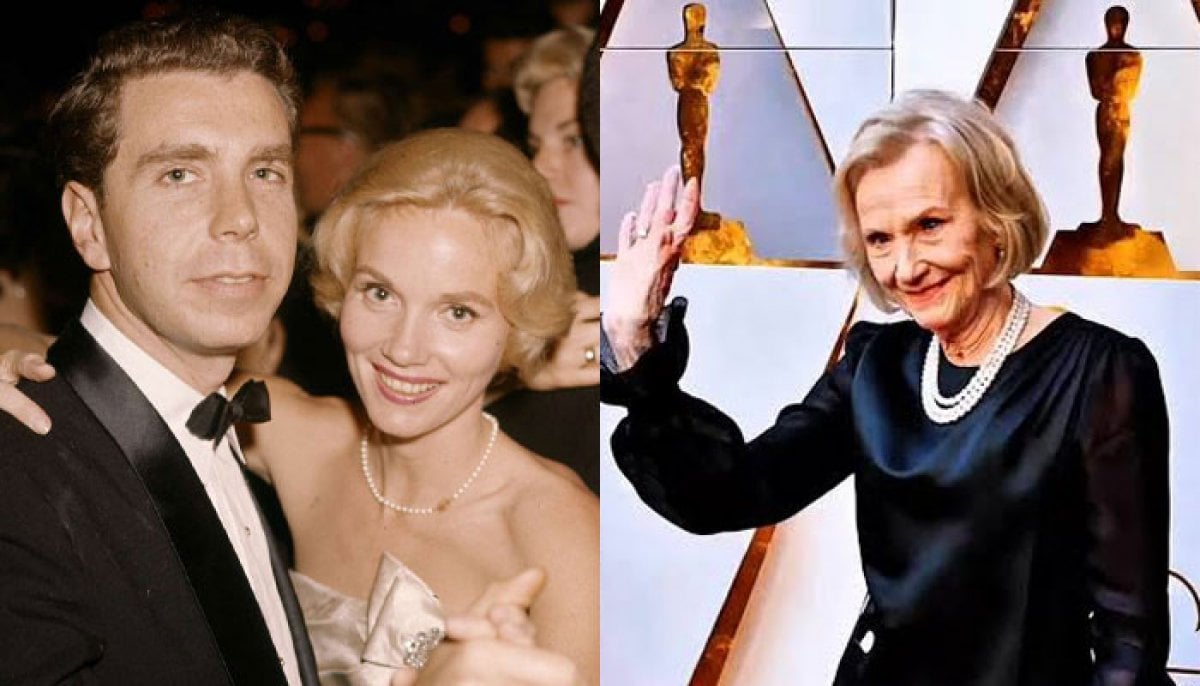 Oscar-winner Eva Marie Saint dies after seven decades on stage and screen
 -
 UK airports begin passport-free e-gates rollout: What passengers need to know
 -
 Sandra Bullock opens up about ‘absolutely incredible’ ‘Practical Magic’ house
 -
 JD Vance urges judging politicians by actions, not words
 -
 Paramount eyes Spielberg, Michael Bay reunion to revive 'Transformers'
 -
 Orionid meteor shower lights up skies nationwide this fall
 -
 US and China discuss reciprocal visits to nuclear sites: What to know