Rare population of world's heaviest parrot 'Kakapo' soars past 300 after record-breaking breeding season
Conservationists celebrate a historic milestone as a massive rimu mast year triggers the largest single-season population boom in recovery history
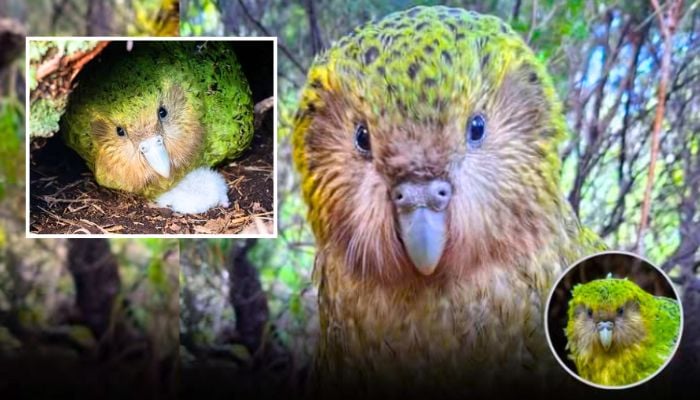
New Zealand’s Department of Conservation (DOC) and Ngāi Tahu officially added 90 fledged chicks from the 2026 breeding season to the tally, pushing the total population of the critically endangered kākāpō to 325 birds.
This marks the highest number of chicks ever produced in a single breeding season under the modern recovery programme—matching in one year what it took 16 years to achieve during the early stages of the project.
It also pushes the population past 300 for the first time in roughly 75 years.
Following a four-year hiatus, the boom was triggered by a massive "mast year" of abundant rimu fruit production across the species' protected island sanctuaries (such as Whenua Hou/Codfish Island and Fiordland's Anchor and Chalky islands).
“The last time the population is thought to have exceeded 300 birds may have been as long as 75 years ago,” said Deidre Vercoe, the conservation department’s kākāpō recovery operations manager.
“We had a four-year gap between breeding seasons, so it’s fantastic to finally see the population increase after all that time.”
When the Kākāpō Recovery Programme began in 1995, only 51 birds remained (31 males and 20 females).
While the jump to 325 is a monumental conservation victory, experts emphasize that the flightless, nocturnal parrots remain critically dependent on safe, predator-free habitats as conservationists begin experimenting with less intensive, more natural management strategies,


-
 New study sounds alarm as Doomsday Glacier melts more aggressively than thought
 -
 Hubble data hints at planet born after its star died
 -
 NASA to brief public on Artemis III mission progress
 -
 ‘Time capsule beneath the sea’: World’s oldest shipwreck holds secrets from Great Pyramid era
 -
 NASA spots mysterious V-shaped scar stretching 700 light-years across space
 -
 Space Jellyfish over Florida: What is that glowing cloud?
 -
 SpaceX Falcon 9 launches Dragon with 6,300 pounds of supplies to ISS
 -
 How far can a rover go? NASA’s Perseverance breaks Mars driving record