Solar Eclipse in UK: Met office reveals best places to watch on Wednesday
The UK will experience a partial solar eclipse on Wednesday 12 August
_updates.jpg)
The meteorological office has revealed the best spots to witness the UK’s deepest total solar eclipse for the next 54 years on coming Wednesday.
On August 12, more than 90 percent of the sun's light will be blocked by the moon between 6:17pm and 8:06pm. This celestial showdown is going to be marvelous as this is the fullest once since the total eclipse in 1999.
The extent of the Sun's coverage and the timing of maximum obscuration will differ across the country.
Among all the spots, Cornwall, Devon and westernmost parts in Wales will see the eclipse at its fullest as 94-96 percent of the sun will be obscured by the moon.
In Plymouth, the moon is set to cover 94.66 percent of the sun at 7:16pm on Wednesday, as per Met Office prediction.
The parts of Wales, West Midlands and the South West and the westernmost parts of Scotland can expect to see 92-94 percent of solar eclipse.
At 7:13 pm in Cardiff, the moon will obscure 93.24 percent of the sun, closely followed by Belfast at 7:08 pm, where 93.09 percent of the sun will be covered.
In Birmingham: 91.79 percent at 7:12 pm
London: 91.41 percent at 7:13 pm
Inverness: 90.74 percent at 7:03 pm
Edinburgh: 90.71 percent at 7:06 pm
Newcastle: 90.22 percent at 7:07 pm
In the coasts of Norfolk, Yorkshire and Aberdeenshire, as well as the Orkney and Shetland Islands, 88-90 percent of solar coverage is expected.
Royal Greenwich Observatory issued a warning regarding the use of regular sunglasses to view the eclipse as it can harm the eyes.
Imo Bell, a planetarium astronomer at the observatory, said, “"It's not a total eclipse, but over 90% is really exciting. We're not going to get one this good for a really long time."
"So, you can use solar eclipse glasses, which are very, very different from sunglasses – they block out so much light that you can't see anything through them except the sun, because that's how much light they need to block for the damaging light of the sun to be safe to view. Ideally a solar telescope is an amazing way to witness it,”




-
 Elon Musk, SpaceX eyes 1 million satellites for orbital data centers
 -
 Small asteroid to create fireball over ocean near Australia today: What to know
 -
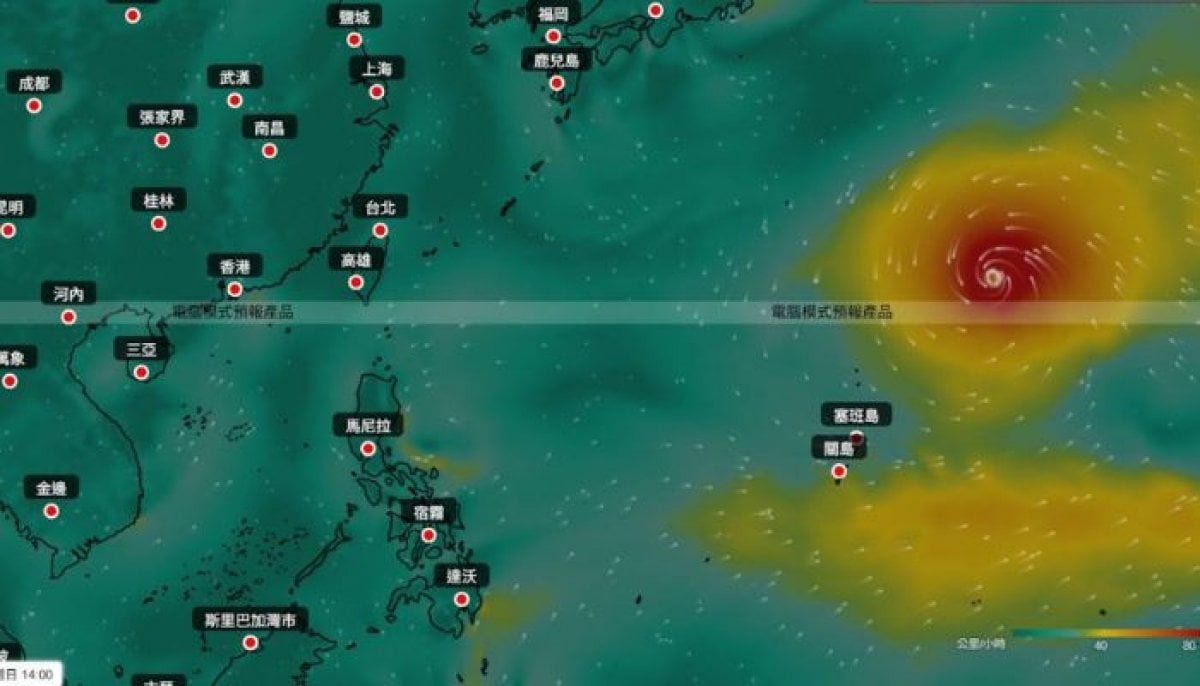 AI model flags possible cyclone near Hong Kong
 -
 First private rocket reaches orbit from Continental Europe as Isar Aerospace launches Spectrum
 -
 49 years of Voyager 1: The epic journey that took us beyond the solar system
 -
 Earth's next supercontinent could trigger mass extinctions, says scientists
 -
 China warns moon could become Earth’s next battleground
 -
 How was the Moon formed? Scientists uncover new clues in recent breakthrough
-
 Scientists just discovered diamonds can generate electricity
 -
BepiColombo spacecraft enters its biggest test near Mercury
-
NASA Hubble spots strange 10-sided ‘decagon’ swirling around Saturn’s south pole
-
Rare population of world's heaviest parrot 'Kakapo' soars past 300 after record-breaking breeding season