Earth's next supercontinent could trigger mass extinctions, says scientists
Scientists have modeled four ways Earth's landmasses could reunite, and the climate outcomes range from tropical to catastrophic
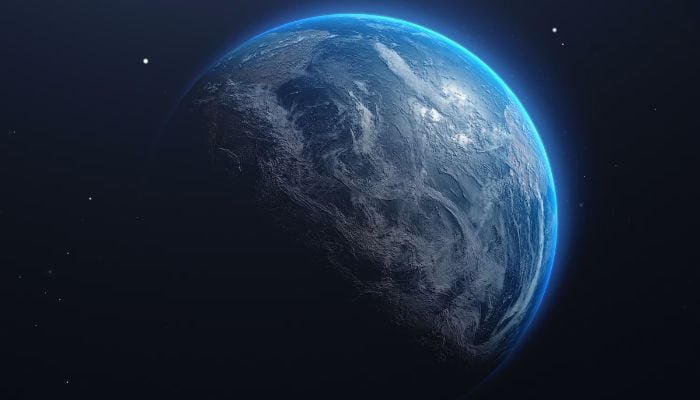
Earth's landmasses move roughly 0.6 inches a year, about the same rate fingernails grow. It sounds negligible, but stretched across 200 million years, that drift is enough to reassemble every continent on the planet into a single new supercontinent, according to geoscientists who have mapped out exactly how it might happen.
Scientists have described four possible futures for Earth after the break-up of Pangea 200 million years ago. The first is called the Pangea, where the Atlantic continues to expand while the Pacific Ocean completely closes, causing the Americas to crash into an amalgamated landmass made up of Africa, Europe, and Asia.
The opposite of this is the second one, called Pangea Proxima, whereby the Atlantic and Indian oceans close down, bringing all the continents into a circle around the slowly decreasing inland sea. The third possibility was designed by João C. Duarte, who works at the University of Lisbon’s Instituto Dom Luiz, and it is known as Aurica.
This involves the closure of the Atlantic and Pacific oceans while the Indian Ocean expands, bringing the seven continents together near the equator.
A team led by Michael Way at NASA's Goddard Institute for Space Studies ran 3D global climate models on two of these scenarios, publishing the results in Geochemistry, Geophysics, and Geosystems in 2021.
Aurica came out roughly 3 degrees Celsius warmer than today, with coastlines resembling modern Brazil's beaches and reefs. Amasia told a bleaker story: with land clustered at the poles, the disrupted ocean conveyor belt that currently distributes heat from the equator would leave the region locked in permanent ice, reflecting sunlight back into space and compounding the cooling.
Duarte, who believes that Aurica is the likeliest result while Amasia is the least likely, does not think that either would be kind to life on planet Earth.
Rather, Duarte expects that there will be tough competition and even mass extinctions as the continents clash and become one, regardless of which of these happens. Scientists look at the Dabbahu Fissure in Ethiopia, which split in 2005 for 25 miles, as an example.
Alex Pullen, an environmental engineering and earth sciences researcher at Clemson University, cautions that the models can't account for what vegetation, greenhouse gas levels, or atmospheric particles will look like that far into the future, all of which shape climate outcomes significantly.


-
 Can cancer drugs be made in space? Here’s what the new mission aims to find out
 -
 SpaceX Falcon 9 successfully launches Bandwagon-5 mission with 32 payloads
 -
 Europe launched 8 orbital rockets last year, can it rival Starlink?
 -
 Japan launches world’s first mission to bring sample back from phobos
 -
 Orionid meteor shower 2026: Peak date, viewing tips and what to expect
 -
 Why Mars looks blue in NASA’s unedited curiosity panorama?
 -
 Blue Origin upgrades new Glenn rocket launch infrastructure to take on SpaceX
 -
 NASA’s next Mars mission targets Phobos and Deimos, not Red Planet